UPTET 2026's Digital Objection System: What It Gets Right About Exam Transparency
The UPTET 2026 answer key challenge window—open July 8-14—shows how digital platforms are making teacher recruitment examinations more transparent and accountable across India.
The Examination That Tested a System
On July 2, 3, and 4, 2026, the Uttar Pradesh Teacher Eligibility Test (UPTET) was conducted across the state, drawing hundreds of thousands of candidates competing for eligibility to teach in government primary and upper primary schools. Within six days of the final exam date, the Uttar Pradesh Basic Education Service Selection Commission (UPESSC) published a provisional answer key on its official portal and opened a structured digital window for candidates to raise objections.
That window closes on July 14. It is a small procedural detail in the larger machinery of India's teacher recruitment system, but it represents something worth examining: a functioning, scalable model for transparent post-exam accountability built on digital infrastructure.
What the UPTET Digital Objection Process Involves
The UPTET 2026 provisional answer key was published on July 8, 2026, for both Paper 1 (Primary, Classes 1–5) and Paper 2 (Upper Primary, Classes 6–8). Candidates received a seven-day window to challenge any answer they believed was incorrect.
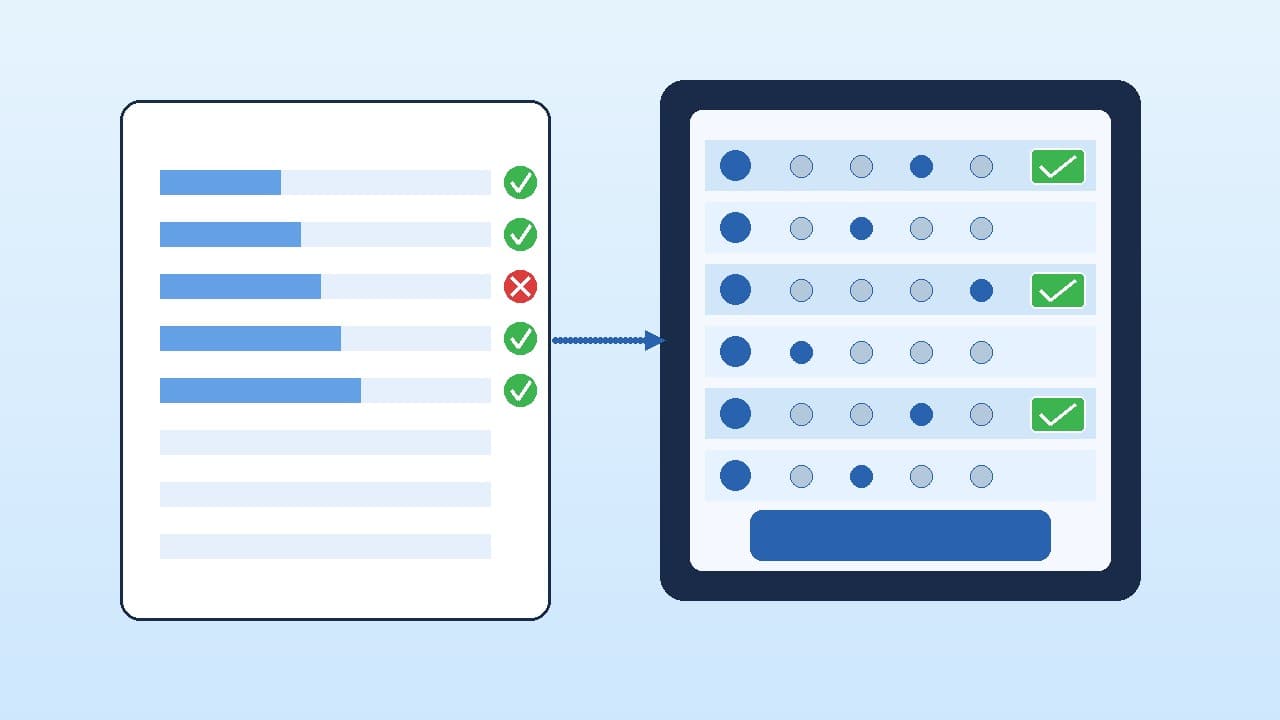
The process is entirely digital. Candidates log in using their registration credentials, navigate to the objection interface, select the specific questions they wish to contest, upload valid supporting documentation — textbook references, official source materials, prior court orders — pay a prescribed fee per question, and submit. No offline letters, faxes, or emails are accepted. The digital submission is the only channel.
This design has several practical consequences:
The final answer key is expected within two to three weeks of the objection window closing, following expert panel review.
Scale Makes Digital the Only Viable Option
The UPTET attracts hundreds of thousands of candidates annually. Uttar Pradesh is India's most populous state, and demand for teacher certification is intense across its vast network of government schools. Managing objections from even 1% of the candidate pool through a physical, paper-based process would be operationally unworkable — slow, susceptible to loss, and impossible to audit consistently.
Digital objection systems at this scale do more than handle volume. They create a verified record that protects both the examination body and the candidate. When an objection is accepted and marks are revised, the digital audit trail shows exactly what changed, when, and why. When an objection is rejected, the candidate receives a documented reason rather than silence.
This matters in the context of Right to Information applications and judicial scrutiny, both of which are routine features of Indian teacher recruitment examinations. Courts increasingly expect examination bodies to produce contemporaneous records, not reconstructed summaries.
Contrast with Physical Examination Failures
The timeliness of UPTET's digital process is worth noting against the backdrop of recent examination controversies. The HTET examination conducted on July 4 and 5 in Haryana faced complaints of broken seals and distribution of wrong question papers at several centres — incidents that required physical intervention and post-hoc investigation because the physical examination infrastructure created ambiguity about what happened.
UPTET, conducted across more centres and over more days, processed its examination and published a structured digital challenge mechanism within the same week. The difference is not the examination body's intent but the infrastructure it is working with.
What Other Examination Bodies Can Learn
The UPTET objection model is not unique to teacher recruitment. Its design principles apply to any large-scale examination — university semester papers, autonomous college internals, or professional certification tests.
Single digital channel. Accepting objections only through a registered portal eliminates the ambiguity of parallel submissions and prevents tampering. It also requires candidates to engage with the actual question text and answer options rather than writing general complaints.
Fee-based filtering. A modest objection fee, refunded when the objection is upheld, discourages frivolous challenges without pricing out genuine grievances. UPTET's structure mirrors international best practices in standardised testing, where similar fee-with-refund mechanisms are standard.
Supporting document requirement. A system requiring candidates to upload a source ensures objections are grounded in evidence rather than preference. This compresses review time for the expert panel and improves the signal-to-noise ratio substantially.
Public timeline commitment. Publishing expected dates for the final answer key creates accountability for the examination body as well as for candidates. The institution commits to a resolution date, not an open-ended "under review" status.
Automated bonus mark award. When a question is disqualified, the system applies equal credit to all affected candidates without manual intervention. This eliminates the possibility of selective or delayed correction.
The Missing Layer: Subjective Evaluation
UPTET, like most teacher eligibility tests, is primarily multiple choice. Digital objection systems work cleanly in this context because the answers are either correct or incorrect and comparison to a published key is mechanical.
University and college examinations involve a different challenge: extended written answers evaluated by a human examiner. Here, the equivalent of digital transparency is on-screen marking — scanning answer scripts and having examiners evaluate them on-screen, with per-question marks recorded digitally rather than written in script margins.
On-screen evaluation provides the same auditability that UPTET's digital objection system provides for objective papers: every examiner's decision is recorded, timestamped, and linked to a specific question in a specific script. Moderation can compare marks across evaluators for the same answer. Totalling errors are eliminated because the system calculates the final mark automatically. A student who disputes a result can be shown the examiner's screen-by-screen mark entry, not just a total.
Why This Matters for Controllers of Examinations
The UPTET objection system is a visible, public-facing example of digital accountability. But the underlying principle — that every evaluation decision should be recorded, verifiable, and defensible — applies with equal force to the back end of university examination systems that no student sees.
For controllers of examinations, digital evaluation systems are not simply about speed or cost savings. They are about institutional integrity in a regulatory environment that increasingly demands documented evidence of fair process — for NAAC accreditation, for student grievance redressal, and for judicial review.
When a student challenges a result, the question is not just whether the mark was correct, but whether the institution can demonstrate how it arrived at that mark. A paper-based evaluation chain, where scripts change hands between evaluators and the department office with no electronic record, cannot answer that question reliably. A digital system answers it immediately.
Conclusion
The UPTET 2026 answer key challenge window closed having processed thousands of objections from a state with over 240 million residents. The machinery works because it was designed to work at scale, with digital infrastructure as the foundation rather than an afterthought.
Examination bodies and university exam departments that are still managing grievance and re-evaluation processes through physical paperwork are running a system that cannot scale, cannot audit itself cleanly, and cannot meet the transparency expectations that students, courts, and accreditation bodies now require.
UPTET's answer key process is a contained but instructive example. The principle it demonstrates — digital, documented, deadline-bound accountability — applies across every examination system in the country.
Related Reading
Ready to digitize your evaluation process?
See how MAPLES OSM can transform exam evaluation at your institution.