NEET-PG 2026: Inside India's Most Security-Hardened Medical Exam
On August 30, 2026, over 2.73 lakh medical graduates will sit NEET-PG under the most comprehensive security architecture ever deployed for a postgraduate entrance exam in India.
A Postgraduate Exam Transformed
On August 30, 2026, more than 2,73,183 medical graduates will walk into examination centres across 340 cities in India to write the National Eligibility cum Entrance Test for Postgraduate admissions — NEET-PG 2026. What awaits them is the most rigorously secured paper-based examination infrastructure India has ever assembled for a postgraduate professional entrance test.
The National Board of Examinations in Medical Sciences (NBEMS), which oversees NEET-PG, has introduced a sweeping overhaul of examination security protocols this year. The changes come in the shadow of the NEET-UG 2026 controversy, which resulted in the cancellation and re-examination of a test taken by over 22 lakh candidates. For NEET-PG, NBEMS has moved decisively on multiple fronts simultaneously.
Aadhaar-Based Biometric Verification at Every Centre
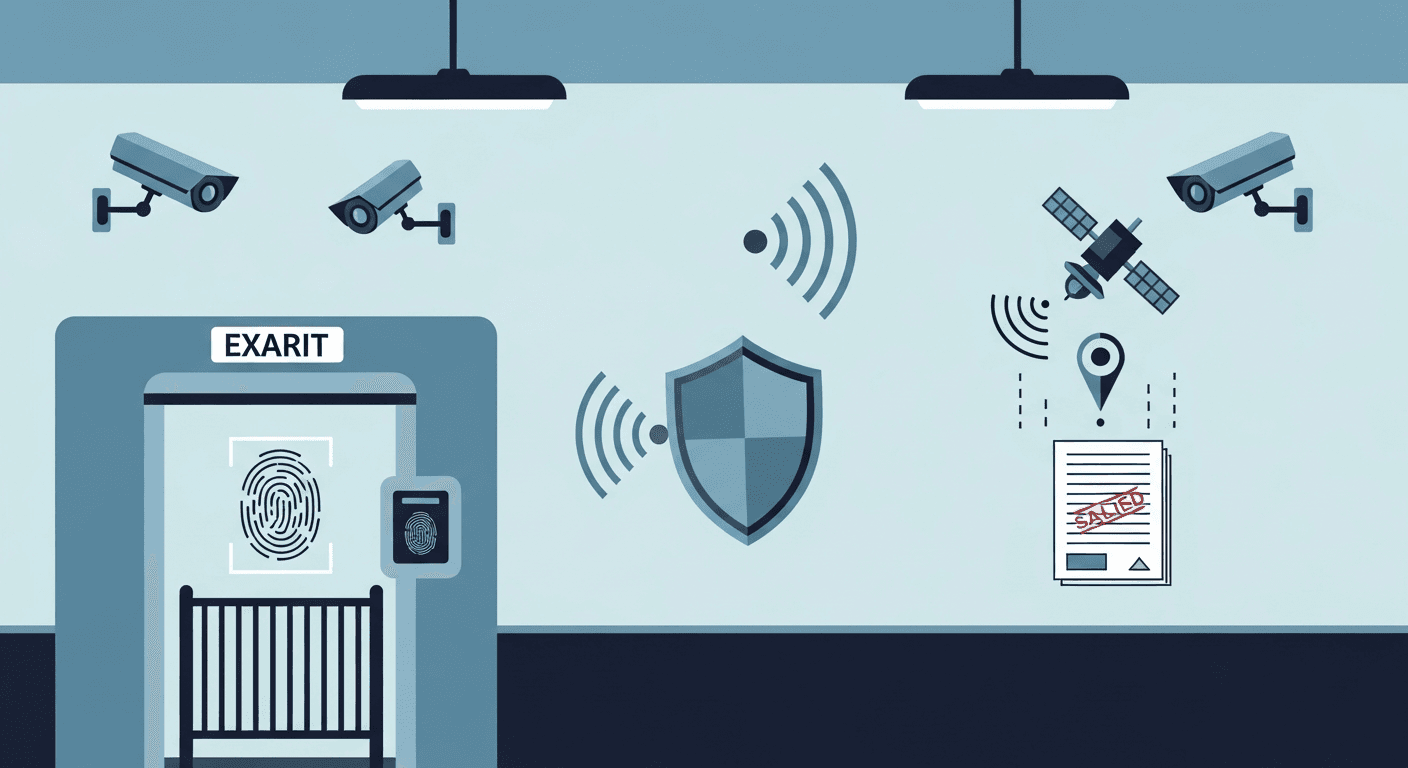
The most significant change is the mandatory biometric verification layer at the point of entry. Every candidate appearing for NEET-PG 2026 must undergo Aadhaar authentication before they can enter the examination hall.
The system works in two layers. Fingerprint biometrics form the primary check, with the candidate's live fingerprint matched against Aadhaar records. Where fingerprint authentication fails — due to worn fingerprints, dry skin, or technical issues — iris-based biometric verification is available as a backup. This dual-modality approach eliminates the gap that simple ID-card checks leave open.
The verification happens in real time, connected to the Aadhaar central database, making impersonation structurally infeasible rather than just procedurally prohibited. Previous examinations that relied on photograph matching and manual ID checking had documented vulnerabilities: differences in photograph quality across states, reliance on individual invigilator judgment, and no audit trail of who actually verified which candidate.
NEET-PG 2026's Aadhaar layer creates an irrefutable record: a candidate either authenticated or they did not.
Single Shift: The Fairness Architecture Choice
Perhaps the most consequential structural decision NBEMS has made for 2026 is conducting NEET-PG in a single shift nationwide. All 2,73,183 candidates answer identical questions, on the same day, at the same time.
This matters for two reasons that are often underappreciated.
First, multiple-shift examinations create the need for normalisation — a statistical process that adjusts scores across sessions based on difficulty differences. Normalisation is defensible in principle but creates grounds for disputes in practice. When a candidate believes their session was harder, and marks are adjusted by an algorithm, the perceived fairness of the process suffers regardless of mathematical correctness. Single-shift examinations eliminate this entirely.
Second, and more relevant to exam security: every additional shift is an additional opportunity for paper content to become known before later sessions write. The 2024 NEET-UG controversy and the 2026 re-examination both involved allegations of pre-exam circulation of questions. A single shift removes the structural vulnerability that staggered sessions create.
For a postgraduate entrance test where marks determine residency specialisation — and where the difference between securing a seat in a preferred specialty and a general one can rest on single-digit score differences — these architectural choices have real consequences for 2.73 lakh aspirants.
Technology at the Centre: CCTV and Signal Jammers
Beyond candidate verification, NBEMS has mandated that all NEET-PG 2026 examination centres operate with CCTV surveillance connected to central control rooms and electronic signal jammers to block mobile networks and data transmission within examination halls.
Signal jammers are not new to Indian examinations, but their deployment has been inconsistent. The NEET-UG 2026 controversy highlighted how mobile network access, even briefly and in violation of instructions, can enable paper photography and rapid transmission. Mandatory, verified jammer deployment at over 1,300 centres across 340 cities represents a significant operational commitment from NBEMS.
The real-time monitoring angle is equally important. Central control room access to live CCTV feeds from examination halls creates an accountability structure that offline, post-event review could never provide. When an anomaly is visible to administrators in real time, intervention is possible. When review is only retrospective, the examination is already complete.
Candidate-Friendly Adjustments Alongside Security
The NEET-PG 2026 security overhaul has not been framed purely as a restriction. NBEMS has simultaneously introduced candidate-friendly changes that reduce logistical stress without compromising integrity.
Candidates can now select from three preferred examination cities, providing greater flexibility compared to earlier years when city allocation could mean long-distance travel for a single-day examination. The expanded city list of 340 locations — up from fewer cities in previous years — is itself a function of NBEMS' confidence in deploying consistent security infrastructure across a larger footprint.
This reflects a principle that is broadly applicable to examination security design: security and convenience are not opposites. Reducing unnecessary friction for legitimate candidates — while hardening the system against illegitimate actors — is the goal of a well-designed examination. The candidate who travels five hundred kilometres to write an exam they are qualified to write is not a security threat; the architecture should make their experience smoother, not more burdensome.
What NEET-PG 2026 Signals for Medical Education Examination Infrastructure
The 2026 overhaul is significant not only for the 2.73 lakh candidates writing on August 30, but for what it signals about the trajectory of high-stakes professional examinations in India.
NBEMS has demonstrated that it is possible to run a national examination of this scale with Aadhaar biometric verification, single-shift paper security, and real-time surveillance — without converting to computer-based testing. This is important context for the broader debate about examination formats, because the assumption that pen-and-paper examinations are inherently less secure than computer-based tests is not unconditional.
Security is a function of process design, not paper versus screen. The NEET-PG 2026 architecture shows that a well-designed pen-and-paper examination can have rigorous integrity controls. The relevant variables are whether question papers are secured end-to-end, whether candidate identity is verified robustly, and whether the examination environment is monitored effectively.
Medical colleges and examination bodies preparing for their own institutional examinations — whether for internal assessment, entrance, or professional certifications — can draw specific lessons from the NEET-PG 2026 model. Biometric identity verification is increasingly accessible; Aadhaar-based authentication is available as an API. Single-shift examination design is a scheduling choice. Verified technology infrastructure — CCTV, jammers — is a procurement and compliance requirement that can be written into examination centre agreements.
The investment that NBEMS has made in NEET-PG 2026 is, in effect, a reference architecture for what a credible high-stakes examination looks like in India's current environment.
Looking Ahead
NEET-PG 2026 results will be expected in the weeks following the August 30 examination, feeding into the Medical Counselling Committee (MCC) process for PG medical seat allocation. The 12.5% increase in registered candidates compared to last year — reflecting more MBBS graduates entering the postgraduate competition — means the examination's integrity stakes are higher than ever.
Whether the NEET-PG 2026 model becomes the template for future years, or whether NBEMS eventually moves toward computer-based testing (as announced for NEET-UG 2027), the 2026 cycle will be studied as the year that postgraduate medical examination security in India was demonstrably raised.
For institutions watching how the examination ecosystem evolves, the direction is clear: verifiable candidate identity, tamper-resistant question security, and real-time monitoring are becoming the minimum expected standard, not the exception.
Related Reading
Ready to digitize your evaluation process?
See how MAPLES OSM can transform exam evaluation at your institution.