Two Exam Failures, Two Root Causes: Why India Needs Separate Fixes for Paper Leaks and Evaluation Errors
NEET 2026's paper leak and CBSE's OSM controversy represent distinct failure modes in India's examination system — each requiring its own structural fix, not a single catch-all reform.
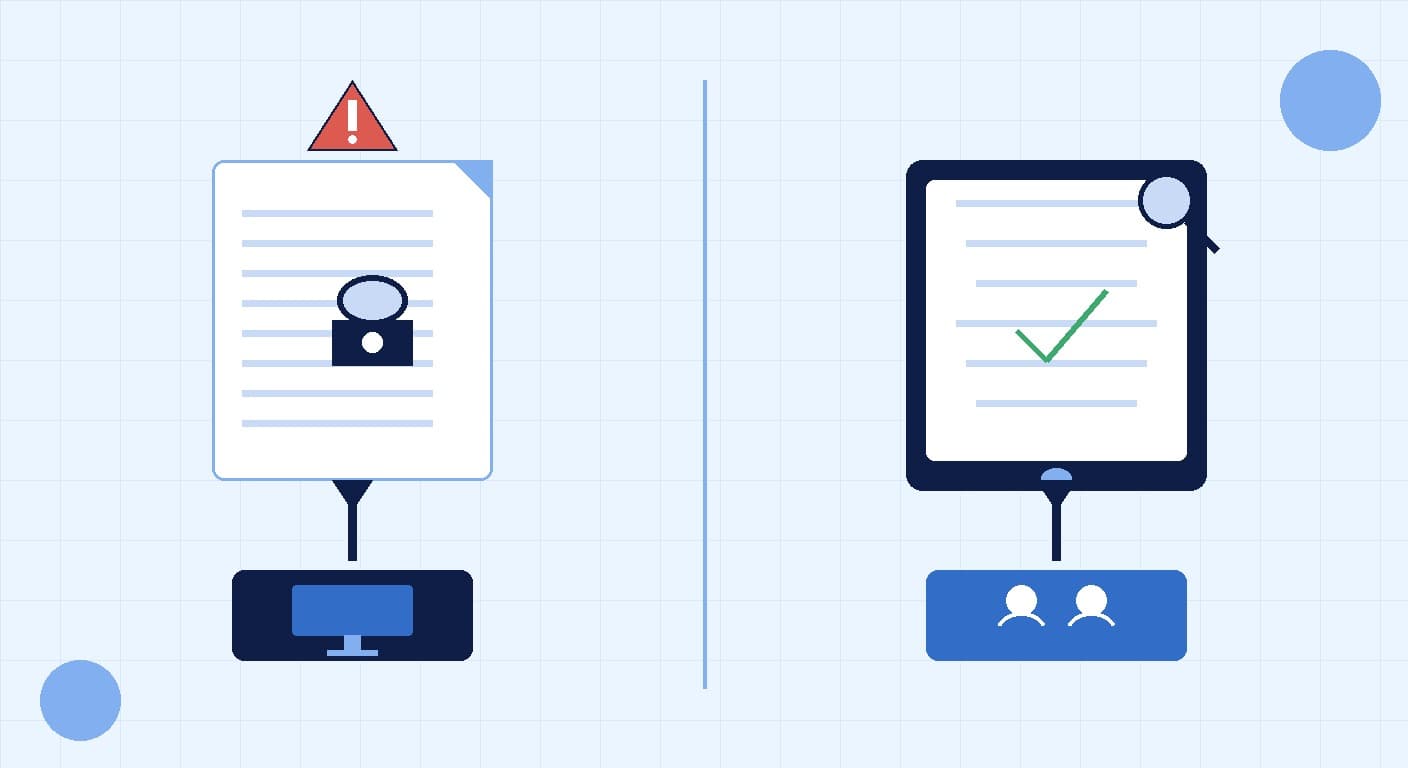
One Headline, Two Different Problems
India's 2026 examination season produced two headline crises that look superficially similar but are mechanically distinct.
The first: NEET 2026's paper leak, in which a chemistry lecturer with legitimate access to the question paper allegedly dictated exam questions to coaching students before the May 3 examination, leading to the cancellation of an exam written by 22 lakh candidates and a re-examination on June 21.
The second: CBSE's first full-year rollout of On-Screen Marking (OSM) for Class 12, which generated more than 40,000 revaluation applications — roughly ten times the historic baseline — alongside a cybersecurity researcher identifying vulnerabilities in the marking platform, parliamentary committee hearings with affected students, and the eventual transfer of CBSE's chairman and secretary.
Both crises generated political pressure and national media coverage. Both involved examinations at scale. Both implicated central government examination bodies. But they are failures of entirely different systems, and the solutions that fix one will do nothing to fix the other.
Treating them as a single "exam integrity" problem is producing confused policy and delayed reform. The distinction matters for every university and examination body in India.
What the Paper Leak Problem Actually Is
A question paper leak is a supply-chain security failure. The paper exists as a document — physical or digital — from the moment it is composed. Before the examination begins, it passes through a sequence of custodians:
A leak can originate at any of these nodes. In NEET 2026, investigators allege the leak occurred at the paper-setter level — the point of earliest access — because an individual with legitimate institutional credentials used that access to coach students before the exam.
The solution space for paper leaks operates entirely before the examination begins:
None of these measures interact with what happens to answer scripts after the exam ends. They exist entirely on the input side of the examination pipeline.
What the Evaluation Error Problem Actually Is
Evaluation errors are a process integrity failure during the marking of answer scripts — entirely after the examination is complete.
In CBSE's 2026 OSM rollout, problems included evaluators unfamiliar with the digital interface making incorrect entries, alleged technical vulnerabilities in the OnMark platform, unusually high volumes of students applying for revaluation, and a cybersecurity researcher identifying potential weaknesses in the marking system's security architecture. CBSE's response — reducing revaluation fees by 85%, launching a helpline, processing results in phases via DigiLocker — was an attempt to manage the downstream consequences of evaluation process failures.
The root cause here is different from a paper leak. The question paper reached students without compromise. What went wrong was the chain of events after candidates submitted their answer scripts.
Evaluation errors arise from:
The solution space for evaluation errors is structurally separate:
Why Conflating the Two Leads to Wrong Investments
The most visible policy outcome of 2026 is the government's confirmation that NEET will move to CBT from 2027. This is the right response to the NEET paper leak — CBT fundamentally restructures the distribution pipeline that was compromised.
But CBT does nothing to address the evaluation process failures that affected CBSE's OSM rollout. Conversely, deploying a high-quality OSM platform for university answer script evaluation does nothing to secure the question paper before the examination begins.
The risk for examination administrators is a form of policy substitution: addressing the visible crisis with a solution that solves the other problem. A university that invests in OSM because it is "worried about paper leaks" is misapplying resources. A national examination body that moves to CBT without addressing evaluator training and platform quality control for its remaining subjective examinations has only solved half the problem.
The Full Map of Examination Vulnerabilities
India's examination system has vulnerabilities at every stage. Effective reform requires addressing each layer independently:
| Stage | Vulnerability Type | Failure in 2026 | Solution Category |
|---|---|---|---|
| Question composition | Insider access by setters | NEET (alleged) | Access segmentation, vetted paper-setters |
| Paper production | Printing press exposure | Multiple state boards | Secure printing, digital production |
| Distribution | Transport and custodian exposure | Multiple state boards | Encrypted delivery, chain of custody |
| Examination hall | Devices, smuggling, impersonation | Ongoing | Surveillance, biometrics, CBT |
| Answer script collection | Chain of custody after exam | Less frequent | Barcoded envelopes, digital capture |
| Answer script evaluation | Evaluator errors, bias, fatigue | CBSE OSM | OSM, double valuation, anonymity |
| Result calculation | Manual totaling errors | Sporadic | Automated computation |
| Result communication | Tampering, delay, misinformation | Board-level | DigiLocker, digital marksheets |
A reform agenda that only addresses one row of this table and presents it as comprehensive exam reform is not credible — and the 2026 evidence makes this visible.
What University Examination Administrators Should Act On
For universities conducting their own examinations — particularly large affiliating universities managing hundreds of colleges and hundreds of thousands of scripts — both vulnerability categories are present simultaneously.
For paper security, the key question is: who has access to question papers, at what stage, with what logging? University examination systems that rely on a small number of individuals having unaudited access to complete question papers carry NEET-style insider risk.
For evaluation integrity, the key question is: how many hands does a script pass through before a final mark is entered, and what verification exists at each stage? Universities where a single evaluator's handwritten total is the only check before a result is declared carry CBSE-OSM-style evaluation risk.
Critically, improving one does not improve the other. A university that adopts digital evaluation but does not audit its question paper access controls has addressed evaluation integrity without reducing its paper leak exposure. A university that moves to sealed, time-locked question paper delivery but continues with manual evaluation has reduced its pre-examination vulnerability without improving its post-examination one.
Both investments are worthwhile. Neither is a substitute for the other. The examination crises of 2026 have been expensive, disruptive, and deeply unfair to the students caught in the middle. The least they should produce is clarity about what kinds of problems require what kinds of solutions.
---
Related Reading
Ready to digitize your evaluation process?
See how MAPLES OSM can transform exam evaluation at your institution.