India's 2026 Broken Exam Calendar: A University Admissions Office Planning Guide
NEET retest on June 21 pushes MCC counseling to August, CBSE OSM revaluation results are due in July, and CUET-UG faced emergency rescheduling — university admissions offices need a revised playbook for the 2026 season.
The Most Disrupted Admissions Season in Recent Memory
The 2026 admissions cycle has been disrupted at multiple simultaneous points in a way that has no close precedent in a single academic year.
NEET-UG was cancelled on May 12 after a paper leak, pushing the retest to June 21 and the Medical Counselling Committee (MCC) schedule to July at the earliest, with final counselling rounds expected to extend to October. CBSE's Class 12 results — released on May 13 following the first full-scale OSM deployment — triggered roughly 40,000 re-evaluation requests, with results expected in July. CUET-UG suffered a technical glitch on May 30 requiring NTA to reschedule over 3,700 affected students, delaying central university admissions timelines.
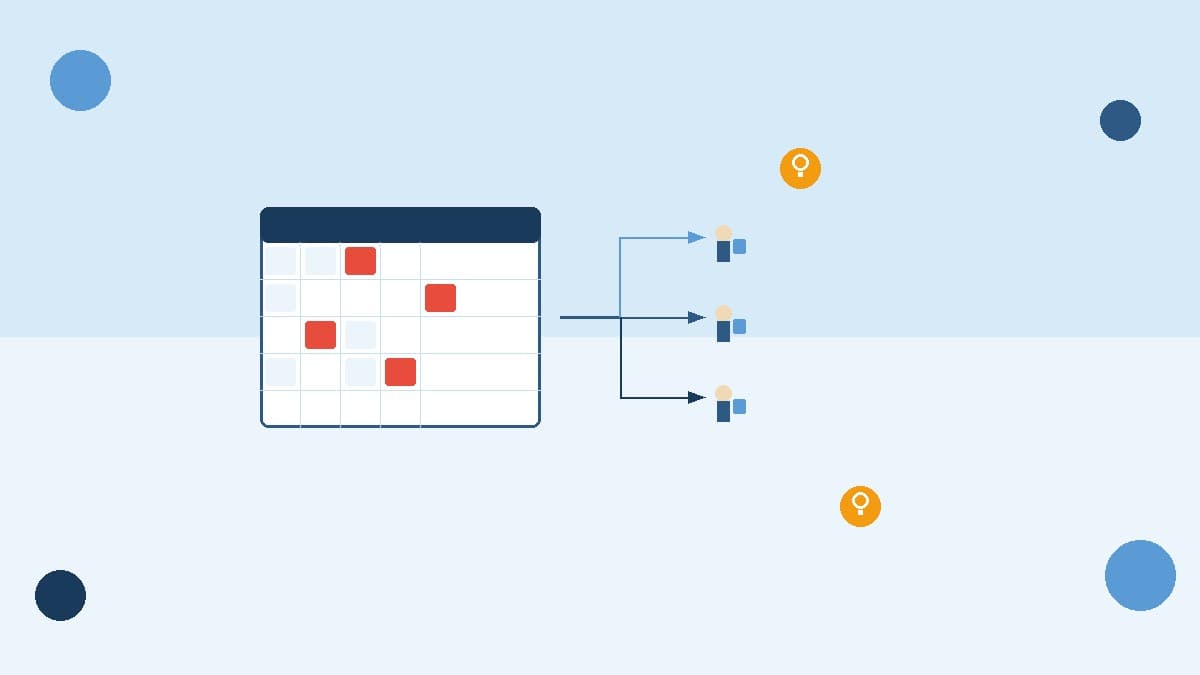
Each disruption alone would require calendar adjustments. Together, they create a cascade: delays at the national exam stage ripple through state counselling bodies, individual institutions, hostel allocation, faculty scheduling, and eventually classroom formation.
This guide is written for registrars, admissions controllers, and academic administrators managing the downstream effects.
The Disruption Timeline at a Glance
| Exam | Original Schedule | Current Status | Admissions Impact |
|---|---|---|---|
| NEET-UG 2026 | May 3 exam, June counselling | June 21 retest | MCC Round 1 now July 21 (tentative); final rounds extend to October |
| CBSE Class 12 OSM | May 13 results | ~40,000 revaluation requests; results July | CBSE-dependent admissions delayed until revaluation resolves |
| CUET-UG 2026 | May 26–June 3 | Glitch May 30; affected students rescheduled | Central university admissions pushed by 2–3 weeks |
| JEE-based admissions | JoSAA Round 1 June | Running largely on schedule | Limited direct disruption from above events |
The practical effect: a student applying to a health sciences program at a deemed university — using NEET scores, Class 12 board marks, and possibly CUET for merit ranking — is waiting for three separate result outputs, none of which has a firm date as of June 9.
Five Actions University Admissions Offices Should Take Now
1. Set conditional offer windows, not fixed cut-off dates
In a disrupted calendar, announcing a hard document submission deadline before result dates are confirmed creates student anxiety and administrative backlash. Shift to conditional language in all communications: "Admission will close [N] working days after official results are published by the respective examining body." This formulation is legally defensible, operationally manageable, and reduces the inbound query volume that overwhelms admissions staff during peak periods.
2. Communicate the cascade to applicants proactively
Students do not always understand that a NEET cancellation affects their engineering college's admissions timeline when CUET scores are also involved. A single, plain-language advisory — published on the institution's website and distributed through your student communication channels — explaining which results are delayed, by approximately how long, and what the institution's response is, prevents the high-volume individual queries that arrive in July.
3. Audit your internal evaluation readiness ahead of July
If your institution runs internal semester examinations for continuing students, summer is a critical window to verify that your evaluation workflow can produce certified grade records quickly when national exam results finally arrive and admissions activity compresses. An institution that is simultaneously processing internal grade sheets and managing a delayed admissions intake — in the same July-August window — without digital evaluation tools will face significant staff capacity constraints.
4. Pre-position for the August–October peak
With MCC counselling expected to extend to October and CBSE revaluation results arriving in July, many institutions face a scenario in which admissions are being finalized in September or later. This requires proactive decisions now: hostel capacity reservation with conditional holds, provisional course registration processes for students admitted before results are fully resolved, and faculty briefings on compressed class formation timelines.
5. Map your programs against the specific disruptions
MBBS, BDS, BAMS, BSMS, BUMS, and BHMS programs are directly dependent on NEET scores and follow MCC counselling timelines. B.Sc Nursing and allied health programs may follow state-specific counselling timelines. Engineering and management programs following CUET are affected by the CUET-UG rescheduling but less exposed to the NEET delay. Undergraduate general degree programs dependent on CBSE Class 12 marks face the OSM revaluation timeline risk.
Map each program against its upstream dependencies and assign a risk level: high (directly dependent on delayed output), medium (partially dependent), or low (insulated). This mapping determines which programs need contingency planning and which can proceed on modified-normal timelines.
How Digital Evaluation Infrastructure Changes the Calculus
Institutions using digital evaluation for internal semester examinations have a specific advantage during external exam calendar disruptions: they can produce certified internal grade records with shorter lag time than paper-based processing allows.
When national-level results are delayed, universities that can quickly produce certified grade records for continuing students — for program transfer requests, for eligibility verification, for scholarship processing — are in a better position to manage the parts of admissions they control, while waiting for the parts they do not.
Digital evaluation also produces machine-readable grade records that integrate directly with admissions management systems, eliminating the manual data entry step. When admissions staff are already working at peak capacity managing re-scheduled interviews and provisional offer letters, removing the manual grade entry step frees staff time for higher-value work.
A further advantage: digital evaluation audit trails allow institutions to respond quickly to RTI requests and university affiliation inspections that may spike during a period when examination procedures are under public scrutiny. In 2026, institutions with complete digital documentation of their evaluation processes are better positioned than those relying on physical records.
What the Cascade Reveals About Structural Exam Risk
The 2026 disruption is not unprecedented in its individual components — paper leaks, technical glitches, and revaluation controversies have each occurred in prior years. What is new is their simultaneous occurrence across three of India's four largest national examination pipelines in a single May–June window.
The overlap amplifies impact because students and institutions depend on multiple national exam results in sequence, not in isolation. A student applying to a deemed university needs NEET scores, Class 12 board marks, and possibly CUET scores to complete a single application. When all three are delayed simultaneously, no part of the admissions process can proceed.
For examination bodies, this is a structural argument for genuinely staggered examination calendars and independent redundant processing pipelines. The current calendar — where NEET, CBSE, and CUET all conclude in a five-week window — creates single-point-of-failure exposure at the national level.
For institutions, it is an argument for building admissions workflows that are explicitly designed to handle late results without degrading student experience or institutional operations. That means conditional offer letters, digital-first record management, and admissions staff cross-trained for high-uncertainty periods.
The 2026 season will eventually resolve. MCC counselling will conclude by October. CBSE revaluation results will arrive in July. CUET-affected students will receive their results. The admissions offices that emerge with the least operational damage will be those that stopped assuming national exam calendars would proceed as planned.
Related Reading
Ready to digitize your evaluation process?
See how MAPLES OSM can transform exam evaluation at your institution.