JoSAA 2026: How Digital Examination Records Power India's Fairest Admissions System
On June 2, India's joint seat allocation for IITs and NITs opened for over 59,000 seats. The process works only because digital examination records are reliable, tamper-proof, and machine-readable — a blueprint for what universities can achieve.
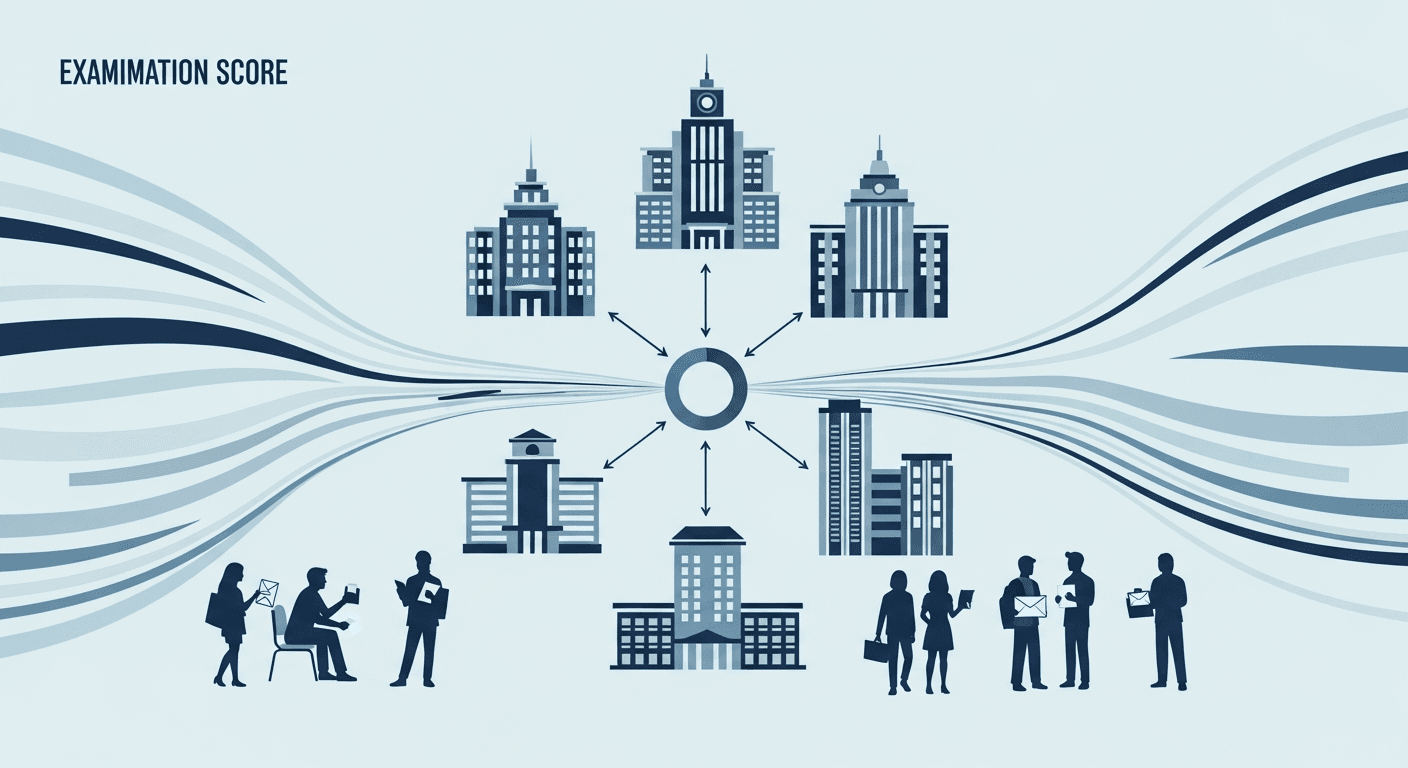
India's Most Transparent Admissions Process Runs on Digital Data
On June 2, 2026, one day after JEE Advanced results were announced, the Joint Seat Allocation Authority opened registrations for over 59,000 seats across 138 institutes — 23 IITs, IISc Bengaluru, 31 NITs, 26 IIITs, IIEST Shibpur, and 56 other government-funded technical institutes.
Over the next three weeks, hundreds of thousands of candidates will fill preferences, participate in mock allocation rounds, and receive seat allotments through an algorithm that considers their JEE Advanced rank, JEE Main rank, and verified Class 12 board marks. No interviews. No institutional discretion. No manual sorting. A candidate's rank in the algorithm determines their seat.
JoSAA is not a perfect system — candidates game preference filling, seats go unfilled, and the process spans multiple rounds over three weeks. But it is one of the most transparent and operationally rigorous admissions processes in Indian higher education. And it works only because the examination data feeding into it is digital, verified, and tamper-proof.
What Data JoSAA Ingests
The JoSAA 2026 seat allocation process draws on three primary data sources:
JEE Advanced rank: Computed from marks across two papers in Physics, Chemistry, and Mathematics. The rank list is generated and published by the organizing IIT — IIT Madras for the 2026 cycle — and is made available in machine-readable form for JoSAA to consume.
JEE Main rank: The NTA-published Common Rank List, used for NIT, IIIT, and GFTI seat allocation. JEE Main is conducted in CBT mode and results are published through NTA's digital portal.
Class 12 board marks: Candidates must meet a minimum eligibility criterion — either 75% aggregate in their board examination or top 20 percentile among successful candidates in their respective board. For SC/ST/PwD candidates, the threshold is 65%.
This third data source is the critical one. JoSAA must cross-verify each candidate's board marks against the records published by their respective board. India has 33 State Boards of Secondary Education plus CBSE, CISCE, and others. Each board publishes results through its own portal. JoSAA's virtual reporting centres verify uploaded documents and cross-check against board databases.
Why Digitisation of Board Results Makes This Possible
Before digital result publication became standard, the board marks verification in a process like JoSAA was a significant administrative bottleneck. Candidates would arrive with physical marksheets. Officials at reporting centres would verify documents against physical result gazettes or telephone the board. Errors and delays were routine.
Digital result portals changed this. When a board publishes results with roll-number-indexed digital records, institutions downstream — JoSAA reporting centres, university admission offices, scholarship databases — can verify marks quickly and with high confidence. When marks are also available through DigiLocker, the verification can be near-instant and cryptographically linked to the issuing authority.
The shift from CBSE and most state boards to digital result publication over the past decade has made JoSAA's current scale operationally possible. An allocation process that seats tens of thousands of candidates across 138 institutes in six rounds over three weeks requires data that is standardised, accessible, and trusted.
A Simple Illustration
Consider what happens when a candidate's board marks are in dispute. Under the old system, a candidate claiming their marks were entered incorrectly would need to obtain a corrected physical marksheet from their board, courier it to a JoSAA centre, and hope the change propagated before seat acceptance deadlines closed. The process took days or weeks.
Under the current digital system, CBSE's re-evaluation results flow into DigiLocker. A candidate whose marks are corrected after revaluation can present updated digital credentials. The JoSAA system can consume updated marks within the same allocation round in which the change occurs, if the timing aligns.
This is a direct consequence of digital examination infrastructure. The integrity of the downstream admissions process is only as good as the integrity of the upstream examination records.
The Eligibility Verification Challenge
The board marks eligibility check is where the current system still has gaps. Not all boards have standardised their digital record formats. Some smaller boards still publish results primarily as PDFs or static web pages rather than structured data. When JoSAA verifiers must manually cross-check against such sources, the efficiency advantage of digitisation is partially lost.
The One Nation One Data initiative, under which NAAC, NIRF, AICTE, and other bodies will draw from a single validated institutional data store, will help at the institutional level. An equivalent initiative at the student level — a unified, cryptographically verified academic record accessible to any authorised downstream system — would eliminate the manual verification bottleneck entirely.
Several countries have moved in this direction. Singapore's MySkillsFuture platform maintains a unified skills and qualifications record. The UK's UCAS system relies on digital school records to verify A-level eligibility for university admission. India's DigiLocker infrastructure exists; what remains is wider board adoption of structured, machine-readable result publication.
What JoSAA's Scale Demonstrates for Universities
JoSAA's operation offers a proof of concept that institutions running their own admission processes should study.
Merit-based, auditable allocation is scalable. JoSAA allocates seats to tens of thousands of candidates across over a hundred institutes through a rule-based algorithm that generates a complete audit trail. Every allotment can be traced to the specific rank, eligibility check, and preference order that produced it. There is no space for unexplained discretion.
Faster examination results accelerate the downstream process. JoSAA registration opens the day after JEE Advanced results. This is possible only because results are processed and published within hours of examination completion. Universities that take weeks to declare results push their own admission timelines proportionally later — disadvantaging both candidates who need early certainty and the institution itself, which loses candidates to faster competitors.
Verified board marks are a prerequisite. Institutions that run their own merit-based undergraduate admissions processes face the same board marks verification challenge as JoSAA. Institutions that build processes to handle this digitally — accepting DigiLocker credentials, cross-checking against board APIs — gain a significant operational advantage over those still relying on photocopied marksheets.
The Rankings Connection
For institutions filing data for NIRF 2026 rankings, due for submission ahead of the August rankings announcement, admission quality metrics are a component of multiple parameters. The quality of an institution's incoming cohort — measured partly through board marks and entrance ranks — feeds into Teaching, Learning and Resources scores. The speed and transparency of the admission process feeds into Graduation Outcomes.
JoSAA institutions benefit from being part of a trusted, externally verified allocation system. For autonomous colleges and private universities that manage their own admissions, building equivalent credibility requires investing in transparent, auditable processes — which in turn require reliable digital examination records.
Looking Ahead
JoSAA 2026 will conclude its seat allocation rounds through late June. For the 59,000-plus students it seats this year, the process will largely be invisible: they will receive an allotment letter, pay a seat acceptance fee, and report to their institute.
The invisibility is the point. A well-functioning admissions system based on verified digital data should feel effortless to candidates. The engineering behind it — standardised result formats, digital credential verification, algorithm transparency, audit trails — is what makes that effortlessness possible.
For India's examination ecosystem broadly, JoSAA is evidence that when examination data is digital, structured, and trusted, it can power processes that would be operationally impossible on paper. That is the case for digitising examination records at every level of the education system — not just at the apex institutions, but across every state university, affiliating body, and autonomous college.
---
Related Reading
Ready to digitize your evaluation process?
See how MAPLES OSM can transform exam evaluation at your institution.