The Admissions Deadline Trap: CBSE OSM Revaluation vs. College Entry Dates in 2026
CBSE's revaluation portal closes June 6. KEAM's deadline for submitting marks is June 7. IITs won't relax the 75% cutoff. Here is what happens when a digital evaluation rollout fails to account for the admissions pipeline downstream.
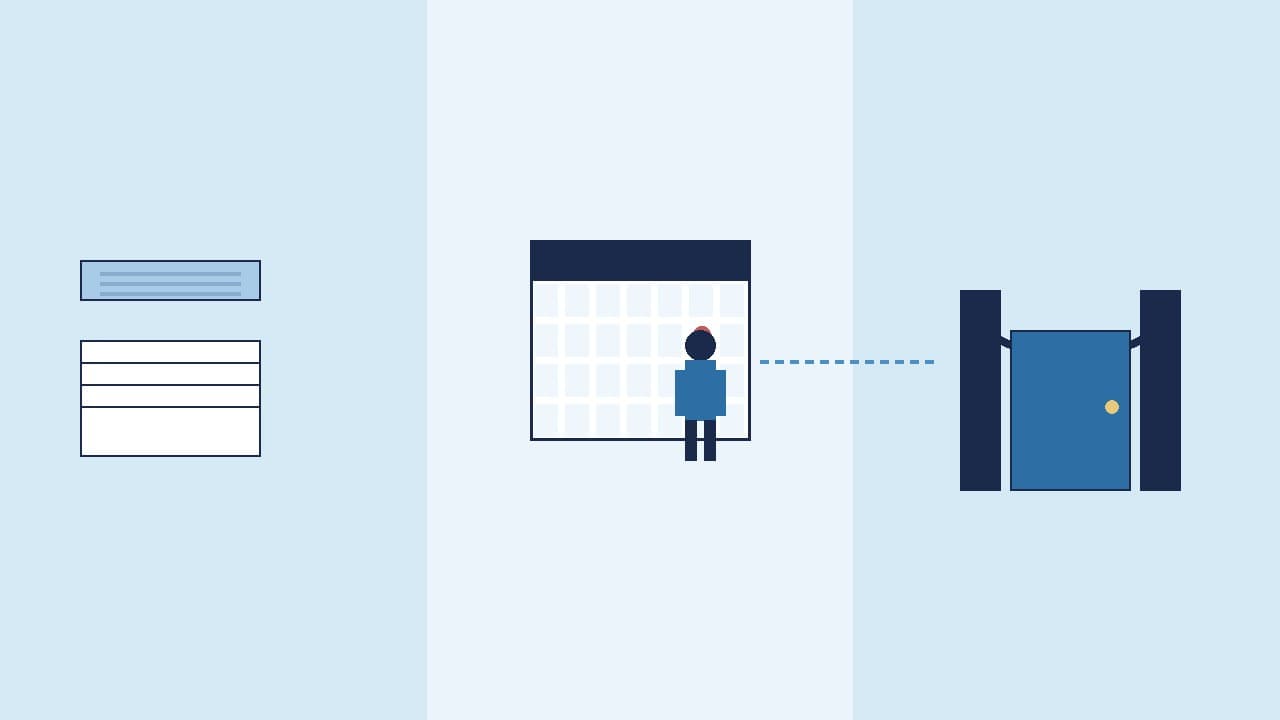
A One-Day Gap That Could Cost Students a Year
CBSE's portal for verification and re-evaluation of Class 12 answer sheets under the On-Screen Marking (OSM) system closed on the night of June 6, 2026. By that point, over 56,000 students had filed applications. Revaluation results from CBSE are expected by late June or early July at the earliest.
The Kerala Commissioner for Entrance Examinations had set June 7 as the deadline for students to submit their Class 12 marks for the KEAM 2026 engineering admissions rank list.
One day. That is the gap between a student's last chance to flag an evaluation error and the deadline that will determine their rank in one of India's largest state-level engineering counselling processes. Students whose CBSE marks improved through revaluation would not receive revised scores in time. Their original OSM-assigned marks — the very marks under dispute — would be used for KEAM rankings.
This is not an isolated administrative quirk. It is a systemic consequence of rolling out digital evaluation at national scale without building a revaluation timeline that is compatible with the downstream admission systems it feeds.
How the Collision Happened
The OSM Context
CBSE implemented On-Screen Marking for Class 12 board examinations in 2026 for the first time at full national scale, processing nearly 9.8 million answer scripts digitally. When results were declared on May 13, the overall pass percentage had dropped to 85.20% — down from 88.39% in 2025, the lowest in seven years. Students across the country reported unexpectedly low marks, particularly in Science subjects, and allegations emerged of scanning quality failures, blurred images, missing pages, and answer-sheet mix-ups.
CBSE's response was to open a revaluation portal. Over 56,000 students applied. The portal faced a 3.8 million-packet Denial-of-Service attack during peak demand. The chairman and secretary of CBSE were transferred to other government departments as the controversy escalated.
The KEAM Collision
KEAM — Kerala Engineering Architecture Medical entrance — is a state-level counselling process that uses a combined score of entrance test performance and Class 12 board marks. A student's Class 12 percentage directly affects their rank in the KEAM merit list. Even a two or three-mark improvement through revaluation can shift a student's rank by hundreds of positions, potentially moving them into a different engineering college or course.
With CBSE revaluation results not expected before late June and Kerala's June 7 deadline firm, students who applied for revaluation are competing for KEAM seats using marks they themselves believe are incorrect. Parent groups submitted representations to the Kerala Higher Education Ministry seeking an extension, and Higher Education Minister Roji M John indicated the government would examine the issue. As of the date of this article, no formal extension had been announced.
The IIT Eligibility Wall
At the national level, JEE Advanced-qualified students who scored below 75% in CBSE Class 12 because of OSM-related marking disputes found themselves in a harder position. The 75% aggregate in Class 12 boards is a mandatory eligibility criterion for admission to IITs through JOSAA counselling.
IIT Roorkee — the organising institute for JEE Advanced 2026 — firmly declined to relax the threshold. The institution noted that 36 different school boards participate in JEE admissions and that uniform reduction of the criterion would be unfeasible. It stated it was "in close touch with CBSE" and would try to resolve individual cases, but no structural relaxation was offered.
For a student who cleared JEE Advanced but scored 73% in CBSE Class 12 because an evaluator marked a page incorrectly under OSM, this is not an abstract policy issue. It may mean a year lost.
The Structural Problem
The mismatch exposed by the CBSE OSM rollout is not primarily a technology failure. It is a systems design failure.
Examination boards do not operate in isolation. Their results feed into an interconnected ecosystem of admission processes, each with fixed timelines, weightage formulas, and eligibility thresholds. When the examination board introduces a new digital evaluation system, the revaluation timelines that system produces must be compatible with every downstream process that depends on its marks.
This requires three things that were absent from CBSE's 2026 OSM rollout:
Pre-declared revaluation SLAs: Admission authorities, universities, and counselling bodies need to know, before the exam cycle begins, how long re-evaluation under OSM will take. If OSM revaluation takes 30 days, admission deadlines should accommodate 30 days. If admission deadlines cannot move, the revaluation system needs to be faster.
Provisional admission mechanisms: Several universities have used provisional admission practices in the past — admitting students based on pending results with the final seat confirmed once marks are verified. A well-designed OSM revaluation pipeline should include a standard mechanism for examination boards to issue provisional result certificates that admission authorities can accept.
Coordination between examination and admission bodies: The KEAM-CBSE gap emerged partly because the two systems — one state, one central — do not share a common planning calendar for revaluation timelines. That coordination gap is addressable. It requires the examination body to proactively inform state admission authorities of expected revaluation timelines each year, ideally before results are declared.
Who Else Is Affected
KEAM and JEE Advanced are the most visible examples, but the admissions cascade from CBSE OSM's revaluation delay is wider.
Delhi University's Common Seat Allocation System (CSAS) uses Class 12 marks as the primary admission criterion across most undergraduate programmes. DU's admission process typically begins in late May and runs through July, precisely the window in which CBSE revaluation results were pending.
Medical admissions through NEET-UG counselling by the Medical Counselling Committee (MCC) also factor Class 12 marks for a subset of state quotas and deemed universities, creating similar downstream risks for MBBS aspirants with OSM mark disputes.
State-level engineering counsellings in Maharashtra, Karnataka, and Tamil Nadu use Class 12 percentages as tiebreakers or eligibility filters. Any systematic downward shift in Class 12 marks from OSM affects the fairness of these processes for CBSE students competing against state board students whose scores were evaluated through more established systems.
What Proper OSM Deployment Looks Like
Boards and universities planning digital evaluation transitions in the future need to build admissions pipeline compatibility into the design phase, not treat it as an afterthought.
A practical framework includes:
The CBSE OSM controversy of 2026 will shape how Indian examination bodies approach digital evaluation for years to come. The lesson is not that digital evaluation failed. Several boards — ICAI, JEE Advanced, and multiple state boards — have run digital evaluation without comparable controversy. The lesson is that any examination system that processes millions of scripts must design its revaluation pipeline with the same rigour it applies to the evaluation pipeline, and must account for every system its marks feed.
A student clearing JEE Advanced after a year of preparation should not lose an IIT seat because a digital evaluation system lacked a workable revaluation SLA.
Related Reading
Ready to digitize your evaluation process?
See how MAPLES OSM can transform exam evaluation at your institution.