CPPT: The Hybrid Exam Model That Could End India's Question Paper Leak Problem
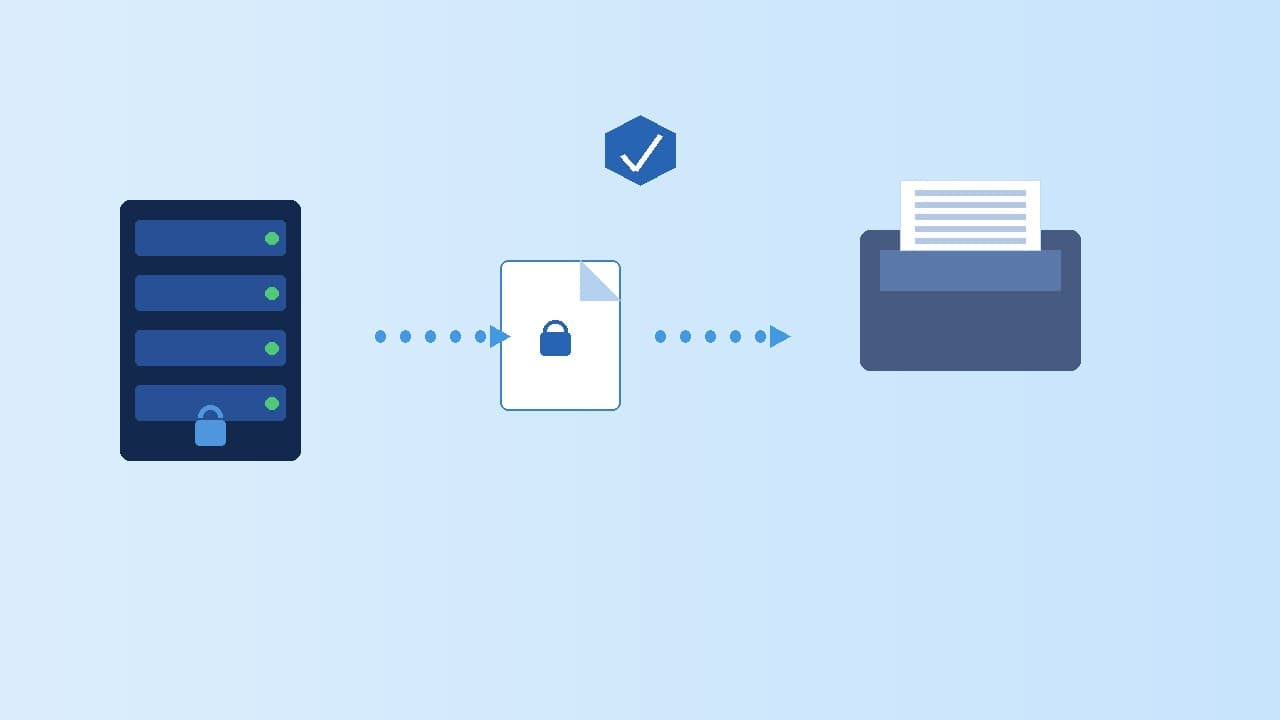
Computer-assisted Secure Pen-and-Paper Testing encrypts and transmits question papers digitally, printing them locally at the exam centre minutes before the exam. Here is how it works and why universities should be paying close attention.
The Problem With Both Extremes
India's examination system has been debating two models for years: paper-based exams (pen-and-paper, traditional, familiar to students and faculty) and computer-based tests (CBT, used by JEE Main, CUET PG, and UGC NET).
Each has its limitations. Paper-based exams create a physical supply chain — question papers must travel from printing facilities to examination centres across geography, creating multiple interception opportunities. CBT eliminates the physical paper entirely but requires significant infrastructure: large numbers of networked computers, stable power and internet, trained proctors, and a student population comfortable with screen-based assessment.
For most of India's 1,000+ affiliating universities and their tens of thousands of affiliated colleges, CBT at scale remains out of reach. The computer lab capacity, internet bandwidth, and technical staffing needed for simultaneous CBT across hundreds of centres in a single examination event is simply not available.
The K. Radhakrishnan Committee on examination reform, constituted after the NEET-UG 2025 controversy, proposed a third way: CPPT — Computer-assisted Secure Pen-and-Paper Testing.
What CPPT Is
CPPT is a hybrid examination delivery model. The key elements are:
The critical security gain is in the transit phase. Under the conventional model, question papers exist as physical objects for days or weeks before the exam, transported across supply chains that involve printing presses, packaging operations, transport contractors, and examination centre staff. Each handoff is a potential leak point.
Under CPPT, there is no physical question paper until approximately 30 minutes before the exam starts. There is nothing to intercept from a printing press. There is nothing to photograph at a transport checkpoint. There is no sealed envelope that can be opened and resealed.
What CPPT Does Not Solve
Being clear about the limits of CPPT matters for implementation planning.
CPPT addresses transit-based leaks — the interception of physical papers between the printing stage and the examination hall. This is the primary mechanism behind the NEET-UG 2025 and 2026 leak patterns, which involved printing press workers, transport handlers, and examination centre staff with access to sealed materials before exam day.
CPPT does not address insider leaks at the paper-setting stage — the category demonstrated by the Uttarakhand Technical University case in July 2026, where the paper setter himself shared questions with students. In a CPPT system, the paper setter still creates questions in a digital environment. If that environment is not controlled — if the paper setter can copy questions to personal devices or share them via messaging apps — the insider leak vulnerability remains.
Addressing insider threats requires separate controls: audited question authoring environments, randomised question banks, multi-layer moderation before finalisation, and the separation of question creation from question composition.
CPPT and digital question management are complementary, not alternative, security layers.
The Infrastructure Required for CPPT
For universities considering CPPT implementation, the infrastructure requirements are substantially lower than full CBT:
At the Central Level
| Component | Requirement |
|---|---|
| Encrypted question paper server | Secure, access-controlled central repository with key management capability |
| Transmission mechanism | Encrypted file transfer over HTTPS or offline media (USB with encrypted container) |
| Key management system | Time-locked decryption keys issued per centre per exam per date |
| Audit logging | Full log of who accessed the server, when, from which terminal |
At the Examination Centre Level
| Component | Requirement |
|---|---|
| Dedicated offline server or laptop | To receive and store the encrypted paper file before exam day |
| Printer(s) | Laser printers capable of printing the required number of paper sets within 15–30 minutes |
| Toner and paper stock | Sufficient for the examination and a 20% margin for misprints |
| Local network (optional) | Internal network connecting server to printer; no internet required |
| Power backup | UPS or generator to ensure printing completes without interruption |
Notably, this list contains no requirement for student-facing computers, high-speed internet, or computer labs. CPPT is designed to work in examination environments that already exist, adding security without requiring new student infrastructure.
CPPT and University Examinations: The Opportunity
The Nandan Nilekani task force, constituted after NEET-UG 2026, has recommended CPPT as a priority reform for large centralised examinations including NEET, JEE, and CUET. National Testing Agency reform proposals include building 1,000 Secure Testing Centres at IITs, NITs, and Kendriya Vidyalayas equipped for CPPT and CBT delivery.
These centres are designed for NTA examinations. University-level examinations — semester exams across thousands of affiliated colleges — are not in scope for the NTA infrastructure programme.
This creates a policy gap that universities themselves will need to fill.
The good news is that CPPT is implementable at university scale without NTA involvement. A state university conducting semester examinations across, say, 200 affiliated colleges needs:
For many universities, the technology exists. What is missing is the policy decision to require it, the process design to implement it, and the training to operate it.
How CPPT Supports NAAC and NIRF Evidence
For institutions navigating the NAAC binary accreditation framework and the NIRF data submission process, CPPT implementation generates several categories of useful evidence.
NAAC Criterion 6 — Governance, Leadership and Management: NAAC metric 6.2 evaluates the institution's use of technology in administrative and governance processes. Documentation of a structured CPPT-based examination delivery system, including security protocols and audit logs, directly addresses this criterion.
NAAC Criterion 2 — Teaching-Learning and Evaluation: Metric 2.5 covers examination reforms. Implemented CPPT with documented procedures, staff training records, and incident logs demonstrates substantive examination reform rather than procedural change.
NIRF Teaching, Learning and Resources (TLR) parameter: NIRF evaluates the quality of the teaching-learning environment. While CPPT does not directly score as a TLR metric, institutions with lower paper leak incidents maintain the examination credibility that supports stronger student outcome data — which does score.
NIRF Graduation Outcomes (GO) parameter: Institutions where examination results are trusted — where students and employers do not question whether grades reflect genuine performance — score better on outcome indicators over time. Examination integrity is an upstream driver of outcome credibility.
A Practical Implementation Roadmap for Universities
For a university examination cell planning to adopt CPPT, a phased approach reduces risk:
Phase 1 — Pilot (one semester, selected subjects or centres)
Phase 2 — Expansion (one full examination cycle, selective subjects)
Phase 3 — Full deployment
The Larger Picture
India's 2026 examination calendar has been marked by paper leak incidents across a range of institution types — national-level entrance exams, state boards, technical universities, and AYUSH medical programmes. Each incident costs students time, erodes public confidence in credentials, and imposes administrative burdens on institutions.
The debate about CBT as the ultimate solution misses a critical point: CBT cannot be universally mandated for subjective examinations at university scale in the near term. Pen-and-paper subjective exams will remain the primary format for a substantial portion of Indian higher education for years.
CPPT is not a compromise between security and accessibility. It is a design that delivers full transit security within the pen-and-paper format that students, faculty, and institutions already understand. It does not require students to learn new technology. It does not require colleges to build computer labs. It requires a server, a printer, and a process.
For universities that have already invested in digital answer-sheet evaluation — scanning, onscreen marking, digital marks processing — adding CPPT on the question-paper side completes the integrity loop. From the moment a question is authored to the moment a mark is recorded, the entire examination process exists in a controlled, auditable digital environment. That is the standard Indian universities should be aiming for.
Related Reading
Ready to digitize your evaluation process?
See how MAPLES OSM can transform exam evaluation at your institution.