Bihar's University Examination Reform: Inside the State's Digital Evaluation Push
Bihar's 33 state universities serve over 5 million students. A February 2026 digital evaluation proposal awaits the governor's approval while an August 2026 reform committee has three months to recommend the way forward.
India's Largest State University System Faces a Reckoning
Bihar runs one of India's largest state university systems. Its 33 universities — including Patna University, Babasaheb Bhimrao Ambedkar Bihar University (BRABU) in Muzaffarpur, Tilka Manjhi Bhagalpur University, Lalit Narayan Mithila University, and Magadh University — collectively serve over 5 million students. The scale of examination operations is enormous: hundreds of thousands of answer scripts evaluated every semester, results expected across dozens of subjects, and millions of marksheets printed and distributed annually.
The examination infrastructure underlying this system has not kept pace with enrollment growth. In July 2025, BRABU declared postgraduate third-semester results that showed a student had scored 257 marks out of a 100-mark maximum — and was still declared not promoted. University officials attributed the anomaly to a data-entry mistake in an Excel sheet. Nearly 9,000 students had appeared for that particular examination.
This type of error — arithmetically impossible marks produced by manual tabulation — is not exceptional. It is the predictable output of a system that scales evaluation volume without scaling the verification infrastructure around it.
The February 2026 Proposal
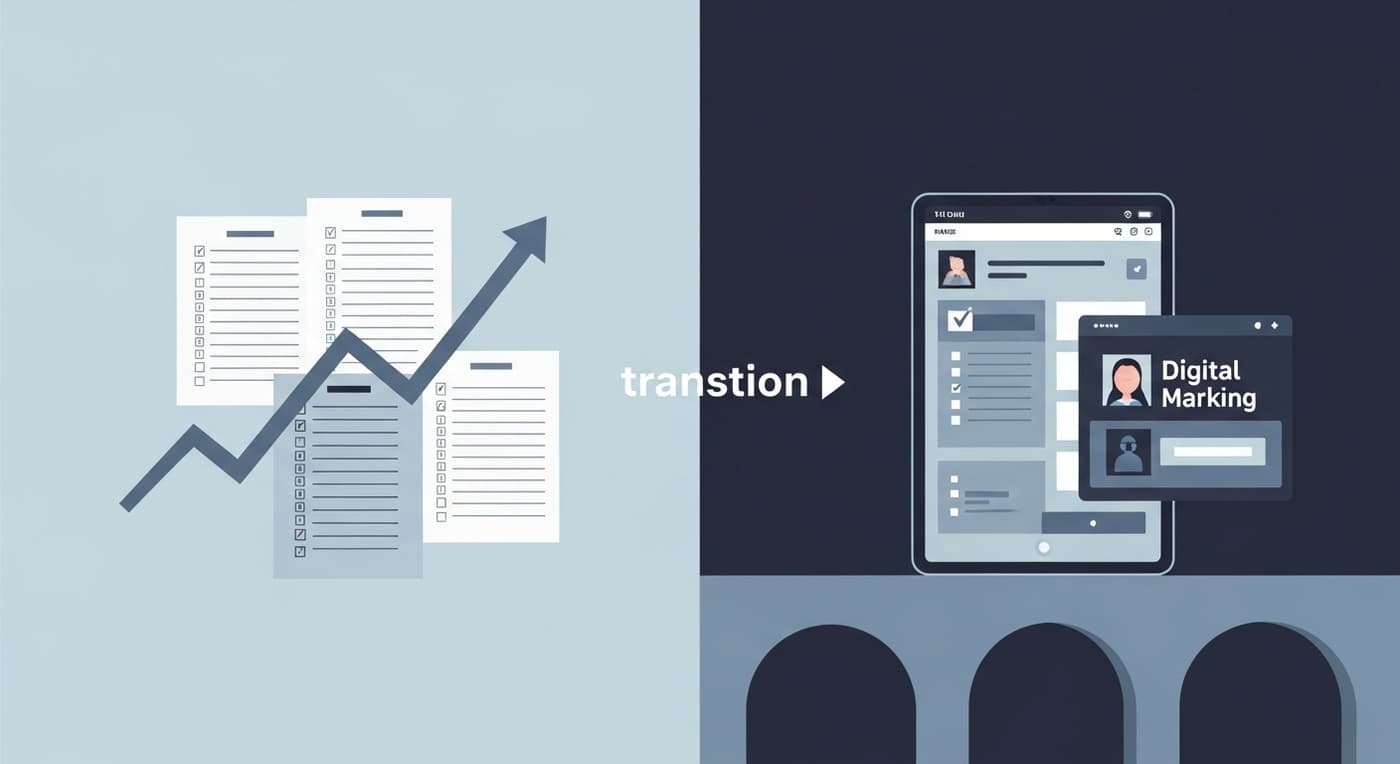
In February 2026, Education Minister Sunil Kumar addressed the Bihar Legislative Council on the government's plan to shift university examinations to digital evaluation. The proposal involved scanning answer scripts into a digital system and distributing them to evaluators through a secure platform, replacing the current model of physical distribution of paper bundles.
The minister clarified that the initiative would apply initially to university examinations only. School and intermediate board examinations would continue under their existing processes in the first phase.
One structural constraint distinguishes Bihar's reform path from that of states like Uttarakhand or Punjab: the state's universities operate under a constitutional arrangement where the governor serves as chancellor. The February proposal was submitted to Lok Bhavan Patna — the governor's secretariat — and awaits final approval before any phased rollout can begin.
This approval requirement adds a layer of governance that other states' education departments can navigate more directly. As of the last publicly available information, the proposal had not received final clearance.
The August 2026 Exam Reform Committee
On August 24, 2026, the Bihar government issued a formal notification establishing a five-member committee for examination reforms. The committee's mandate covers university examinations and includes specific attention to:
The committee has three months from formation to submit its recommendations to the state government — putting the deadline at approximately late November 2026. Its findings are expected to form the basis for a legislative or regulatory framework, potentially feeding into the new University Bill that Bihar has been preparing.
This is significant. Bihar has historically enacted examination-related changes through executive orders within individual universities rather than through unified state-level regulations. A committee with a defined mandate and deadline, operating at the state level, represents a more structured approach.
Why the Stakes Are High
Bihar's university examination system operates under pressures that make the case for digital evaluation particularly urgent.
Volume without infrastructure: A state with 5 million university students produces an examination volume comparable to that of a mid-sized country. Yet evaluation centres remain largely manual, result tabulation relies on processes that have not changed substantially in decades, and grievance redressal infrastructure is fragmented across institutions.
Economic consequences of delayed results: A delayed or erroneous result in Bihar's university system affects students seeking central government employment, where academic records are verified against institution-issued documents. An error that is corrected months after a competitive exam cycle closes can permanently foreclose an opportunity.
The Excel-based tabulation problem: The BRABU case — student scoring 257 out of 100 — is not a story about a single data entry mistake. It is a story about a tabulation system that produces no automatic validation. A digital evaluation platform that computes marks directly from evaluator input, with automated range checks and aggregation rules, would flag a marks-total mismatch before it ever reached a result sheet.
What Digital Evaluation Means for Bihar's Universities
When — or if — Bihar's governor approves the February 2026 proposal, the practical rollout will face several implementation challenges that are worth examining in advance.
Scanning infrastructure at scale: Bihar's universities are spread across districts with variable infrastructure quality. High-speed scanning of answer scripts requires reliable power and connectivity at evaluation centres. A phased rollout — starting with one university or one examination cycle — is the established best practice.
Evaluator training: University teachers who currently assess paper answer books in their homes or at evaluation centres will need to learn to use a digital marking interface. Evaluator orientation takes time; the CBSE experience showed that inadequate training leads to marking inconsistencies that undermine the system's purpose.
Connectivity and device access: A secure digital evaluation platform requires that evaluators can access it from devices they control. In a state where many evaluators may rely on shared or mobile-only internet access, institutions need to build connectivity assumptions into their rollout plan rather than assuming it as given.
Audit and grievance infrastructure: One of the primary benefits of digital evaluation — the ability to retrieve and review a specific evaluator's markings on a specific script — is also its most valuable governance feature. Bihar universities will need to build the examination department capacity to use this audit trail, not just generate it.
What Happens at the November 2026 Deadline
The five-member committee's report, due in late November 2026, will land at an important moment. Bihar's odd-semester examination cycle typically runs through November-December. If the committee recommends a phased pilot of digital evaluation, implementation in any meaningful form would not begin before the January-April 2027 examination season at the earliest.
Universities in Bihar that are watching this process should use the intervening months productively: conducting internal audits of current error rates in result declaration, mapping the volume of annual examination scripts by programme, and assessing the scanning and connectivity infrastructure at their evaluation centres. The groundwork for digital evaluation is administrative as much as technical.
The experience of states like Uttarakhand — where the government directed universities to adopt onscreen digital evaluation from January 2026 — and institutions like J.C. Bose University in Haryana, which published results within 30 days of examinations using a fully digital workflow, provides a roadmap. Bihar's scale demands a more carefully staged approach, but the direction is clear.
Related Reading
Ready to digitize your evaluation process?
See how MAPLES OSM can transform exam evaluation at your institution.