34,637 Students Nearly Failed for Someone Else's Data Entry Error: UP Board's 2026 Marks Crisis
An April 2026 audit of UP Board results found tens of thousands of students with blank practical marks across 652 exam centers — students who would have been declared failed despite passing their theory papers.
The Audit That Found a Crisis
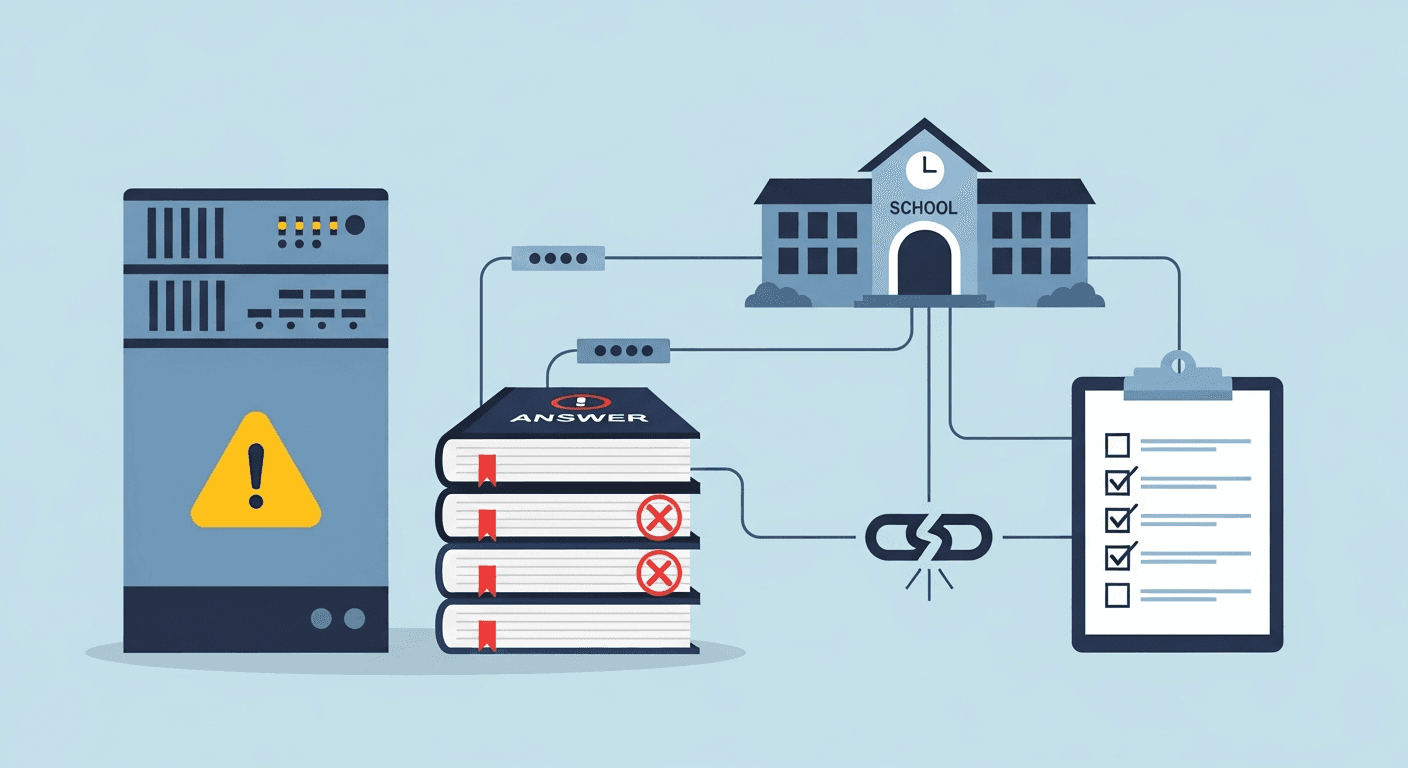
In early April 2026, as the Uttar Pradesh Madhyamik Shiksha Parishad (UPMSP) moved toward declaring Class 10 and Class 12 results — expected between April 20 and April 25 — a routine data audit at board headquarters uncovered something alarming. Approximately 34,637 students across 652 examination centres had zero or blank entries in their practical marks columns.
These were not students who had skipped practical exams or been marked absent by mistake. In many cases, the exams had been conducted, the marks had been awarded, and the answer sheets had been submitted — but the data had never been uploaded to the board's central system. The columns were blank because no one had entered the numbers.
Under standard board rules, a blank practical score is treated as zero. A student who scores zero in practicals — regardless of their theory performance — cannot pass. Tens of thousands of students who had likely performed adequately in their practical examinations were at risk of being declared Failed or assigned an Incomplete Result (INC) because of an administrative failure at their exam centre.
The Emergency Response
The board took immediate action. An emergency data portal was opened, and the 652 defaulting examination centres were notified that this was their "absolute final chance" to upload pending practical marks. The portal window closed on April 7, 2026 — a 48-hour turnaround.
The language from board authorities was stark. Centres that failed to upload within the window would face accountability proceedings, and students at those centres would bear the consequences in their result.
This emergency escalation — a forced 48-hour sprint to correct data that should have been entered weeks earlier — is itself a symptom of how fragile the current system is. When data entry depends entirely on human compliance at the school level, with no automated monitoring, errors accumulate silently until a downstream audit catches them.
CBSE Faced the Same Problem, Months Earlier
The UP Board was not alone in this. CBSE issued a similar emergency notice in February 2026, directing all affiliated schools to complete and upload practical examination, project, and internal assessment marks for Classes 10 and 12 by February 14, 2026. At the deadline, approximately 30% of schools had still not completed the process.
The scale is different — CBSE's practical marks affect 17 lakh+ Class 12 students — but the structural failure is identical: practical marks are entered manually by schools into a central portal, with no real-time verification that the data is complete or accurate.
When 30% non-compliance is the norm in one system, and 34,637 missing records are discovered days before results in another, it is not a coincidence. It is a pattern.
Why This Keeps Happening
Practical Marks Are a Multi-Party Problem
Unlike theory examinations, where answer sheets flow through a controlled distribution and collection chain, practical exams are conducted at the school level. The examiner attends the school, evaluates students, and submits marks — but the actual data entry into the central system is done separately, by school staff, through a web portal.
This creates a gap between the event (the practical exam) and the system of record (the board's database). Nothing in the current process enforces that these two are ever reconciled. Schools can conduct an exam, award marks, and simply fail to upload the data — and the board has no automated way to know this has happened until it runs an audit.
Manual Compliance Cannot Scale
The UPMSP manages results for over 55 lakh students appearing in Class 10 and Class 12 combined. Even if 99% of exam centres submit marks correctly, the remaining 1% represents hundreds of centres and potentially thousands of students. At the scale of UP Board, manual compliance checks are not reliable.
Incentives Are Misaligned
Schools face no immediate consequence for late practical mark submission until a deadline is imminent. Without real-time monitoring that flags missing records the moment they become overdue, the problem is invisible until it becomes a crisis.
What Integrated Digital Evaluation Changes
The UP Board practical marks crisis illustrates a specific failure mode that integrated digital evaluation systems are designed to prevent.
Real-Time Completion Dashboards
In a purpose-built evaluation management system, every evaluation task — practical mark entry included — is tracked in real time against a list of expected records. If a student was registered for a practical exam, the system expects a mark. If no mark has been entered by a configurable deadline, an automated alert is triggered for the school, then the regional office, then the board.
The crisis that required a 48-hour emergency window would, in this model, have been flagged weeks earlier as a routine compliance gap — with enough time for normal correction.
Integrated Scanning and Submission
For descriptive exams, digitisation at source is the solution. When answer books are scanned and uploaded to an evaluation platform immediately after collection, the system has a physical count: X answer books received = X evaluations expected. If evaluations fall short, the gap is immediately visible.
Audit Trails for Every Action
Digital platforms create a timestamped record of every mark entry, modification, and submission. If a school enters marks late, the record shows when they were entered and who entered them. This accountability mechanism acts as a compliance incentive without requiring manual supervision.
The Student Welfare Dimension
It is worth being direct about what was at stake for those 34,637 students.
In India's board examination system, a student who fails — even on a technical administrative ground — faces consequences that ripple well beyond the academic year. College admissions, scholarship eligibility, and family expectations are all affected. A student who performed adequately in their practical examination and has no recourse for a blank-entry failure is not in a recoverable position within a normal academic calendar.
This is not a hypothetical. In previous years, students at UP Board have been mistakenly marked "Absent" during the marks-entry phase. Unless corrected in time, those students were declared failed. Many discovered the error only after results were published, by which point the damage to college admissions was already done.
The question the UP Board's 2026 experience puts squarely on the table is this: should the validity of a student's examination result depend on whether a data entry task was completed at their school? In a paper-based, manually-managed system, the answer is effectively yes. That is a system design problem, not a staffing problem.
What Needs to Change
The corrective action is not about firing school coordinators or imposing stricter penalties after the fact. The correction needed is architectural:
The UP Board's situation is a case study in what systemic examination management reform looks like in practice. The technology exists. The cost of not building it — measured in student welfare, administrative emergency, and institutional credibility — is demonstrably higher than the cost of building it.
---
Related Reading
Ready to digitize your evaluation process?
See how MAPLES OSM can transform exam evaluation at your institution.