Tamil Nadu SSLC 2026: Inside India's Largest State Evaluation Challenge
With 8.8 lakh answer scripts entering evaluation from April 6, Tamil Nadu's SSLC season illustrates why India's state boards urgently need a digital answer to paper-based checking.
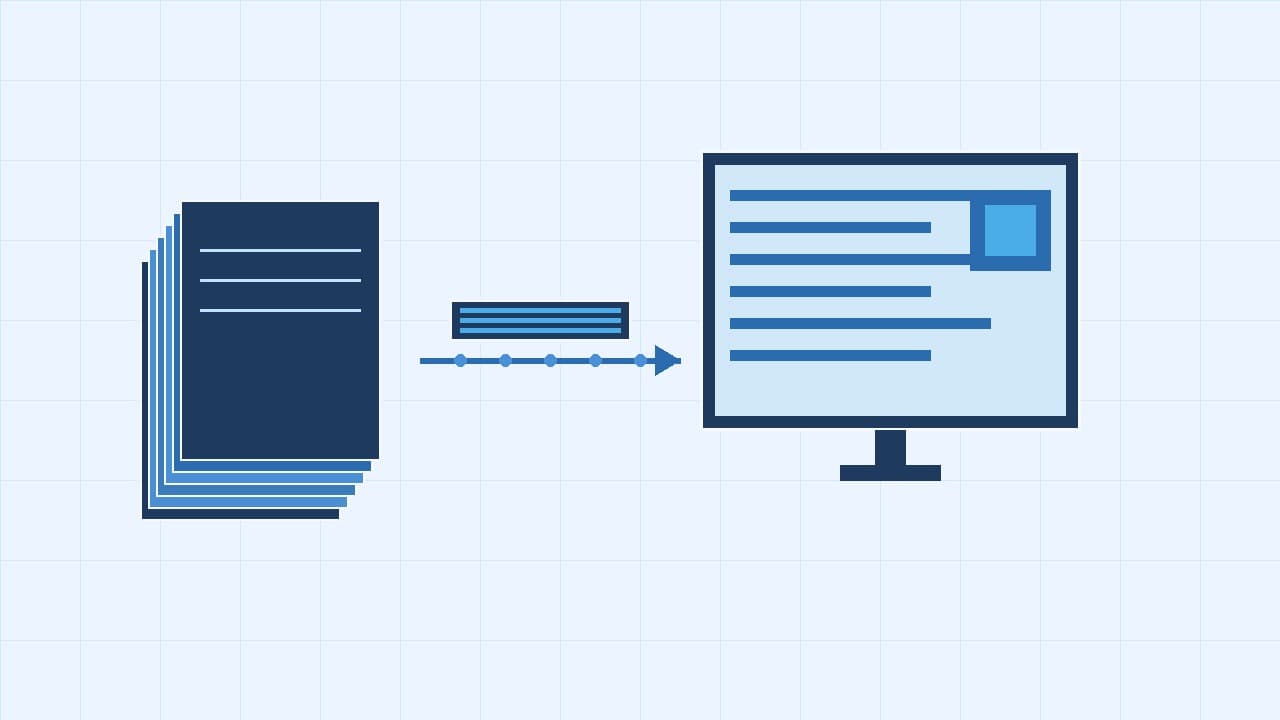
April 6: The Date 8.8 Lakh Papers Begin Their Journey
On April 6, 2026, answer sheet evaluation for the Tamil Nadu SSLC (Class 10) public examinations commenced across the state. The Directorate of Government Examinations reported that 8,82,806 students appeared for the examinations this year — each producing answer scripts across multiple subjects that must be checked, totalled, moderated, and tabulated before results can be declared.
Simultaneously, Karnataka began evaluating third-language papers (Hindi, Sanskrit, and regional languages) from April 9. Uttar Pradesh concluded its board evaluation cycle on April 4, with results expected in the last week of April. Maharashtra and Rajasthan are in the middle of their own evaluation seasons.
In any given April-May window, India processes somewhere between 15 and 20 crore answer scripts across state boards alone — a logistical undertaking that consumes thousands of teacher-weeks and millions of rupees in physical infrastructure, transport, and administration.
How Manual Evaluation Works at State Board Scale
For boards like the Tamil Nadu Directorate of Government Examinations, the evaluation process follows a well-worn but demanding sequence. After exams conclude, answer scripts are bundled at examination centers and transported to regional evaluation camps — typically government schools, colleges, or community halls provisionally converted into marking facilities.
Schools receive government orders relieving specific teachers from regular duty for the duration of the evaluation period, typically two to three weeks. These teachers travel to their assigned evaluation center, register, collect a bundle of scripts, and evaluate under the supervision of a Head Examiner. Marks are written on answer scripts and recorded in paper mark ledgers. A second-round totalling check follows, and marks are then manually entered into tabulation software — or in some districts, onto paper tabulators.
The system works, in the sense that results eventually get published. But the friction at every stage is significant.
The Scale Problem in Numbers
To appreciate the weight of Tamil Nadu's 8,82,806 students: assuming a typical examination scheme of 6 papers per student, the state's evaluators must check approximately 53 lakh answer books in under four weeks.
A diligent examiner checking 30-35 scripts per day (a realistic rate for most subjects) evaluates roughly 700 scripts over a four-week evaluation period. To clear 53 lakh scripts in that window, you need approximately 7,500 active evaluators working simultaneously — all away from their schools and classrooms.
The Teacher Availability Crunch
India's teacher shortage compounds this challenge. Nationally, there are approximately 9.83 lakh sanctioned but unfilled teaching posts. In higher secondary schools, subject-specialist availability is particularly thin. When an evaluation camp requires 200 Physics teachers from a given district, the district's actual pool of qualified Physics teachers may be only slightly larger — leaving many schools functionally without their science faculty during April-May.
This creates a contradiction: evaluation season coincides with revision and practical examination schedules for students who are about to appear for their own board exams. Schools effectively lose their most experienced teachers precisely when students need them most.
Where Things Go Wrong: The Paper Trail's Weak Links
Manual evaluation at this scale introduces failure points that are difficult to audit after the fact.
Totalling errors remain surprisingly common. A 2023 analysis of re-evaluation petitions across three state boards found that nearly one in twelve re-checked scripts had a totalling discrepancy — not a marking disagreement, but a simple arithmetic error in adding up question-wise marks. Digital systems eliminate this category of error entirely through automated summation.
Script security during transport is another concern. Physical answer books pass through multiple custody points — collection centers, district offices, evaluation camps, and tabulation centers — with varying standards of documentation at each hand-off. Missing scripts, water damage, and labeling errors regularly affect a small fraction of the total, but that fraction represents thousands of students.
Examiner fatigue affects consistency. Research on human evaluation behavior consistently shows that marking quality declines over long sessions and across large bundles. The first script in a bundle is often evaluated differently from the last. Without digital monitoring tools, chief examiners cannot detect these drift patterns in real time.
The CBSE Model: What State Boards Are Watching
The Central Board of Secondary Education's rollout of On-Screen Marking (OSM) for Class 12 in 2026 offers a reference point for state boards planning digital transitions. Under CBSE's OSM implementation:
CBSE has clarified that Class 10 evaluation remains in physical mode for 2026, with the OSM transition being staged. State boards are observing this rollout carefully, especially the logistical details around scanner procurement, network bandwidth requirements, and evaluator training.
What a Digital Transition Looks Like for a Board Like Tamil Nadu's
Moving from paper to digital evaluation at the scale of Tamil Nadu's SSLC does not happen overnight. Infrastructure requirements include:
Several state boards in India have conducted limited digital pilots — Rajasthan State Open School (RSOS) transitioned its open-school evaluation to digital well before CBSE's main board adoption. These pilots offer practical data on scanner throughput, evaluator adaptation curves, and server load patterns.
The Student Perspective: Faster Results, Fewer Disputes
The downstream benefits of digital evaluation compound at scale. When Tamil Nadu's SSLC results are declared, typically in May or June, students anxiously wait to confirm eligibility for higher secondary programs — many of which have fixed admission windows. Days saved in result declaration have real consequences for student planning.
Faster results are only part of the story. When a student challenges their marks through a revaluation petition, physical systems require the script to be physically retrieved, transported to a re-evaluation venue, and checked again — a process that can take six to eight weeks. Digital systems allow instant retrieval and remote re-evaluation, compressing this to days.
The reduction in revaluation disputes also benefits boards. Digital double valuation — where a second evaluator independently marks the same script and discrepancies are flagged automatically — catches most genuine marking errors before results are declared, rather than after. This reduces the volume of post-result grievances substantially.
The Path Forward
India's April-May evaluation season is simultaneously the country's largest quality-assurance exercise for its students and one of its least-digitized administrative processes. Tamil Nadu's 8.8 lakh students in 2026 deserve the same accuracy and speed being built into CBSE's digital systems.
The transition is not a question of whether but when. Boards that begin their digital evaluation infrastructure projects now — starting with scanning capacity and network readiness surveys — will be positioned to pilot digital evaluation for at least one subject group within two to three examination cycles.
The paper mountain that materializes every April does not need to be permanent.
---
Related Reading
Ready to digitize your evaluation process?
See how MAPLES OSM can transform exam evaluation at your institution.