SWAYAM MOOCs in the July 2026 Semester: What the Credit Integration Mandate Means for University Examination Systems
UGC has directed universities to incorporate SWAYAM MOOCs into the July 2026 semester, allowing students to earn up to 40% of course credits online. Universities that have not yet built digital examination records infrastructure will find this mandate harder to execute than it appears.
A Quiet Policy Change With Large Operational Consequences
The University Grants Commission's instruction to Higher Education Institutions to incorporate approved SWAYAM MOOCs into their curriculum for the July 2026 semester did not make the kind of headlines that a NEET controversy or a board result delay would generate. But for examination registrars and controllers of examination across India's 1,100-plus universities, it represents a more structurally significant challenge than most regulatory communications they receive in a given year.
The core provision is simple: under UGC's Credit Framework for Online Learning Courses through SWAYAM, universities can permit students to obtain credits for up to 40 percent of the courses in a programme in a given semester through SWAYAM online courses. Students who complete these courses and pass the associated proctored end-term examinations receive certificates from the national coordinator — typically NPTEL, IGNOU, or the host IIT — carrying a credit count and a grade. Those credits can then be transferred into the student's academic record at their parent institution.
The simplicity of the framework at the policy level masks the operational complexity at the institutional level. A student earning 40 percent of their semester credits through SWAYAM means that 40 percent of what appears on their marksheet originated outside the university's own examination system — assessed, graded, and certified by a different body, under a different rubric, on a different platform.
How the Credit Transfer Chain Actually Works
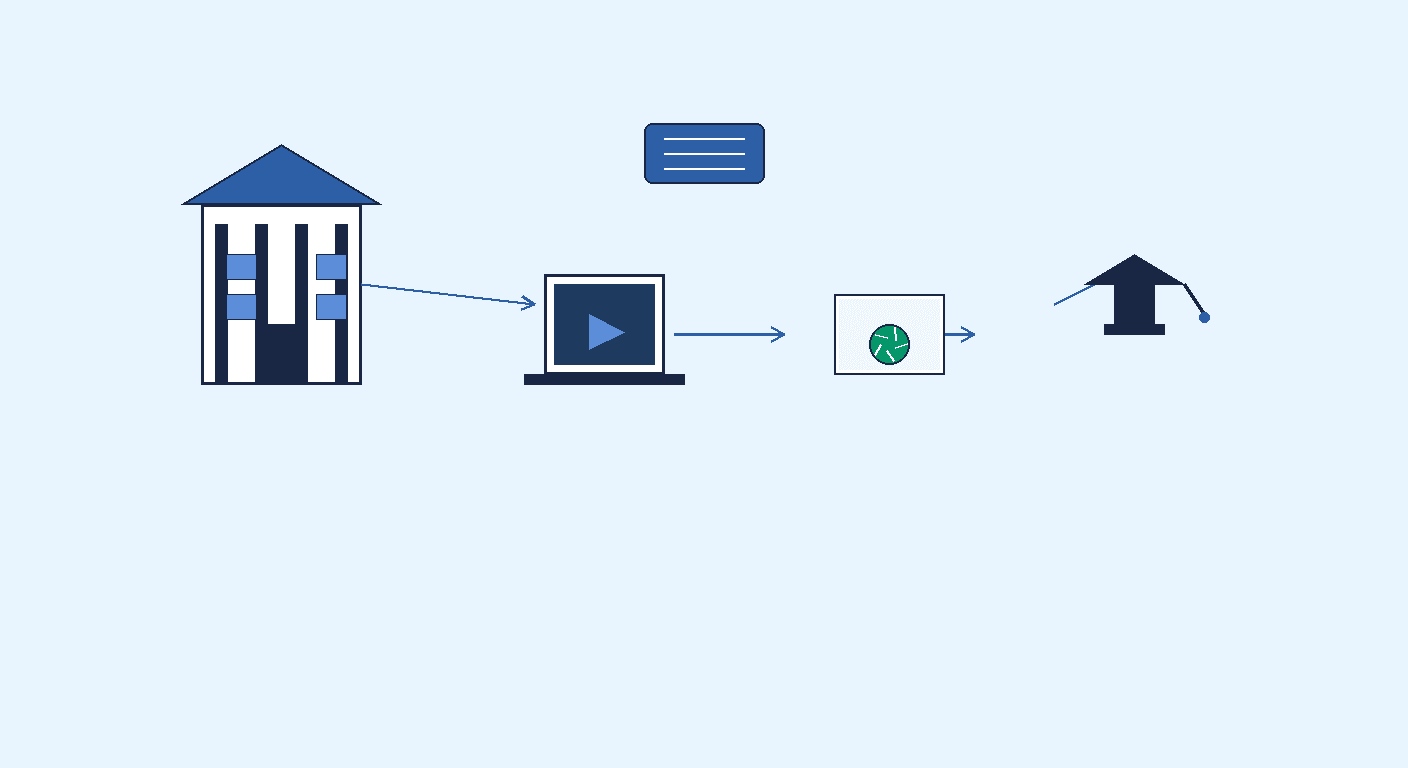
The Academic Bank of Credits (ABC) is the technical infrastructure that is supposed to make this seamless. Here is the intended flow:
In institutions where this infrastructure is fully in place, the process is relatively smooth. The ABC portal has scaled significantly — over 26.35 crore APAAR IDs have been generated as of mid-2026, making it one of the world's largest student digital identity systems. UGC set a hard deadline of June 30, 2026 for all HEIs to upload 2025 academic records to the NAD/ABC platform, with an explicit warning that institutions missing the deadline may not receive another opportunity.
The question is what happens at the institutional end when the certificate arrives.
Where the Integration Breaks Down
Most university examination departments operate on examination management software that was designed for a self-contained evaluation cycle: a student registers for papers, the university conducts examinations, evaluators mark answer books, results are compiled, and marksheets are generated. The system's data model assumes that every grade on a student's record was produced by the university's own examination process.
A SWAYAM credit does not fit this model. It arrives as an external document — a PDF certificate, a NAD verification URL, or an ABC portal entry — that must be manually reviewed, verified against a course mapping table, translated into the university's credit and grade scale, and then entered into the Student Information System (SIS) by hand. In universities handling hundreds of students who have enrolled in SWAYAM courses across dozens of different programmes, this manual reconciliation becomes a significant administrative burden.
The risks of this manual process include:
Credit mapping errors. A SWAYAM course in Engineering Mathematics carrying 3 NPTEL credits may or may not correspond to a 3-credit unit in the university's own programme structure. If the course equivalence mapping is not formalised in the university's regulations before the semester begins, examination departments will be resolving these questions individually for each credit transfer request.
Grade scale mismatches. NPTEL uses a 100-point scale with letter grade cutoffs. Universities may use CGPA systems, percentage systems, or weighted average systems. Conversion policies that are not standardised — or that are applied inconsistently — produce marksheets that do not accurately represent academic performance.
Timing conflicts with result declaration. SWAYAM end-term exams for the January semester were completed by June 21, 2026. Universities declaring July 2026 semester results in September or October will need the SWAYAM results — and the completed ABC credit upload — before their result compilation closes. Any delay in certificate issuance from the NPTEL side creates a dependency that can hold up an entire results cycle for affected students.
ABC upload backlogs. Despite the June 30 deadline, the NAD/ABC system has historically seen compliance rates that vary widely across institution type and geography. An institution that has not completed its own record uploads has limited standing to verify incoming SWAYAM credit certificates against the ABC portal.
What Well-Prepared Universities Are Doing
Universities that have invested in digital examination infrastructure — specifically, platforms that separate result compilation from result entry and that support external credit ingestion — are better positioned to handle this integration.
The key capabilities that distinguish well-prepared institutions include:
Formalised course equivalence tables. Published before the semester starts, these tables map each approved SWAYAM course to the specific programme requirement it satisfies, the credit equivalence, and the grade conversion formula. Students and departments have a clear reference, and examination offices do not have to make ad-hoc decisions.
Digital verification of ABC certificates. Rather than accepting PDF certificates at face value, examination registrars with ABC portal access can verify the certificate's authenticity directly against the student's academic account. This takes minutes and eliminates document forgery risk.
Automated grade conversion. Examination management systems that accept a grade input from an external source and apply a configured conversion formula — generating the equivalent internal grade without manual calculation — reduce transcription errors in result compilation.
Early-semester registration of SWAYAM intent. Institutions that ask students to declare their SWAYAM course registrations at the start of the semester — rather than presenting certificates at the end — can anticipate the volume of external credit transfers and prepare the administrative workflow in advance.
The NAAC and NIRF Dimension
SWAYAM adoption carries accreditation and ranking implications that examination registrars may not immediately recognise as part of their domain, but that directly flow from how well the credit integration is managed.
Under NAAC's evaluation framework, Criterion 2 — Teaching-Learning and Evaluation — assesses whether the institution uses ICT-enabled tools, whether student performance data is systematically collected and analysed, and whether the curriculum integrates online resources. A university that has formally integrated SWAYAM credits into its examination records, with clean digital trails from ABC through to marksheets, can demonstrate all three. A university handling the same SWAYAM credits through a manual, paper-based process demonstrates none of them effectively.
NIRF's Teaching, Learning and Resources parameter (weighted at 30%) includes indicators related to student-faculty ratio and examination outcomes. The graduation and PhD outcome parameters (10%) depend on accurate, timely academic records for all enrolled students — including those with partially externally-earned credits. Delays or inaccuracies in SWAYAM credit recording directly affect the data that feeds these parameters.
For institutions targeting NAAC re-accreditation under the binary grading cycle or aiming to improve their NIRF band position, the internal examination infrastructure required to manage SWAYAM integration is not an administrative back-office concern — it is an accreditation asset.
A Structural Shift That Requires Structural Readiness
The July 2026 SWAYAM mandate is not temporary or experimental. NEP 2020's vision of a flexible credit system — where a student can accumulate credits from multiple institutions, online and offline, and carry them toward a degree — requires exactly this kind of hybrid examination record management as a permanent operating mode.
Universities that treat SWAYAM credit integration as a one-time administrative problem to be handled with spreadsheets and manual entries are building a backlog of data quality problems that will surface at NAAC inspections, NIRF data submissions, and student credential verification requests. The ABC system's 26-crore-plus APAAR IDs and its June 30 upload deadline represent a push from UGC toward digital record completeness. Institutions that align their examination management systems with that direction — rather than trying to adapt a paper-era workflow — will be the ones that can answer an accreditation peer team's data request in minutes rather than days.
The infrastructure question is not whether to integrate. The mandate has settled that. The question is how cleanly and verifiably it will be done.
Related Reading
Ready to digitize your evaluation process?
See how MAPLES OSM can transform exam evaluation at your institution.