From CUET Score to Graduation: Building the Data Chain That NIRF and NAAC Reward
Universities that integrate CUET admission data with digital semester evaluation records can generate longitudinal student outcome evidence — the exact type that NIRF Graduation Outcomes scores and NAAC Criterion 2 assessments now demand.
The Gap Between Admission Data and Outcome Data
Every Indian university participating in the Common University Entrance Test (CUET) collects detailed, standardised admission data: subject scores, aggregate percentile, qualifying examination marks, home state, and socioeconomic category. This data is structured, machine-readable, and retained by the National Testing Agency in a format that institutions can retrieve.
What most of these same universities do not have is equally structured data for what happens to those students after admission — how they perform semester by semester, where they consistently struggle, how their trajectory compares to students admitted with similar CUET scores from a previous batch, and whether the university's own academic programmes are generating measurable learning outcomes.
This gap is not incidental. It is a direct consequence of paper-based semester evaluation processes that produce individual marks for individual students but generate no structured, queryable dataset. Marks are recorded in registers, results are declared on notice boards, mark sheets are printed — and then the data disappears into filing cabinets or institutional silos that neither academic departments nor IQAC cells can systematically analyse.
The gap matters because both NIRF and NAAC now evaluate Indian universities on outcome evidence rather than process declarations. Institutions that can demonstrate with data what their students achieve, and how their programmes contribute to those achievements, score measurably higher than institutions that can only claim to do so.
What NIRF's Graduation Outcomes Parameter Actually Requires
The National Institutional Ranking Framework allocates its five parameters across 100 normalised points. Graduation Outcomes (GO) carries 30 points for most institution categories — the single highest-weighted parameter in the NIRF framework.
Within GO, the sub-metrics are:
| Sub-metric | Description |
|---|---|
| Ph.D. students per faculty | Doctoral output relative to teaching strength |
| Placement and higher studies rate | Percentage placed or enrolled in PG within the measurement year |
| Median salary | Median compensation of placed students |
| Competitive examination success | GATE, CAT, UPSC, NEET, civil services pass rates |
None of these metrics are directly generated by evaluation systems. But they are substantially shaped by the academic trajectory that evaluation data tracks. Universities that can identify, early in a student's academic career, which students are at risk of poor outcomes — and intervene — are better positioned to improve actual placement and progression rates, not merely report them.
Digital evaluation data makes this identification tractable. A university running structured digital semester evaluations can cross-reference admission cohort data (CUET scores, category, subject background) with academic progression data (semester GPA, subject-wise performance trends, re-examination rates). The result is an evidence base that paper evaluation cannot produce.
Which CUET score ranges correlate with strong performance in core first-year courses? Which subjects show structurally low pass rates across multiple batches — suggesting curriculum or pedagogy issues rather than student capability gaps? Which evaluators are marking significantly higher or lower than their peer group, creating grade inconsistency that distorts the academic record?
These questions cannot be answered with paper-based evaluation. They can be answered when every evaluation event produces structured digital records.
What NAAC Criterion 2 Specifically Requires
NAAC's revised accreditation framework — implemented through the Binary Accreditation model with Maturity-Based Graded Levels (MBGL) — has sharpened the evidentiary requirements for Criterion 2: Teaching-Learning and Evaluation.
Three key level indicators under Criterion 2 are directly responsive to digital evaluation data:
2.5 — Evaluation Process and Reforms: Institutions are assessed on whether they have implemented reforms in their evaluation processes, including the use of technology in evaluation, continuous internal assessment design, and the quality of moderation and verification processes. Digital evaluation constitutes direct evidence under this indicator — not a policy statement about intended reforms, but demonstrated implementation.
2.6 — Student Performance and Learning Outcome: Institutions must demonstrate defined Course Outcomes (COs) and Programme Outcomes (POs) for each programme, along with evidence that assessment practices measure attainment of these outcomes. NAAC assessors look for mark distribution data, attainment calculation methodologies, and trend analysis across multiple batches. Generic claims are insufficient. Structured digital evaluation records — searchable by subject, batch, semester, and evaluator — provide this evidence without manual compilation.
2.4 — Teacher Quality and HEI Academics: Evaluator training, the use of structured marking schemes, and the quality of assessment design are all assessed. A university using digital evaluation with built-in evaluator training documentation and performance tracking can present this evidence systematically during peer team visits.
Universities preparing Annual Quality Assurance Reports (AQAR) for IQAC submission benefit directly from digital evaluation data because the data is structured at the point of generation. Extraction and analysis require query access, not record reconstruction from physical registers.
The CUET-to-Graduation Data Chain
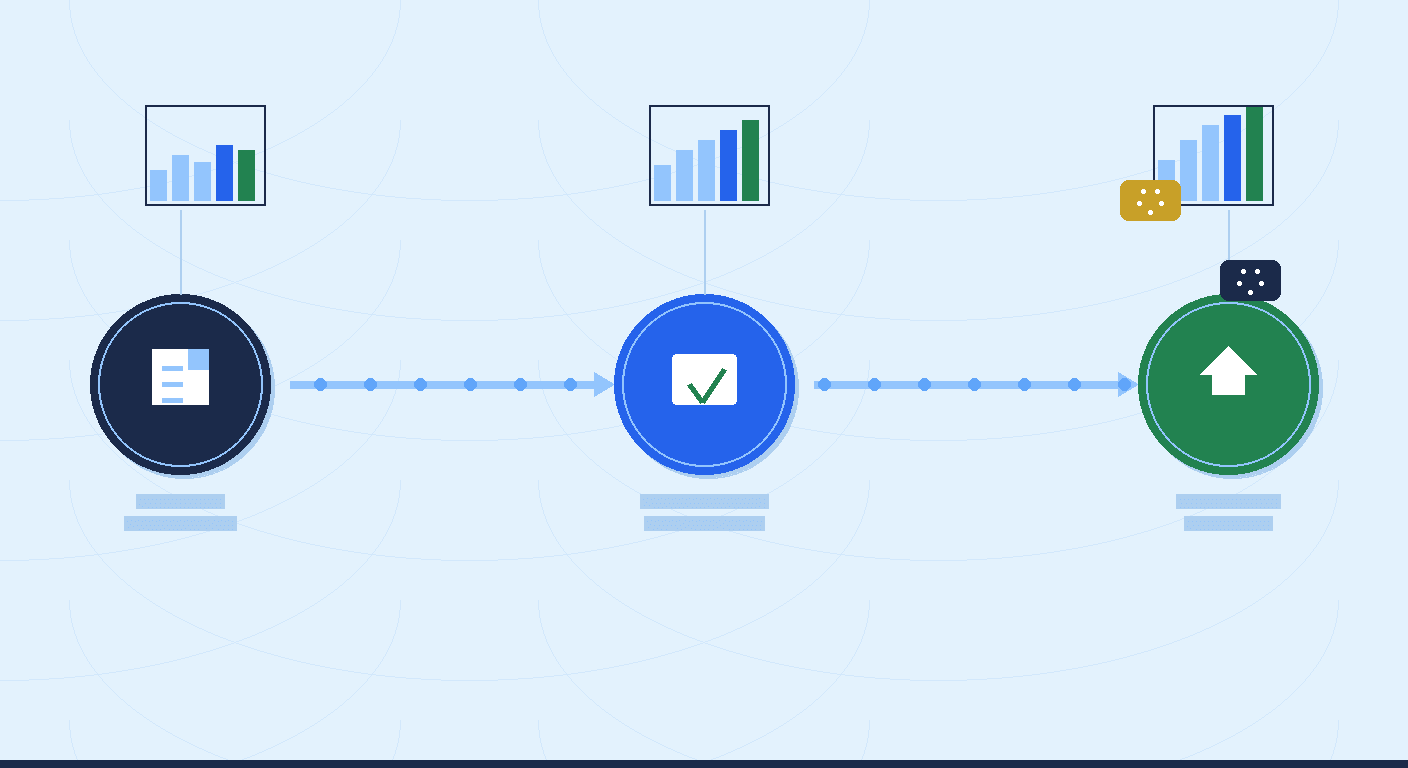
The strategic opportunity for Indian universities is to build what might be called a data chain from admission to graduation: connecting standardised admission scores with semester-by-semester academic performance, progression rates, programme completion, and post-graduation outcomes.
This chain has three segments:
Segment 1 — Admission (CUET or institutional entrance): Collected and held by NTA, retrievable by institutions in structured format. Standardised across participating universities, enabling inter-institutional comparisons.
Segment 2 — Academic Progression (semester evaluations): This is where the gap currently exists for most institutions. Digital evaluation produces structured records at the response level, not just the aggregate student level. Over four or six years of study, a student generates dozens of digitally evaluated assessments — each a data point in a trajectory. Across a cohort of 500 students, this dataset runs to tens of thousands of individual evaluation events per semester.
Segment 3 — Outcome (placement, postgraduate admission, competitive examination success): Collected annually for NIRF reporting. Rarely connected back to Segment 1 or Segment 2 data to understand which academic interventions correlate with better outcomes.
The connection between Segment 2 and Segment 3 is where institutions generate genuine academic intelligence. A university that discovers students admitted with CUET scores above the 75th percentile but who perform poorly in Semester 3 core courses have a significantly lower placement rate than their peers — and can trace this to specific subject-level performance patterns identified in digital evaluation data — has actionable programme intelligence. It can redesign those courses, introduce targeted academic support, and track whether the intervention improves outcomes in subsequent batches.
This feedback loop is how universities that take accreditation seriously actually improve rather than merely document. Paper-based evaluation cannot support it. Structured digital evaluation can.
Three Practical Steps Before the Next NIRF Cycle
NIRF rankings for 2026 are expected to be published in May-June 2026. Institutions submitting NIRF data for the next cycle are already working with performance data from the 2025-26 academic year. The window to improve Graduation Outcomes scores operates on a two-to-three year lag: academic processes implemented in 2025-26 improve the outcome metrics measured and reported in 2027-28.
For institutions building this infrastructure now, three steps are directly actionable:
1. Standardise evaluation data fields: Digital evaluation platforms should capture, at minimum, subject code, student ID, evaluator ID, marks per question, total marks, and timestamp. These six fields enable all the analyses described above. Institutions that do not specify these requirements when implementing digital evaluation will find their data unusable for longitudinal analysis.
2. Connect the admission and evaluation databases: CUET admission data is available to institutions in structured format. Creating a unified student record that links CUET admission scores to internal evaluation outcomes requires a one-time data architecture decision — typically a shared unique student identifier — that becomes trivially maintainable thereafter.
3. Schedule quarterly IQAC review of evaluation patterns: The data chain is only useful if it is reviewed. IQAC cells should receive quarterly reports on subject-wise grade distributions, evaluator consistency scores, and cohort-level progression patterns. Anomalies identified in September can be addressed before the academic year ends, not retroactively explained in the next AQAR.
What NAAC's 90-Percent Coverage Target Means for Institutions Without Accreditation
NAAC has stated a target of bringing 90 to 95 percent of India's higher educational institutions — currently only about 20 percent hold valid accreditation — under the accreditation framework through the Binary Accreditation model. For the approximately 40,000 unaccredited colleges, the window to prepare a credible SSR (Self-Study Report) within the next two to three years requires building an evidence base starting now.
Digital evaluation is among the fastest ways to generate genuine Criterion 2 evidence. A college that implements digital evaluation in the 2025-26 academic year can, by 2027-28, present two full years of structured assessment data demonstrating evaluator consistency, outcome attainment measurement, and technological adoption in evaluation processes. These are not claims — they are records.
Institutions that wait to build this infrastructure until accreditation preparation begins will find that they are manufacturing evidence retrospectively, which NAAC's data-driven validation model is specifically designed to detect.
The CUET data is available. The evaluation infrastructure can be put in place. The NIRF and NAAC frameworks reward institutions that connect the two. The gap between institutions that will benefit from this shift and institutions that will not is, at this stage, primarily a question of when they decide to act.
---
Related Reading
Ready to digitize your evaluation process?
See how MAPLES OSM can transform exam evaluation at your institution.