Punjab Board Goes Digital: State Boards Follow CBSE's Lead on On-Screen Marking
Punjab becomes one of the first state boards to adopt end-to-end digital evaluation for March 2026 exams. Rajasthan introduces digital mark entry. The CBSE domino effect is real.
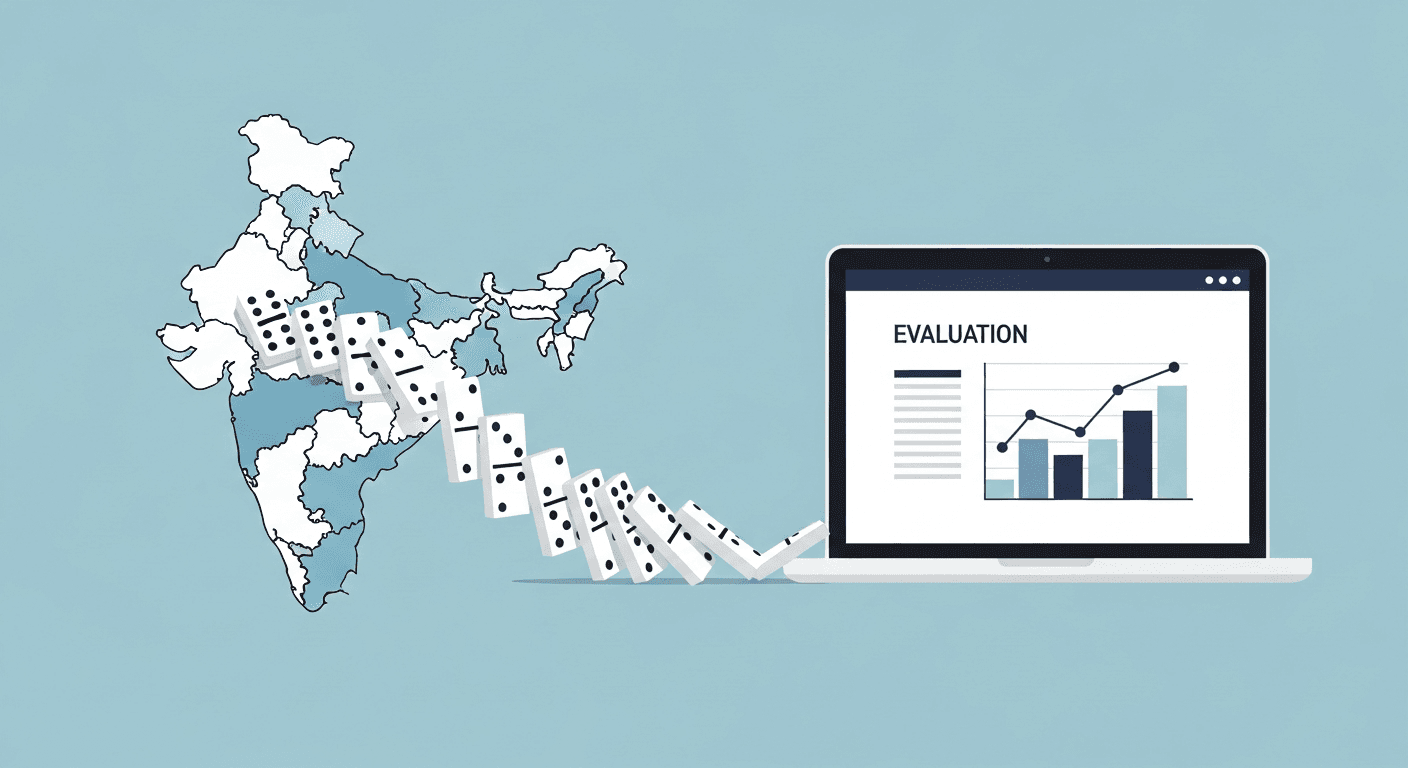
The Domino Effect Has Begun
When CBSE announced On-Screen Marking for Class 12 in February 2026, the question was not *if* state boards would follow — but *how fast*. The answer: faster than most expected.
The Punjab School Education Board (PSEB) has announced that it will implement end-to-end digital evaluation for its March 2026 board examinations. Teachers will evaluate scanned answer sheets on computers using an on-screen marking system, moving away from traditional paper-based evaluation entirely. PSEB is among the first state boards in India to adopt this model.
Meanwhile, the Rajasthan Board of Secondary Education (RBSE) has introduced a digital mark entry system where examiners upload marks directly to an online portal during the evaluation stage — a stepping stone toward full on-screen marking.
These are not pilot programs announced for "next year." These are live implementations for the current examination cycle.
What Punjab Is Doing
PSEB's digital evaluation rollout has several notable characteristics:
Phased approach. Unlike CBSE's all-at-once deployment across all Class 12 subjects, Punjab is starting with selected subjects for matriculation examinations. This phased approach allows the board to identify and resolve issues before expanding to all subjects in future cycles.
End-to-end digital. PSEB is not just digitizing mark entry (as Rajasthan is doing) — it is implementing full on-screen marking where teachers view scanned answer sheet images and evaluate them on screen. This covers scanning, digital evaluation, and result processing.
Accuracy and transparency focus. The board has cited improved accuracy, transparency, and faster result timelines as the primary motivations — the same reasons that drive every digital evaluation adoption.
This phased, end-to-end approach is exactly what CBSE's rollout challenges have taught the sector. Start small, prove the system works, expand systematically.
What Rajasthan Is Doing
RBSE has taken a different but significant step: digital mark entry. During physical evaluation, examiners upload marks directly to an online portal immediately after checking each answer sheet. This eliminates the separate manual data entry step that traditionally follows paper evaluation — a step where totalling errors and transcription mistakes commonly occur.
Digital mark entry is often the first step on the path to full on-screen marking. It digitizes the output of evaluation (marks) without changing the evaluation process itself (still paper-based). For boards that are not yet ready for full OSM, this is a practical intermediate step that delivers immediate benefits:
Why State Boards Are Moving Now
Three forces are converging to accelerate state board adoption:
1. The CBSE Benchmark
When CBSE — the largest board in India with 46 lakh students — adopts on-screen marking, it creates an expectation benchmark. Parents and students who experience digital evaluation through CBSE will ask why their state board still uses paper. Media coverage of CBSE's faster results will put pressure on state boards that take 90+ days.
2. NEP 2020 Implementation Pressure
The National Education Policy 2020 explicitly encourages technology integration in assessment. As of 2026, NEP implementation stands at 67%. State education departments that adopt digital evaluation can demonstrate NEP alignment — an increasingly important metric for central government funding and recognition.
3. The 74% Tipping Point
With 74% of Indian examination boards having adopted or piloted digital evaluation, the holdouts are increasingly outliers rather than the norm. The institutional risk calculus has shifted: it is now riskier to *not* adopt digital evaluation than to adopt it. Boards that delay face questions about why they lag behind the national standard.
The State Board Landscape
Different state boards are at different stages of the digital evaluation journey:
| Stage | What It Means | Examples |
|---|---|---|
| Full OSM | Answer sheets evaluated entirely on screen | CBSE (Class 12), PSEB (selected subjects) |
| Digital mark entry | Physical evaluation with digital mark upload | RBSE |
| Pilot programs | Testing OSM with limited subjects or centres | Multiple state boards |
| Planning stage | Announced intent, building infrastructure | Several state boards |
| Not yet started | Still fully paper-based | Remaining boards |
The movement is clearly from bottom to top. Boards that were in the "planning stage" last year are now running pilots. Boards that ran pilots are moving to production. The direction is uniform — no board that has adopted digital evaluation has reverted to paper.
Lessons from CBSE's Rollout
State boards have the advantage of learning from CBSE's February 2026 experience. The key lessons:
Start with selected subjects. Punjab's phased approach — starting with selected matriculation subjects — is the safer path. It limits the blast radius of any technical issues while building institutional experience.
Train evaluators properly. CBSE's one-week training window was insufficient. State boards should begin evaluator training 4-6 weeks before the evaluation cycle, with hands-on mock evaluations using the production system.
Test infrastructure under load. CBSE's portal struggled during mass mock evaluations. State boards should conduct load testing with the actual number of expected concurrent users before going live.
Ensure scanning quality. Scanned image quality is the foundation of on-screen marking. State boards should establish quality control checkpoints during scanning and before images enter the evaluation pipeline.
Plan for support. Evaluators encountering digital evaluation for the first time need real-time support — helplines, on-site technical staff, and quick-reference guides.
What This Means for the Sector
The CBSE-to-state-board cascade was predictable, but its speed is notable. Within weeks of CBSE's announcement, Punjab launched its own digital evaluation program. Rajasthan introduced digital mark entry. Other state boards are accelerating their planning.
This pace suggests that by the 2027 examination cycle, the majority of state boards will have at least piloted on-screen marking. By 2028, full paper-based evaluation may be limited to a small number of boards still building infrastructure.
For the digital evaluation ecosystem — platform vendors, scanning infrastructure providers, training organizations — this acceleration creates both opportunity and pressure. The demand for proven platforms that can handle state-board-scale deployment is growing faster than many anticipated.
For Institutions Watching This Unfold
If your institution is affiliated with a state board that has not yet announced digital evaluation, now is the time to prepare — not wait. The announcement will come, and the boards that are ready will have a smoother transition than those caught unprepared.
Practical steps:
The shift from paper to digital evaluation in India is no longer a question of if — it is a question of which exam cycle.
Related Reading
Ready to digitize your evaluation process?
See how MAPLES OSM can transform exam evaluation at your institution.