Parliament's June 2026 NTA Report: Nationwide Vendor Blacklist and a Rs 448 Crore Reform Mandate
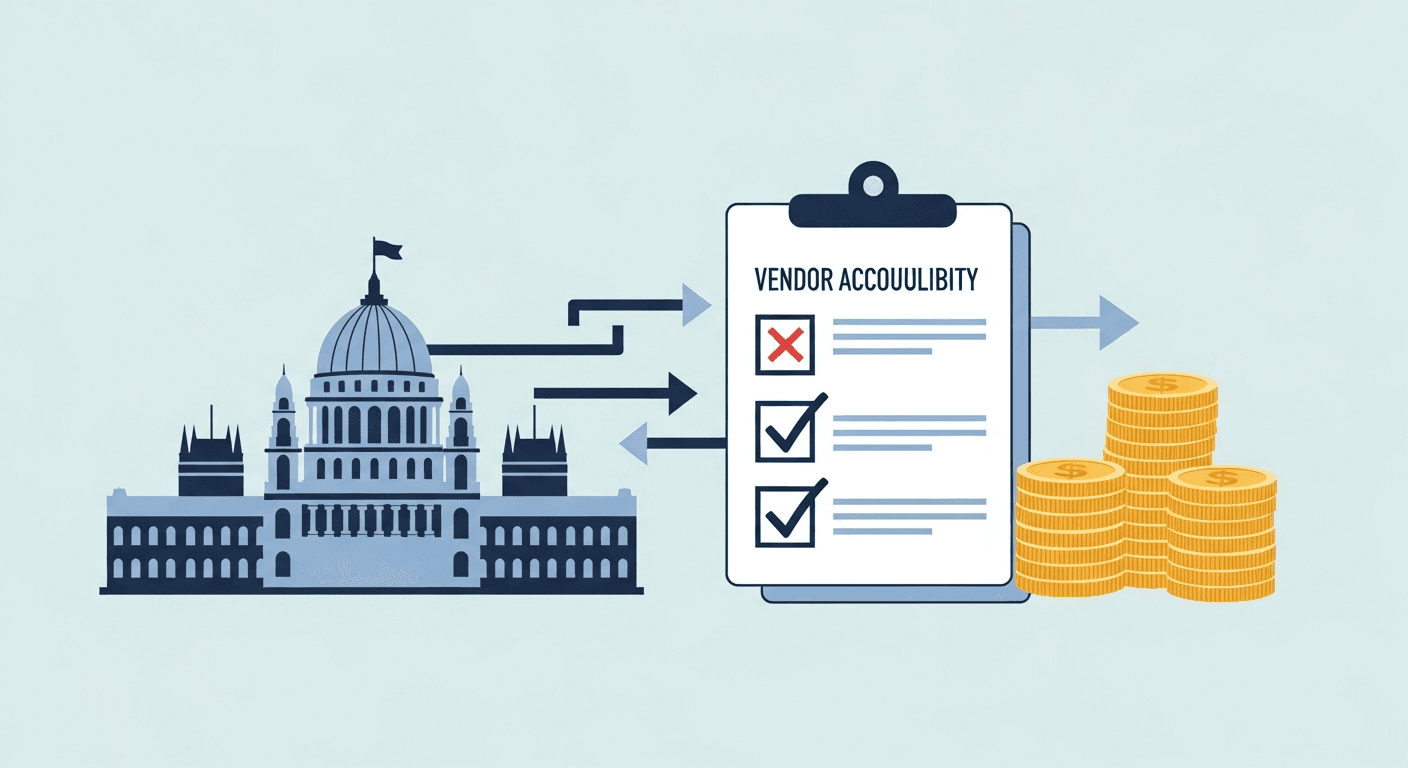
The parliamentary standing committee on education presented a landmark report on June 16, 2026 — calling for a nationwide blacklist of tainted exam vendors, a time-bound HLCE implementation roadmap, and utilisation of NTA's Rs 448 crore surplus for examination infrastructure.
The June 16 Report
On June 16, 2026, the Parliamentary Standing Committee on Education — chaired by Congress MP Digvijaya Singh — presented a report to parliament that goes further than any prior legislative review of India's national examination infrastructure. It does not merely call for reform. It identifies specific governance failures, names structural gaps, and directs accountability to the Ministry of Education in ways that prior committee reports had avoided.
The report arrives in the immediate context of the NEET-UG 2026 paper leak, the cancellation of the original examination, and the re-examination conducted on June 21, 2026. But its scope extends beyond NEET and NTA — it addresses the broader architecture of how India runs, contracts, and oversees high-stakes examinations at national scale.
Three findings stand out for their practical implications for examination system reform.
---
Finding 1: Tainted Vendors Are Still Getting Work
The committee identified a gap that examination administrators and procurement officers across India will recognise: firms that are blacklisted by one state or one examination body continue to receive contracts elsewhere because there is no shared national registry of disqualified vendors.
A firm that is banned from conducting paper distribution in Rajasthan, for example, can receive a separate scanning contract from a university examination board in Tamil Nadu. A software vendor that loses its contract with a state PSC over data security failures can bid on NTA logistics work the following year. There is no mechanism to prevent this because blacklisting operates at the agency level, not the system level.
The committee's recommendation is straightforward: create a nationwide list of blacklisted examination firms that applies across all agencies involved in paper setting, administration, printing, scanning, and evaluation — and require any agency awarding an examination-related contract to verify against this list before award.
This is a standard procurement governance practice in regulated sectors. Defence procurement, pharmaceutical manufacturing, and banking operations all maintain central registries of debarred suppliers. That examination contracting — involving some of the most sensitive data in the country — has operated without a centralised debarment registry is an institutional gap that the committee has now formally flagged.
Why This Matters Beyond NTA
The vendor blacklist recommendation has implications beyond the National Testing Agency specifically. Indian examination administration involves thousands of agencies at state, university, and board levels, all operating with independent procurement processes and no shared information on vendor performance.
The examination vendor ecosystem includes printing houses with access to question papers, logistics firms transporting sealed bundles, software companies managing evaluation portals, and scanning operations handling crores of answer sheets. A firm that handled answer sheet scanning carelessly for one university — causing data loss, quality failures, or security breaches — carries that risk profile into its next contract regardless of jurisdiction.
A national registry, updated by all examination bodies and accessible to all procurement officers, would create accountability across the ecosystem rather than within individual agencies. It would also make the threat of blacklisting credible: currently, a vendor that loses one contract faces limited consequences because alternative contracts are readily available from agencies with no visibility into its prior failures.
---
Finding 2: NTA Has Rs 448 Crore That Should Fund Reform
The committee reviewed NTA's financial data and found that the agency collected Rs 3,512.98 crore in examination fees over six years while spending Rs 3,064.77 crore — leaving a cumulative surplus of Rs 448.21 crore.
This is not a small amount. At current spending levels, it represents roughly nine months of NTA's operational budget. The committee's view is that this surplus should be directed to fortifying NTA's examination infrastructure — specifically the "testing and regulatory capabilities" identified as deficient in the HLCE report.
What does examination infrastructure reform at this scale cost? For reference:
| Infrastructure Item | Approximate Investment Required |
|---|---|
| Nationwide CBT centre build-out to handle 22 lakh NEET candidates | Rs 200-400 crore (capital) |
| End-to-end digital question bank and delivery system | Rs 50-100 crore |
| Biometric authentication integration at all exam centres | Rs 30-50 crore |
| AI-based CCTV surveillance at 5,400+ centres | Rs 20-40 crore |
| Secure encrypted paper delivery network | Rs 15-25 crore |
The Rs 448 crore surplus is sufficient to fund most of these items without additional budget allocation — if directed to infrastructure rather than retained as working capital. The committee's demand that NTA develop a specific utilisation plan for this surplus as part of its HLCE implementation roadmap is a reasonable governance expectation.
---
Finding 3: HLCE Reforms Are Not Being Implemented
The High-Level Committee on Examination Reform (HLCE) — established after the 2024 NEET and UGC-NET controversies and chaired by former ISRO chairman K. Radhakrishnan — submitted its recommendations in October 2024. Key recommendations included:
The Ministry of Education formed a High-Powered Steering Committee to monitor implementation. As of June 2026 — nineteen months after the HLCE report — the parliamentary committee found that "irregularities in the exam process are still rampant" despite this oversight mechanism.
The committee's demand is specific: NTA must publish "a time-bound implementation roadmap" for HLCE recommendations "at the earliest." This is not merely asking for implementation — it is asking for public accountability in the form of a documented timeline that can be measured against.
A time-bound roadmap with published milestones is qualitatively different from an internal reform agenda. It creates external accountability: journalists, student bodies, and the committee itself can track delivery against stated commitments. For examination reform, where institutional inertia has repeatedly delayed changes that were formally agreed upon, this form of accountability may be the most operationally significant recommendation in the report.
---
Three Other Findings That Deserve Attention
Unpublished AISHE Data
The All India Survey on Higher Education (AISHE) is the primary annual data collection on Indian higher education — covering enrolment, faculty strength, infrastructure, examination results, and institutional characteristics across all universities, colleges, and affiliated institutions. Three consecutive years of AISHE data (2021-22, 2022-23, and 2023-24) remain unpublished as of June 2026.
This is a significant policy failure. AISHE data informs NAAC accreditation, NIRF rankings, government grant allocation, and regulatory decisions by UGC and AICTE. Three years of missing data means that policy decisions are being made on the basis of information that is three to five years old. The committee noted that the delay "defeats the purpose of an annual survey."
CABE Last Met in 2019
The Central Advisory Board of Education (CABE) — the apex advisory body for education policy at the national level — has not convened since 2019. CABE brings together education ministers from all states, education secretaries, and senior figures from the higher education sector. It is the institutional mechanism for policy alignment between the Centre and states on education matters.
In the context of examination reform, where state-centre coordination is essential for infrastructure deployment, admissions policy, and regulatory standards, a seven-year gap in CABE convening is an institutional failure the committee has now formally placed on the record.
Institute of Eminence: Only 12 of 20 Slots Filled
The Institute of Eminence (IoE) scheme was designed to identify and fund 20 Indian institutions — 10 public, 10 private — to develop into globally recognised universities within a decade. Eight years into the scheme, only 12 of the 20 mandated designations have been awarded. The committee noted the exclusion of several globally recognised social science institutions including JNU and pressed the Ministry for an explanation.
---
What This Report Means for Examination System Stakeholders
For institutions running their own examinations — affiliating universities, state boards, autonomous colleges — the committee report carries a few specific operational signals.
Vendor selection is now under parliamentary scrutiny. The recommendation for a nationwide blacklist means that procurement practices for examination services will face increasing oversight. Institutions that can demonstrate rigorous vendor qualification processes — verifying prior performance records, conducting security audits, maintaining documented selection criteria — will be better positioned as this scrutiny increases.
Digital infrastructure investment is explicitly recommended. The HLCE recommendations that the committee wants implemented include CBT transition, digital paper delivery, and biometric verification — all of which require institutional infrastructure investment. Universities that have already built internal digital evaluation capabilities are in a stronger position to integrate with the emerging national framework.
Data integrity is non-negotiable. The AISHE data gap has created a policy environment where institutional data submitted to regulatory bodies is often the only available evidence for funding and accreditation decisions. Institutions with robust digital examination records — evaluator logs, marks data, result timelines, revaluation statistics — are better placed to respond to data requests from NAAC, NIRF, and UGC.
---
The Broader Trajectory
The June 16 report lands on a day when the NEET re-examination is being conducted under maximum-security conditions across India. It is a reminder that examination reform in India has typically been reactive — driven by scandal, litigation, and legislative pressure rather than proactive governance.
The committee's specific, measurable demands — a published roadmap, a national vendor blacklist, a utilisation plan for the Rs 448 crore surplus — represent an attempt to move from reactive scandal management to accountable reform delivery. Whether the Ministry of Education responds in kind will determine whether this report joins the long list of unrealised examination reform recommendations, or becomes the document that marks a genuine inflection point in how India manages the integrity of its examination infrastructure.
---
Related Reading
Ready to digitize your evaluation process?
See how MAPLES OSM can transform exam evaluation at your institution.