NTA's Anti-Fraud Portal for NEET 2026: A New Model for Crowdsourced Exam Integrity
India's exam regulator launched a public complaint portal five days before the NEET retest, inviting 22 lakh candidates and the public to report fraud. What it achieves, what it cannot, and what the design teaches us.
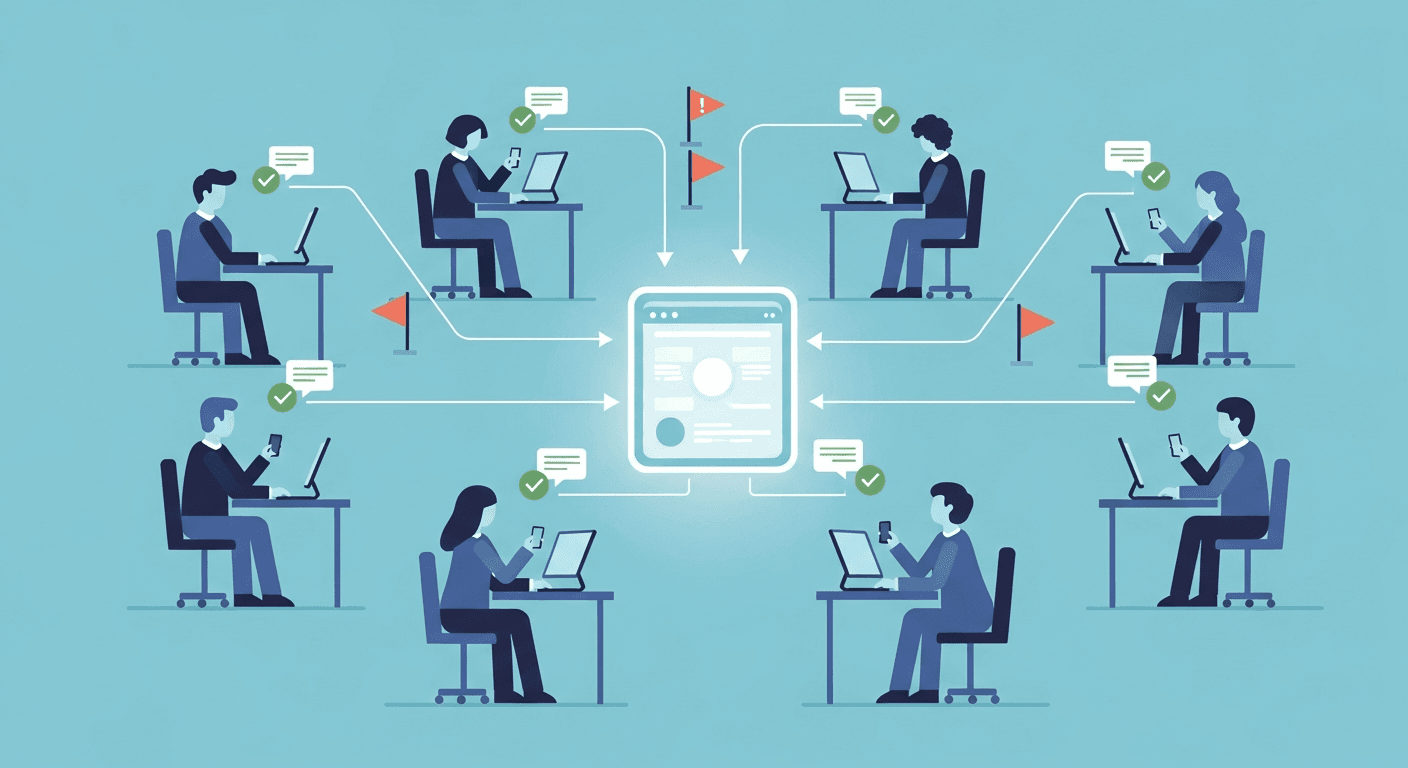
India Crowdsources Exam Integrity for Its Biggest Retest
On June 16, 2026 — five days before the NEET UG re-examination — the National Testing Agency launched a dedicated online portal at innovateindia.mygov.in/neet-ug-2026. Its purpose: to let any member of the public report suspicious activities tied to the June 21 examination.
Students, parents, coaching institutes, and ordinary citizens can submit reports about fake websites claiming access to question papers, Telegram or WhatsApp channels selling results guarantees, individuals impersonating NTA officials, and any other activity intended to defraud candidates. Every complaint, according to NTA, will be examined and forwarded to law enforcement agencies if necessary.
This is a notable institutional step. India has 22.7 million candidates registered for the NEET UG retest — a number that makes centralised surveillance of every channel, group, and website mathematically impossible. Crowdsourcing is not the primary defence, but it is a real and novel one.
What the Portal Can Achieve
Intelligence gathering at candidate scale
NTA and its law enforcement partners cannot independently monitor every Telegram channel, WhatsApp group, coaching institute rumour, and fraudulent website active ahead of a national examination. A portal that lets candidates and their families flag suspicious content in real time converts a population of 22 lakh into a distributed intelligence network.
When coordinated with the simultaneous MeitY-ordered Telegram block and the 200+ channel takedowns already executed, portal complaints can trigger rapid and targeted action rather than broad platform-level enforcement.
A confidence signal to candidates who were burned once
The NEET UG 2026 examination was cancelled after the May 3 paper leak. For many candidates, the June 21 retest represents months of additional preparation on top of years already invested. The psychological impact of a second cancellation would be severe.
The visible existence of a complaint portal — combined with the announced security deployments of Air Force logistics, GPS tracking, CCTV, and paramilitary forces — communicates that the NTA is actively monitoring and that candidates have a channel to report concerns rather than suffer fraud in silence. The signal function has value independent of the portal's operational effectiveness.
Evidence accumulation for active prosecutions
CBI proceedings against the 13 accused arrested in the May 3 paper leak are ongoing. Court records from June 15 to 17 document the investigation process: interrogations in custody permitted by court order, judicial custody extensions, and the tracing of payment flows across the network. Complaint portal data — timestamps, platform names, uploaded screenshots, channel identifiers — can supplement and accelerate this evidence base for current and future prosecutions.
What the Portal Cannot Achieve
Stopping an insider leak
The NEET 2026 paper reportedly entered the leak network through an individual with legitimate access during the translation and printing phase of the official preparation process. The supply side of a paper leak — the point at which a question paper is first extracted from the official chain of custody — is not accessible to public reporting.
No complaint portal catches an insider who photographs a question paper in a secure facility. The network of channels, groups, and sellers that follows is visible to the public; the original extraction point typically is not.
Solving the pre-exam window problem
As long as question papers exist as printed documents before examination day, the economic incentive structure that makes paper leaks profitable remains intact. The documented pricing in NEET 2026 — papers sold for Rs 10 to 12 lakh at the network level, candidates paying Rs 2 to 5 lakh individually — generates enough margin to absorb significant enforcement risk, including the risk that a buyer might report the transaction.
Public reporting is a demand-side pressure on the distribution network. The supply-side fix is structural: remove the physical paper, and there is nothing to leak.
Processing complaints fast enough to matter on exam day
A complaint submitted the night before the examination may not be actionable within the available window even if the NTA processes it immediately. Law enforcement coordination, platform takedowns, and physical intervention at coaching centres all have minimum lead times. The portal's value is greatest in contributing to prosecutions in the weeks and months after the exam, and in deterring fraud networks that know they are being watched — not in same-day disruption of active distribution.
Comparative Models From Other Examination Systems
Several countries have built public exam integrity mechanisms worth examining in this context.
United Kingdom: Ofqual, the exam regulator, maintains a public malpractice reporting page and has formal reporting obligations for exam centres, heads of centre, and teachers. The UK model routes reporting through official institutional channels rather than direct public submission. This limits false positives but narrows coverage.
Singapore: The Singapore Examinations and Assessment Board uses a combination of secure digital delivery, biometric verification at centres, and post-exam statistical analysis to detect anomalous candidate performance. Public reporting is not a primary mechanism; prevention is built into the technical architecture. The consequence is that Singapore has not had a paper leak crisis of the scale India experiences regularly.
United States: The College Board and ACT use item response theory analysis to detect statistical anomalies in post-exam results — clusters of candidates answering specific questions correctly at rates inconsistent with their overall performance. This is retrospective rather than real-time, but it does not depend on candidates reporting anything; the data speaks for itself.
| Mechanism | Preventive or Reactive | Depends on Candidate Action | Effective Against Insiders |
|---|---|---|---|
| Public complaint portal (NTA) | Reactive | Yes | No |
| Institutional reporting (UK model) | Reactive | Partial | Limited |
| Statistical anomaly detection | Reactive | No | Partial |
| Digital delivery (Singapore model) | Preventive | No | Yes |
The NTA portal sits in the reactive, candidate-dependent quadrant. It is appropriate given India's candidate population size and the demonstrated value of tip-based enforcement — the May 3 paper leak was first surfaced by a chemistry teacher who compared a circulated document to the real exam, not by an intelligence operation. But it is not a substitute for the preventive mechanisms that digital examination infrastructure provides.
What Structural Digital Evaluation Would Change
The complaint portal, the Telegram block, the 200+ channel takedowns, the Air Force logistics, and the paramilitary deployments are all responses to a condition that digital examination infrastructure largely eliminates: the physical existence of question papers before examination day.
In a computer-based testing model, no paper travels anywhere. Questions are assembled and delivered server-side. Candidates see questions on screen in sequence, with no ability to photograph and transmit a complete paper. Even if a subset of questions were extracted from a question bank, no single actor can provide advance access to the full examination.
Digital evaluation of answer sheets is the downstream complement. Answer sheets are scanned and encrypted at source; evaluation occurs on digital copies with tamper-evident audit logs. Combined, digital testing and digital evaluation remove the two primary attack surfaces that India's exam fraud networks have exploited — consistently and at scale — across NEET, CBSE, and state board systems.
What the Portal Gets Right About Institutional Design
The portal is, at minimum, a meaningful institutional acknowledgement that exam integrity cannot be maintained by the exam body alone. By opening a formal channel for candidate and public reporting, the NTA is acknowledging that the populations most harmed by paper leaks — candidates who studied honestly for years — are also the populations most motivated to help prevent them.
This framing is correct. Examination integrity is a shared public good. The architecture of crowdsourced reporting treats it as such.
The deeper institutional design question is whether this kind of distributed monitoring should need to exist at all. When examinations are conducted and evaluated digitally, the attack surface that makes crowdsourced vigilance necessary in the first place is significantly reduced. The portal is a valuable tool for the current infrastructure. Its most important function may be demonstrating, over repeated examination cycles, why that infrastructure needs to change.
Related Reading
Ready to digitize your evaluation process?
See how MAPLES OSM can transform exam evaluation at your institution.