NMC's Digital Data Mandate: What Medical Colleges Must Align with Their Examination Records
The National Medical Commission now requires all medical colleges to submit Health Facility Registry and HMIS data for annual renewal. Examination records are the missing piece connecting institutional academic governance to India's digital health infrastructure.
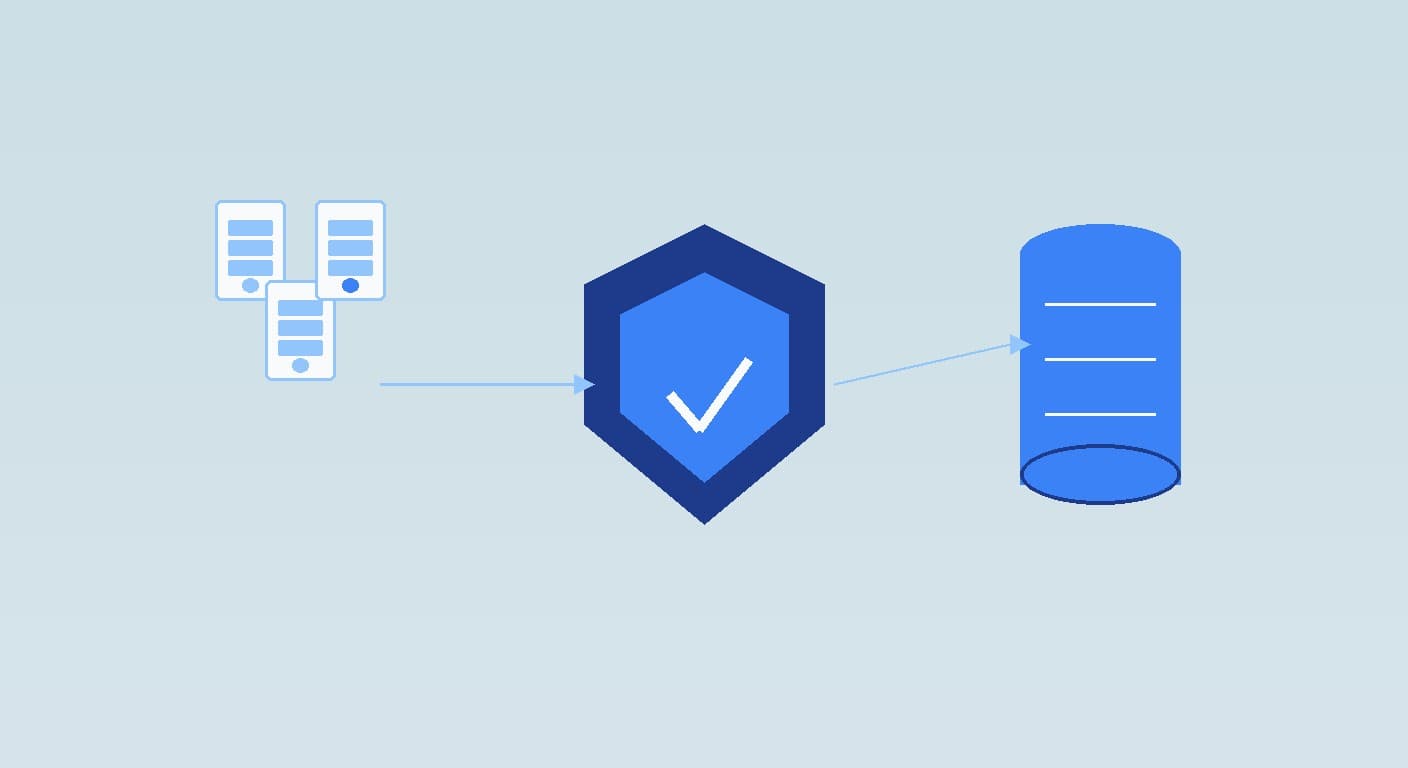
The NMC Digital Shift
The National Medical Commission — which replaced the Medical Council of India in 2020 and now regulates India's 816-plus recognised medical colleges and 1,37,600 MBBS seats — has issued a directive requiring all affiliated medical institutions to submit Health Facility Registry (HFR) IDs and Hospital Management Information System (HMIS) linkage data for their associated hospitals as part of the annual renewal and assessment process.
The purpose stated by NMC is unambiguous: to make the renewal process more objective and transparent, and to integrate medical institutions into India's broader Ayushman Bharat Digital Mission ecosystem. Over 3,55,000 health facilities and 5,42,000 healthcare professionals are already registered under ABDM as of late 2024.
The directive covers hospital-side infrastructure. What it does not directly address — but what accreditation assessors are increasingly examining — is the academic-side data that complements hospital registration: how examinations are conducted, how evaluation is managed, how student assessment records are maintained, and whether that data is available in structured, machine-readable formats for audit purposes.
The gap between hospital digital integration and academic digital governance is the specific risk that medical colleges operating in 2026 need to address.
What NMC Assessments Now Look For
NMC conducts annual renewals and periodic assessments of medical colleges through a structured inspection framework. The inspection criteria include infrastructure, faculty, clinical training facilities, and — critically — academic processes including examination management.
NMC's own College Assessment Reports, publicly maintained on the NMC website from 2011 onwards, document the findings of assessment teams. Across multiple assessment cycles, a consistent pattern of findings exists: institutions with weak examination documentation — incomplete records of evaluation, missing audit trails for internal assessments, inadequately documented grievance resolution — receive adverse observations that affect annual renewal outcomes.
The HFR and HMIS mandate signals that NMC is moving toward a data-first assessment model. Hospital performance data integrated with ABDM is verifiable independently. Clinical case logs tied to HMIS are auditable without relying on institutional self-reporting. The logical extension of this approach — verifiable examination and evaluation data rather than declaration — is already visible in how assessment teams conduct site visits.
Institutions that have built the examination-side equivalent of hospital HMIS integration: systems that log evaluation events, track answer script custody, and generate structured reports — are in a materially different position during NMC inspections than those that cannot produce this data on request.
The Four Types of Examination Data NMC Assessors Request
Based on the pattern of NMC assessment observations, four categories of examination data are consistently relevant:
1. Examination Conduct Records
Documentation showing that internal and university examinations were conducted at scheduled dates, with appropriate invigilation, answer script collection, and dispatch to evaluation centres. The audit trail must account for every answer book from distribution to evaluation completion.
Digital evaluation systems that maintain an answer book barcode or QR code trail — tracking each script from printing through scanning, evaluation, and archival — generate this documentation as a system log rather than a manual record. For institutions managing 500 to 5,000 answer scripts per examination cycle, manual chain-of-custody documentation is both time-intensive and error-prone.
2. Evaluation Quality Evidence
Evidence that evaluation was conducted consistently across examiners, with appropriate training, and with mechanisms to identify and correct anomalies. This includes:
This category of evidence does not exist in paper-based evaluation systems unless it is manually constructed — which means it is typically absent from the documentation that institutions present during NMC inspections. Digital evaluation platforms generate evaluator activity logs and mark distribution reports as standard output, without requiring any additional manual assembly.
3. Student Grievance Resolution
Records of revaluation or re-checking requests submitted by students, the outcome of each request, and the time taken to resolve each case. NMC's inspection criteria include student welfare provisions, and unresolved or poorly documented grievances are a consistent finding in adverse assessment reports.
An institution that maintains a revaluation register — tracking request date, examiner assigned, review date, outcome, and student notification — and can produce this register for any semester on request, demonstrates examination governance quality that NAAC, NMC, and NBA assessors recognise.
4. Result Integrity Data
Documentation of the result computation process: how individual question marks were aggregated, how internal assessment marks were combined with examination marks, and how the final result was verified before publication. This is the data that supports a student grievance challenge ("my marks were added incorrectly") and must be available without requiring physical retrieval of the original paper answer script.
Connecting HFR/HMIS to Academic Records: The Integration Opportunity
NMC's ABDM integration initiative is hospital-focused, but the infrastructure it creates — a unified digital identity for each institution under ABDM, verifiable records tied to that identity — has a natural extension to academic data management.
Institutions that maintain examination records in structured digital systems can align those records with their ABDM institutional identity in a way that paper-based systems cannot. When NMC eventually requires academic records to be submitted through an integrated portal (consistent with the trajectory of HFR and HMIS requirements), institutions with digital examination infrastructure will have exportable data. Those without will face a manual reconstruction effort that, for multi-year historical records, may be impractical.
The practical step for 2026 is not to wait for NMC to mandate academic digital integration but to build the system while the mandate is still forming. The cost of building digital examination infrastructure before it is required is lower than the cost of building it under regulatory pressure, with existing records partially unavailable.
Mapping Examination Data to NMC Assessment Criteria
The following table maps specific examination data types to NMC assessment criteria where they are directly relevant:
| Data Type | NMC Assessment Area | Evidence Value |
|---|---|---|
| Answer script custody log | Examination conduct | Verifies physical security of assessment |
| Evaluator activity records | Evaluation governance | Demonstrates consistent examiner workload |
| Mark distribution by evaluator | Evaluation quality | Identifies statistical anomalies in marking |
| Double valuation correlation | Evaluation reliability | Quantifies inter-rater consistency |
| Revaluation request log | Student grievance | Documents resolution timelines |
| Result computation audit | Result integrity | Supports answer to grievance challenges |
| CO attainment by examination | Academic outcomes | Feeds NBA OBE compliance data |
The NAAC Overlap
While NMC governs medical college operation and renewal, NAAC accreditation remains a parallel requirement for most medical colleges seeking UGC recognition, institutional funding access, and admission to the NIRF rankings. The evidence types listed above — evaluator logs, mark distributions, revaluation records, result audit trails — are precisely the evidence that NAAC Criterion 2 (Teaching-Learning and Evaluation) assessors request during peer team visits.
An institution building examination data infrastructure to satisfy NMC's evolving digital requirements will, as a direct consequence, also be building the NAAC evidence portfolio. The two regulatory frameworks are moving in the same direction: structured digital evidence rather than institutional declarations. A single investment in digital evaluation infrastructure satisfies both.
A Practical Starting Point for 2026-27
Medical colleges that are planning their examination calendar for the 2026-27 academic year have a specific opportunity: run at least two examination cycles under a digital evaluation model before the next NMC renewal submission.
Two full cycles generate enough data to produce the evaluator log, mark distribution, and result audit documentation that assessors request. They also generate CO attainment data for NBA compliance, student satisfaction data for NAAC Criterion 5, and infrastructure documentation for NAAC Criterion 4 and NIRF TLR.
The sequence is straightforward:
The connection between NMC's digital health mandate and academic examination records is not yet formally codified in NMC inspection guidelines. But the direction is clear: NMC is building a verifiable, data-driven institutional assessment model. Examination governance is part of institutional quality. Institutions that align their examination infrastructure with that direction now — before the formal mandate arrives — will have the evidence ready when it is needed.
Related Reading
Ready to digitize your evaluation process?
See how MAPLES OSM can transform exam evaluation at your institution.