NEET 2027 CBT: Why Digital Evaluation Infrastructure Is Your College's Selection Edge
NEET 2027 will run as a computer-based test across 1,000+ centres over six days in 500+ cities. Colleges that invested in digital evaluation infrastructure are already positioned to meet NTA's requirements — and generate new revenue.
The Scale of What NTA Is Planning
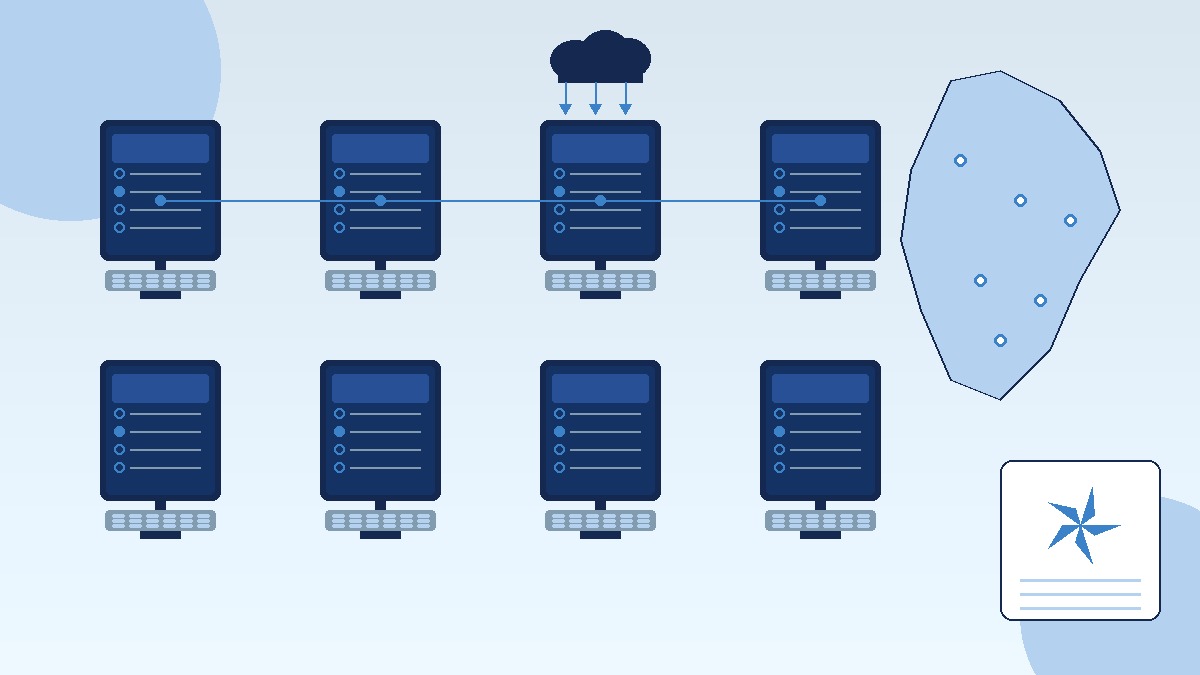
When the government confirmed that NEET-UG 2027 would shift to a computer-based test format, the headline numbers were striking. The examination will run over at least six days at more than 1,000 centres across approximately 500 cities — a dramatic expansion from the 5,440 pen-and-paper venues used in 2026.
The expansion is not about convenience. It is a structural response to a documented security failure. In 2026, NEET-UG was cancelled after investigators found that a guess paper had pre-circulated. A six-day, multi-shift CBT at distributed venues eliminates the single-paper model that made large-scale leaks possible. Each shift uses a randomised question bank; there is no one paper to steal.
For medical colleges, coaching institutes, and science colleges currently evaluating their infrastructure investments, the question is direct: will your institution be on that 1,000-centre list?
What CBT Centre Selection Requires
NTA has not published its final criteria for NEET 2027 CBT centre certification. Based on its established patterns for JEE Main, CUET, and UGC NET CBT operations, centres are typically assessed on the following dimensions:
Computing infrastructure. A centre must have enough functioning terminals for the number of candidates per shift. For a 150-seat centre running three shifts, that is 150 machines configured to NTA specifications — with browsers, screen resolution, and OS requirements locked down. Each machine must pass NTA's pre-examination audit.
Power reliability. CBT centres must maintain uninterrupted power for the duration of each shift. This requires a stable grid supply supplemented by a generator of sufficient capacity and an online UPS capable of bridging the transition. A power failure during an examination creates candidate distress, potential malpractice allegations, and administrative liability. NTA excludes venues that cannot demonstrate reliable backup.
Network and local server architecture. NEET CBT does not rely on live internet delivery for each question. The examination is served from a local server at the venue, with encrypted question packets delivered and unsealed under NTA supervision at the start of each shift. The local server infrastructure, its physical security, and its technical configuration are all subject to NTA inspection.
Physical security and surveillance. CCTV coverage of examination halls, entry biometrics, and controlled access to server rooms are standard requirements. Venues without adequate camera coverage or physical access control are declined.
Technical staff. Each centre must have certified network administrators and technical support personnel on-site for the duration of examinations. Ad-hoc staffing is not acceptable.
Why Digital Evaluation Investment Transfers Directly
Here is what makes this relevant to institutions that have already adopted digital evaluation for their internal and affiliated examinations: the infrastructure requirements overlap substantially.
A college or university that has implemented digital evaluation as part of its examination cycle has typically made the following investments:
Scanning station infrastructure. Digital evaluation begins with the scanning of physical answer scripts. A scanning station requires reliable computers, a dedicated server or NAS for storing high-resolution image files, fast local network connectivity, and a power supply with UPS backup. These specifications are compatible with — and often exceed — the NTA's local server requirements for a CBT venue.
Server-grade storage. A university processing 50,000 answer scripts per evaluation cycle generates tens of terabytes of image data. Institutions that have built this storage infrastructure, with redundant backup and secure access controls, already have the core server architecture that a CBT venue needs.
Trained technical personnel. Running a digital evaluation system requires a system administrator who understands networked storage, database management, user access control, and troubleshooting under time pressure. These are the same competencies NTA requires at a CBT venue.
Power backup. Answer sheet scanning cannot be interrupted mid-process without data integrity risks. Institutions that have learned this lesson have invested in generator backup and UPS systems that meet or exceed what a CBT centre requires.
CCTV and controlled access. Digital evaluation centres handle sensitive examination data. Institutions that have built appropriate physical security for their evaluation infrastructure have simultaneously built the surveillance and access control environment that NTA audits.
The investment does not transfer automatically — specific NTA technical configurations will apply, and not every digital evaluation setup will meet CBT specifications out of the box. But the foundational infrastructure, and more importantly, the institutional culture of maintaining it, is already in place.
The Revenue Arithmetic
A NEET 2027 CBT centre running 150 candidates per shift across three shifts handles 450 candidates per day. Over six examination days, the centre processes 2,700 candidates.
NTA pays venue remuneration on a per-candidate basis. While the official rate for NEET 2027 has not been published, historical CBT venue remuneration rates for central examinations have ranged from Rs 50 to Rs 150 per candidate per shift, with additional lump-sum payments for infrastructure verification and administrative overhead.
At the lower bound, a 150-seat centre operating across six days generates roughly Rs 2 to 4 lakh in direct NTA remuneration. This is not a primary revenue source for most institutions. The actual value is different: it is a certified infrastructure validation from one of India's largest examination bodies, and the utilisation of infrastructure investments that are otherwise idle between examination cycles.
Institutions with well-maintained digital examination infrastructure do not wait for NTA audits to validate their readiness. The validation is embedded in the infrastructure itself.
Three Actions for Planning Cycles Now
Audit your existing digital evaluation infrastructure against CBT specifications. Map what you have — server capacity, terminal count, network bandwidth, power backup, CCTV coverage — against the publicly available NTA CBT centre standards from JEE Main and UGC NET cycles. Identify gaps. The NTA NEET 2027 information bulletin, expected in early 2027, will confirm final requirements.
Accelerate digital evaluation adoption if it is on your roadmap. Institutions that delay digital evaluation until after NEET 2027 centre selection is announced will miss the first cycle of centre selection. Institutions that have been running digital evaluation for one or two full cycles before NTA audits will have both the technical infrastructure and the operational track record.
Document your infrastructure investments for accreditation and centre selection simultaneously. NAAC Criterion 4 (Infrastructure and Learning Resources) awards marks for digital examination infrastructure. NIRF's Teaching, Learning and Resources parameter values IT infrastructure investment. The same documentation package that supports your accreditation cycle also demonstrates readiness to NTA auditors.
The Compounding Advantage
NEET 2027 is the first cycle of what will be a continuing CBT programme. As NTA's experience with 1,000+ CBT venues develops, the technical bar for centre selection will rise — not fall. Early adopters who demonstrate reliable operations in the first cycle earn renewal advantages. Institutions that enter the programme in cycle two or three face a more competitive selection environment.
The pattern mirrors digital evaluation adoption itself. Institutions that adopted digital evaluation in 2022 and 2023 are now operating mature systems with multi-cycle audit trails. Institutions adopting in 2026 are catching up on a head start that translates directly to NAAC and NIRF evidence.
For the medical college that is weighing a digital evaluation platform investment alongside other infrastructure priorities: the NEET 2027 CBT centre selection cycle is a concrete near-term return on that investment, in addition to the accreditation evidence and operational efficiency gains.
Related Reading
Ready to digitize your evaluation process?
See how MAPLES OSM can transform exam evaluation at your institution.