IAF Helicopters and Phone Blackouts: What NEET's Extreme Security Reveals About Exam Integrity
India deployed Mi-17 helicopters and imposed a total communication blackout on paper setters to secure the June 21 NEET retest. The scale reveals a precise lesson about why digital evaluator anonymity does the same job without the army.
What It Takes to Secure a Paper Exam at Scale
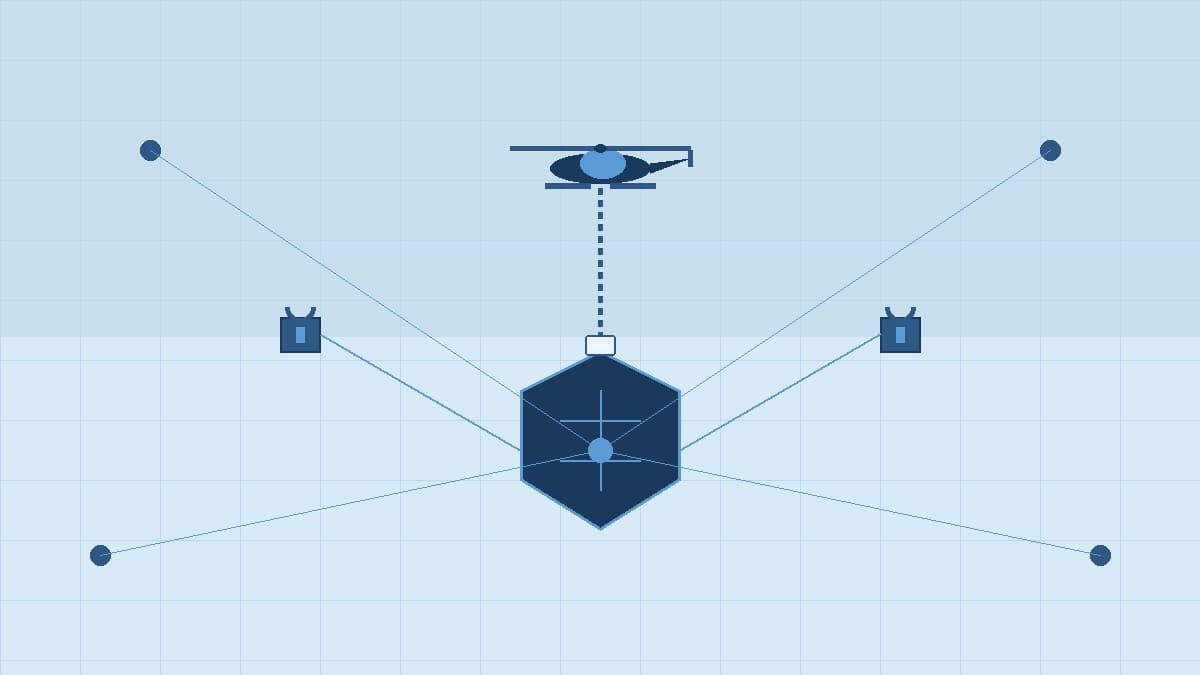
On June 8, 2026, the Indian Air Force confirmed it would deploy Mi-17 helicopters to carry NEET-UG retest question papers from 18 designated locations to examination hubs across the country on June 21. The IAF transport was one element of a security framework that also includes:
This is the security architecture India requires to protect a single pen-and-paper national examination. The original May 3 NEET-UG failed despite comparable precautions: a chemistry professor linked to NTA processes and a biology professor were among 11 individuals arrested for distributing question paper content that overlapped by up to 120 questions with material circulated through WhatsApp and coaching centre networks.
The June 21 retest is deploying the same examination format — pen and paper, OMR sheets — with a more intensified version of the same security model.
The Geometry of Exam Leaks
The NEET 2026 arrests are instructive about where in the chain leaks actually occur. The vulnerability is not at the IAF helicopter stage. It is at the human chain that precedes it: the paper setter who knows the questions, the moderator who reviews them, the translator who renders them in regional languages, the printer who produces them.
In a paper exam, each of these roles requires human beings with content access. Compartmentalization tries to prevent any single person from having the complete picture, but full compartmentalization across a chain of this length is operationally difficult. Each handoff is a potential leak point. Each person at any stage who chooses to photograph a page creates a distribution channel.
The WhatsApp and Telegram networks that circulate leaked content do not need the sealed final packet — they need one photograph, from one person, at any point in the chain. By the time the Mi-17 helicopter is airborne with sealed packets, the content may already be in circulation. The helicopter secures the last mile; the leak, if any, occurs in the miles before it.
This is not a critique of the security measures being deployed for June 21 — they represent a genuine attempt to close every closure-capable gap. It is a description of the structural limitation of paper exam security: the asset being protected (question content) must be known to humans who can leak it, and no operational security framework eliminates that exposure entirely.
What the NEET Security Architecture and Digital Evaluation Have in Common
Digital evaluation does not protect examination questions — NEET is a delivery examination, and its questions must remain secret before administration. But the security architecture of a mature digital evaluation system, when applied to the answer-sheet marking stage, implements the same principles the NEET security apparatus is trying to achieve — as structural properties rather than operational procedures.
The parallel is direct:
| NEET Physical Security Measure | Digital Evaluation Equivalent |
|---|---|
| Phone blackout for paper setters | Evaluator anonymity — examiner never knows which student, institution, or district the sheet belongs to |
| Compartmentalized teams | Role-based access control — no single user can access the complete evaluation chain |
| IAF encrypted transport | End-to-end encrypted transmission of scanned sheets and mark data between nodes |
| 5 lakh security personnel | Immutable audit trail — every evaluation action logged, timestamped, and non-repudiable |
| AI surveillance cameras | Pattern-based anomaly detection on evaluator marking behavior and mark distributions |
| Physical seal and GPS tracking | Digital chain-of-custody logs for every sheet access, annotation, and mark entry event |
The NEET measures are operational: they consume substantial resources, degrade under scale pressure, and can fail at any human handoff. The digital evaluation measures are architectural: they are system properties that apply consistently regardless of evaluation volume, evaluator location, or time of year.
An institution running on-screen marking does not deploy additional security personnel on evaluation day. The evaluator working from a regional evaluation centre does not know the institution, district, or student whose sheet they are marking. That anonymity is not a policy someone must enforce — it is a property of the system that cannot be circumvented without administrative credentials.
The Scale Asymmetry
The operational costs of the NEET June 21 security framework are not publicly itemised, but its components — IAF deployment, multi-week isolation facilities, 500,000 security personnel, communication infrastructure for jammer networks, drone operations — represent a significant per-student security premium for a single examination. The 2.27 million candidates sitting the original May 3 exam imply a security infrastructure cost that would not be acceptable if it had to be replicated for every semester evaluation cycle at every affiliated institution.
This asymmetry matters: the NEET security model is deployable for perhaps two to three high-stakes national examinations per year. It is not a model that can be applied to the 4,500+ university examinations happening across India's affiliating university system, where thousands of courses across hundreds of centres require evaluation each semester.
Digital evaluation's architectural security properties are not premium features available only for high-investment deployments. They are standard features of a properly implemented system — evaluator anonymity, encrypted transmission, access-controlled marking, audit trails — available to the Tier-2 university with 8,000 students as readily as to the national board with 2 million candidates.
What the Comparison Resolves
The 2026 education news cycle has positioned paper exams and digital evaluation in a peculiar reversal: NEET's paper leak has generated criticism of paper exams while CBSE's OSM controversy has generated criticism of digital evaluation, creating the impression that both formats are equally unreliable.
The NEET paper leak and the CBSE OSM controversy are different categories of failure.
NEET failed because paper exams require secrets to be held by humans who can choose not to hold them, and no operational security framework fully closes that gap. The IAF helicopters are evidence of how much effort paper exam security requires, not evidence that the effort is sufficient.
CBSE's OSM failed because the implementation was inadequate: vendor selection prioritised price over security and capability, evaluator training was compressed, and critical vulnerabilities were left unpatched. These are implementation failures that do not characterise digital evaluation systems that are properly designed and deployed.
The relevant comparison is not between NEET's paper leak and CBSE's OSM glitches. It is between what paper exams require in security investment to achieve a given confidence level and what digital systems require to achieve the same outcome. The Indian Air Force's involvement answers that question plainly.
Related Reading
Ready to digitize your evaluation process?
See how MAPLES OSM can transform exam evaluation at your institution.