NEET 2026 Hybrid Exam Model: How Encrypted Paper at Centre Could Seal the Leak Chain
India is considering a computer-assisted paper-based test for NEET after the 2026 cancellation — encrypted question papers delivered digitally to centres for on-site printing. Here is what the model involves and what it still leaves unaddressed.
How NEET 2026 Was Cancelled — and What Comes Next
On 3 May 2026, over 22.79 lakh candidates sat for the NEET-UG examination across India. Nine days later, the National Testing Agency confirmed what a whistleblower had flagged on 7 May: a "guess paper" containing approximately 410 questions had been circulating on WhatsApp and Telegram groups for up to a month before the exam. Chemistry and Biology sections bore the most striking similarities — around 120 questions from those sections allegedly matched the actual paper. The exam was cancelled. The CBI launched arrests across Jaipur, Gurugram, and Nashik.
The cancellation reignited a three-year argument in India's education system: should NEET move to a computer-based test?
Why CBT Alone Is Not the Immediate Answer
The Federation of All India Medical Association (FAIMA) moved the Supreme Court on 14 May demanding NTA be restructured or replaced, full CBT migration for NEET, and a retired-SC-judge-chaired monitoring committee including cybersecurity and forensic experts. These are legitimate demands. But implementation at NEET's scale faces one hard constraint: you cannot run a single-shift exam for 23 lakh candidates in CBT format without a national network of high-capacity testing centres that does not yet exist.
India currently has roughly 4,500 NTA-designated exam centres. At an average capacity of 200 candidates per centre per shift, a single-shift CBT would handle around 9 lakh candidates — well short of NEET's participant base. Multi-shift CBT creates a different risk: leakage across shifts, since candidates who finish early can brief those yet to start.
This is the structural trap that has kept NEET pen-and-paper for years despite annual leak scandals.
The Hybrid Model: Encrypted Paper at Centre
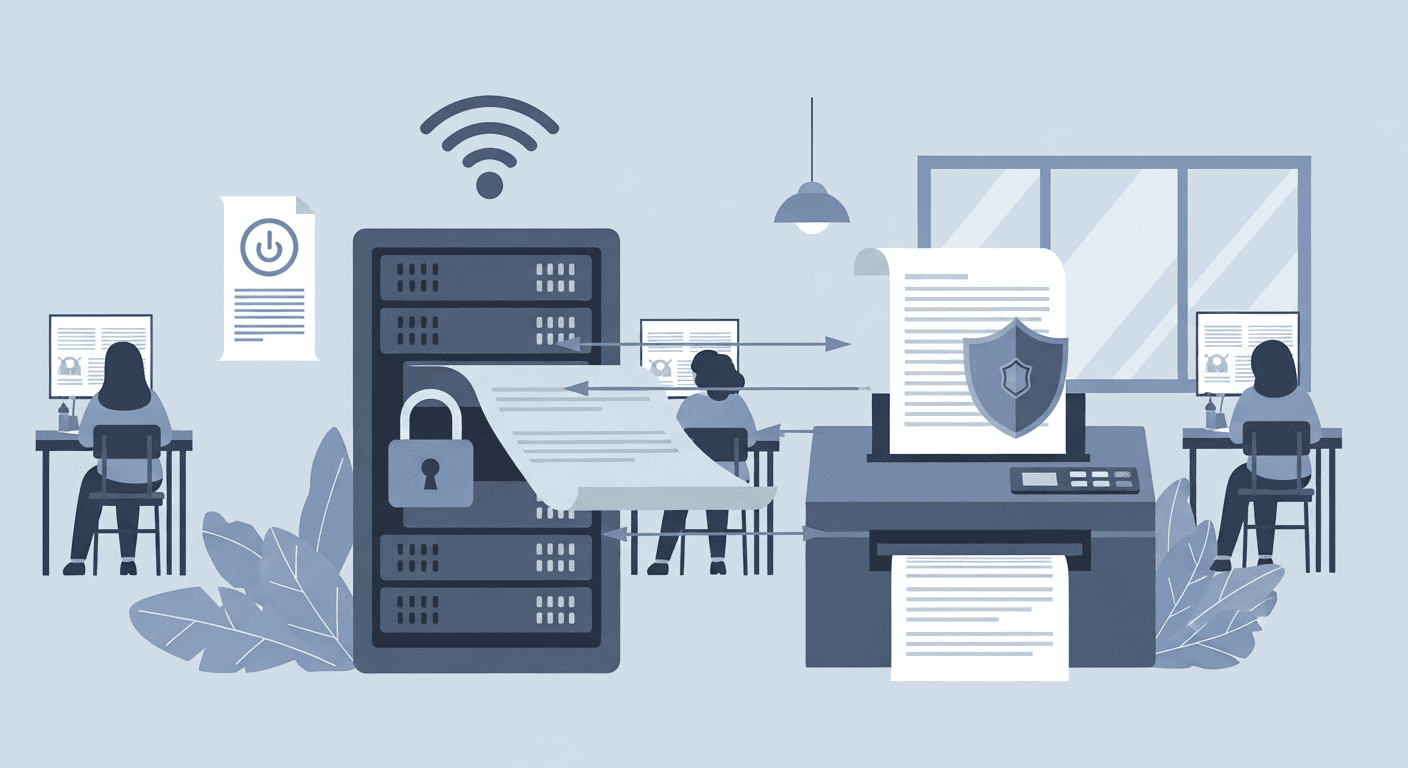
The Radhakrishnan Committee — appointed after the NEET-UG 2024 controversy — studied this constraint and proposed a middle path: the Computer-Assisted Paper-Based Test (CA-PBT). In May 2026, with the fresh cancellation providing political urgency, the Union Health Ministry and NTA are formally reviewing this proposal.
How CA-PBT Works
The model eliminates the longest and most vulnerable stretch of the current leak chain: the period between central printing and distribution to thousands of centres. In 2026, the leaked questions reportedly entered circulation 15 to 30 days before the exam — a window that centralised printing and physical transport creates.
What the Model Solves
| Vulnerability | Current Model | CA-PBT |
|---|---|---|
| Central printing lead time | 4–6 weeks | Eliminated |
| Physical transport chain | 28 states, thousands of centres | Encrypted digital transfer |
| Insider access at printing facility | Single high-risk facility | Decentralised, supervised |
| Circulation window before exam | 15–30 days | Hours at most |
What the Model Does Not Solve
CA-PBT addresses question paper security. It does not address what happens after exam day — which is where a separate category of fraud occurs.
Answer script integrity requires digital evaluation infrastructure. Once answer books are physically transported from 4,500 centres to evaluation hubs, the same chain-of-custody risks that apply to question papers now apply to responses. Manual evaluation introduces evaluator bias, totalling errors, and no audit trail of which evaluator marked which question at what time.
The Missing Half: Digital Answer Sheet Evaluation
A complete secure examination chain requires two locked ends: a secure question paper and a tamper-proof evaluation process. India's policy discussion in May 2026 is focused almost entirely on the first. The second receives considerably less attention.
Onscreen marking systems address the answer sheet half. Each scanned script gets a randomised identifier. Individual questions are assigned to evaluators in masked batches — no evaluator sees the same candidate's full answer book. Double valuation assigns the same answer to two independent markers; divergence beyond a threshold triggers automatic moderation. A complete digital audit trail records who evaluated which question, at what time, and what score was assigned.
When CBSE evaluated 9.8 million Class 12 answer sheets through OSM in 2026, the system generated a timestamped log for every mark entry. That audit trail was what allowed CBSE to confidently eliminate post-result marks verification — because the data to resolve any dispute was already embedded in the system. No physical script needed to be retrieved and re-examined.
What a Complete Secure Examination Chain Looks Like
The debate after NEET 2026 has correctly identified weak links in question paper logistics. But the full architecture of a secure examination ecosystem covers both ends:
None of these components is technologically novel. CBSE's OSM rollout demonstrated that the answer sheet evaluation half is achievable at national scale. The Radhakrishnan Committee's CA-PBT proposal addresses the question paper half. Together they represent a road map — one that could have prevented the 2026 cancellation had it been implemented after the 2024 leak row.
The Infrastructure Investment Required
Critics of the hybrid model point to costs: high-speed secure printers at 4,500 centres, trained print-cell staff, encrypted server infrastructure, and scanner stations for answer book upload. These are real costs. But they need to be weighed against the alternative: re-conducting an exam for 22.79 lakh students costs the NTA and the broader system far more, in direct expenses, lost opportunity costs for aspiring medical students, and erosion of public trust in national examinations.
The NEET cancellation is the third major exam integrity crisis in three years. The cost of inaction is no longer hypothetical.
Related Reading
Ready to digitize your evaluation process?
See how MAPLES OSM can transform exam evaluation at your institution.