From Crisis to Counseling in 45 Days: NEET 2026's Digital Pipeline Blueprint
NEET UG 2026 was cancelled, re-examined for 22 lakh students, evaluated digitally, and counseling began within 45 days. Here is what every university can learn from that recovery.
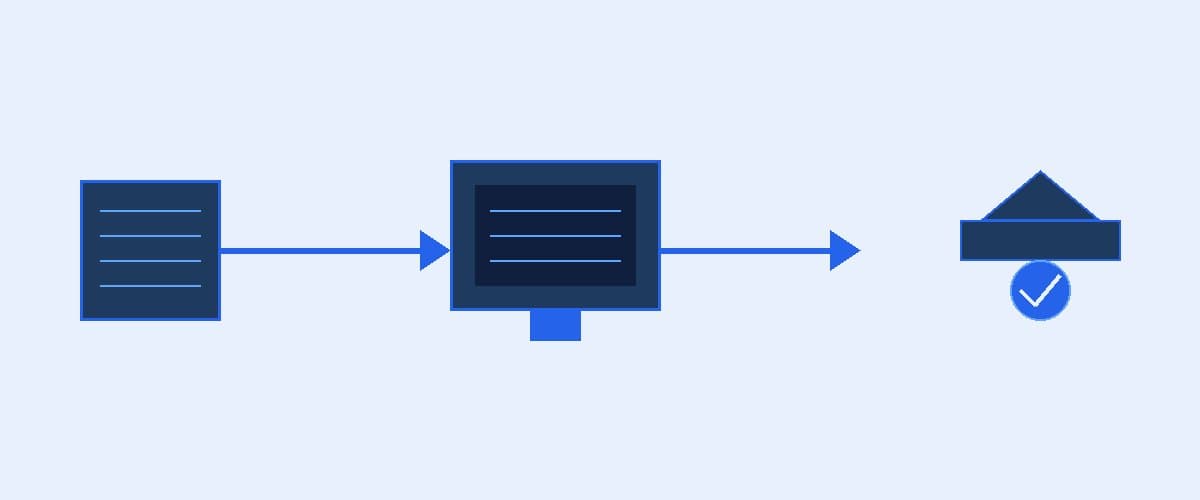
Forty-Five Days
On June 21, 2026, approximately 22 lakh candidates appeared for the NEET UG re-examination across 7,000 centres in every state and union territory. The original exam had been cancelled following a confirmed paper leak involving NTA subject experts — a crisis that displaced months of preparation and threatened an entire cohort's medical career timelines.
On August 5, 2026 — 45 days later — the Medical Counselling Committee opened Round 1 registration for NEET UG 2026 admissions, offering 31,728 seats across MBBS, BDS, and BSc Nursing programmes. Choice filling began August 6. The Round 1 seat allotment result is scheduled for August 17.
That 45-day window — from mass re-examination to live counseling — is a benchmark. It represents what India's digital examination infrastructure can deliver when it is used end-to-end. And it sets a standard against which every university's own examination-to-admission pipeline should be measured.
Breaking Down the 45-Day Timeline
Understanding how 45 days was achievable requires mapping each phase of the digital pipeline that made it possible.
Phase 1: Conducting the re-examination (Day 0)
The NTA conducted the NEET UG re-examination on June 21 in a single shift. Key security measures included biometric verification at every centre, Faraday-shielded rooms at selected high-risk venues, AI-assisted invigilation, and question paper delivery within a two-hour window before exam start. The candidates sat the exam on paper OMR sheets — the same format as the cancelled original.
Phase 2: OMR scanning and digital evaluation (Days 1–7)
Within hours of exam completion, OMR answer sheets were dispatched from centres to regional processing hubs. OMR scanning at this scale involves high-speed industrial scanners, automated image quality checks, and immediate digital upload to the central evaluation server. The digitised responses were matched against master answer keys using automated scoring algorithms.
Unlike subjective answer scripts, OMR evaluation is fully automated once the digital image is captured. The marginal time cost of evaluating 22 lakh additional candidates versus 10 lakh candidates is small — the system scales horizontally.
Phase 3: Answer key challenge window (Days 8–15)
NTA opened a window for candidates to challenge the official answer key. Challenges were submitted online, reviewed by subject expert panels, and disposals were published within the window. This step, which appears to add time, actually compresses downstream disputes: by resolving answer key ambiguities before result announcement, NTA reduced the volume of post-result revaluation applications.
Phase 4: Result computation and publication (Days 16–29)
The NEET UG 2026 re-exam result was published within 29 days of the examination date. For 22 lakh candidates, this involved computing normalised scores, generating rank lists across categories (General, OBC, SC, ST, EWS, PwBD), and validating data integrity before publication. The result was made available on the NTA portal and through DigiLocker.
Phase 5: Counseling opens (Day 45)
The MCC began Round 1 registration on August 5, publishing the seat matrix of 31,728 seats. Candidates register online, fill their institution preferences during August 6–13, and the Round 1 allotment result is due August 17. Physical reporting to allotted colleges is scheduled through August 22.
The Contrast: Manual Evaluation at This Scale
The same 45-day pipeline would have been impossible with manual answer sheet evaluation for subjective papers.
Consider a comparable scenario: a state university with 3 lakh students writes semester examinations in April. Answer scripts are dispatched to evaluator centres. Evaluators — typically faculty drawn from affiliated colleges — evaluate 20–30 scripts per day. Tabulation is done manually. Errors are corrected by hand. Results are published after 60, 90, or sometimes 120 days.
In this model, a disruption — evaluator shortage, transport strike, weather event — adds weeks to the timeline. There is no parallel processing. There is no audit trail for which evaluator marked which script and when. There is no mechanism for detecting evaluators who mark unusually fast or unusually slow.
The NEET 2026 re-exam processed OMR sheets for 22 lakh candidates in 29 days because the evaluation step was almost entirely automated. The human bottleneck — the evaluator — was replaced by a validated scoring algorithm applied to digitised data.
For universities that manage subjective answer scripts, digital evaluation platforms offer an analogous compression. Human evaluators are still required, but the logistics of moving, tracking, and tabulating physical answer books are eliminated. Evaluators work from their own devices. Scripts are distributed digitally. Completed evaluations are aggregated automatically. Tabulation is real-time.
What Universities Can Replicate: A Practical Pipeline Map
The NEET 2026 recovery is not a unique achievement of NTA scale. Its principles apply directly to affiliating university and autonomous college exam cycles. Here is a comparable pipeline map for a university managing 50,000 students across April semester examinations.
Weeks 1–2: Scanning and upload
Within two weeks of the last examination date, answer books are scanned and uploaded to the evaluation platform. Quality checks (image legibility, page count) are automated. Scripts are digitally distributed to the evaluator queue.
Weeks 3–5: Dual evaluation
Each script is independently evaluated by two assigned evaluators. The platform enforces anonymity — evaluators see only a reference ID. Evaluators work online and complete marks submission through the platform. The total evaluation window for 50,000 students, assuming 30 scripts per evaluator per day and a pool of 500 evaluators, is approximately 15 working days.
Week 6: Moderation and tabulation
Discrepant evaluations (mark difference above a defined threshold) are automatically routed to a moderator. Tabulation is system-generated. Controller of Examinations reviews the aggregate data and approves release.
Week 7: Result publication
Result is published on the student portal with question-wise marks breakdown visible to students.
This is a seven-week pipeline — approximately 50 days — for a large affiliating university. Compare this to the industry average of 60–120 days for manual evaluation cycles in India.
The Counseling Implication
The fastest examination pipeline is only valuable if counseling or admissions processes can begin immediately after results. In NEET 2026, the MCC could start Round 1 precisely because the results were published with structured, validated data that could feed directly into the seat allotment algorithm.
Universities that publish results in a format accessible to downstream systems — digital transcripts, standardised data exports, DigiLocker integration — create the same upstream advantage. Affiliated colleges can begin internal admissions. Students can apply to postgraduate programmes. Scholarship disbursements can be processed. Every downstream process that depends on examination data moves faster when the data is digital, structured, and available.
Universities that still publish results as PDFs or scanned mark sheets impose a manual re-entry step on every downstream process. That friction compounds across thousands of students and dozens of dependent processes.
The Reputational Dimension
The NEET 2026 crisis damaged NTA's institutional credibility significantly. The recovery — conducted at extraordinary scale in an extremely compressed timeline — has begun to restore it. Students and medical colleges received functioning Round 1 counseling on schedule. Admissions to 31,728 MBBS, BDS, and nursing seats are proceeding. The academic year for medical education is delayed but not destroyed.
For universities, there is a direct parallel. An institution that can recover from an examination disruption — a results delay, a paper irregularity, a system failure — in weeks rather than months communicates institutional resilience. That resilience is increasingly visible to regulators, accreditation bodies, and prospective students.
NAAC criterion 2 evaluates teaching-learning effectiveness, which includes examination processes and result timeliness. NIRF's Graduation Outcomes parameter rewards institutions with high placement rates and graduation rates — both of which are supported by fast, accurate result cycles. The operational speed of an examination pipeline is not just an administrative metric. It is an institutional quality signal.
The Infrastructure Investment Case
The NEET 2026 re-examination cost NTA an estimated Rs 180–200 crore in additional logistics, security, and coordination. The investment in digital evaluation infrastructure — scanning, platform licensing, evaluator training — is a fraction of the cost of a single disrupted examination cycle.
For universities, the calculation is similar. A delayed semester result — one that pushes admissions, scholarships, and postgraduate enrollment back by 60 days — carries direct costs in student attrition, institutional credibility, and regulatory scrutiny. The investment in digital evaluation infrastructure that compresses that timeline by 30–40 days more than pays for itself in the first disruption it prevents.
NEET 2026 demonstrated what a digital pipeline can absorb. The question for every university is not whether to build one, but how quickly.
Related Reading
Ready to digitize your evaluation process?
See how MAPLES OSM can transform exam evaluation at your institution.