How MSBTE Cracked Digital Evaluation: Maharashtra's Technical Board as a Model for India
While CBSE's OSM rollout drew national controversy, Maharashtra's technical education board quietly delivered results in 40 days with a fully digital evaluation system. Here is what they did right.
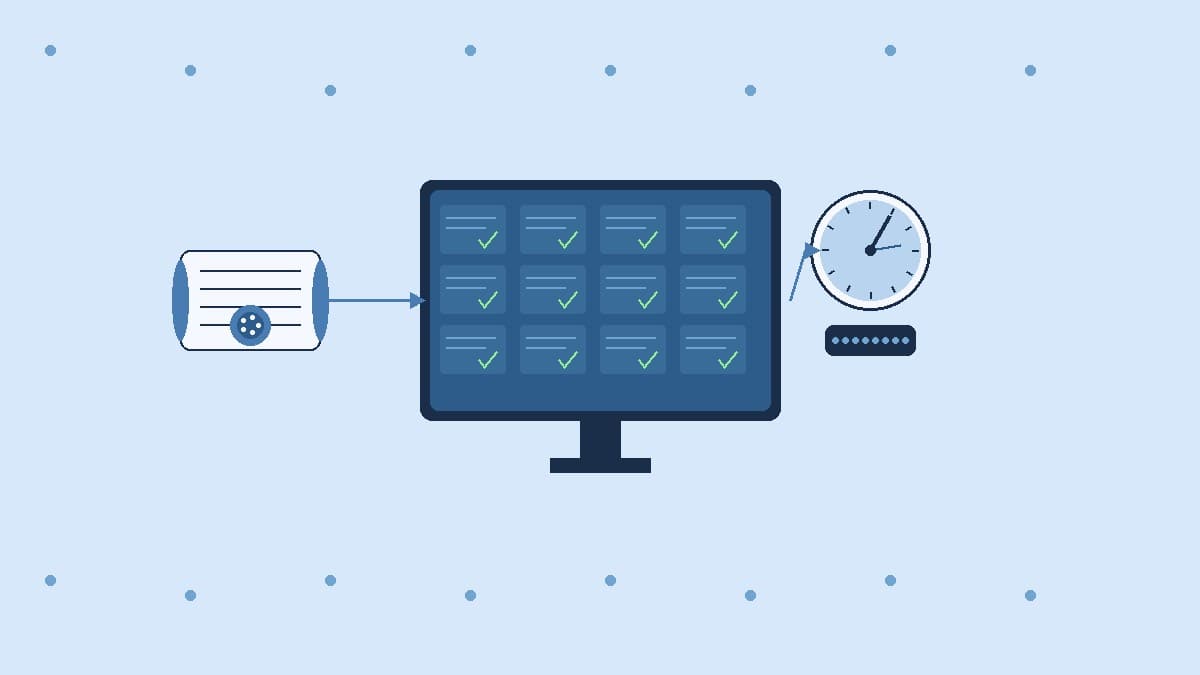
Two Maharashtra Exam Stories, One Lesson
In June 2026, as India's national education conversation was dominated by CBSE's troubled On-Screen Marking rollout and the NEET paper leak aftermath, a quieter milestone passed almost unnoticed.
The Maharashtra State Board of Technical Education (MSBTE) declared Summer 2026 diploma results on June 18—for examinations that had concluded on May 16. The evaluation was conducted entirely through a digital centralized system. The result reached students in 33 days from the final examination date.
MSBTE is not a peripheral institution. It governs examinations for over 3,200 polytechnic, pharmacy, and allied health institutes across Maharashtra, covering hundreds of thousands of diploma students each semester. Getting digital evaluation right at that scale—in the same academic year that CBSE's national OSM rollout generated a parliamentary inquiry, two senior officials' transfers, and an IIT audit—represents a case study that deserves attention from every examination controller in the country.
What MSBTE Is and Why It Matters
It is important to distinguish MSBTE from the Maharashtra State Board of Secondary and Higher Secondary Education (MSBHSE), which conducts the Class 10 and Class 12 (HSC/SSC) board examinations. MSBTE is a separate statutory body under the Directorate of Technical Education, Maharashtra, responsible exclusively for diploma-level technical and vocational education.
This distinction matters because MSBTE's student base is vocational: diploma engineers, pharmacy technicians, allied health workers, computer application specialists. These students move into jobs or lateral entry degree programs immediately after their diploma. A 40-day result timeline is not an administrative metric for them—it is the difference between starting work in June and waiting until August.
MSBTE runs two examination cycles annually: Summer (April–May examinations, June results) and Winter (November examinations, January results). The Winter 2025 result was declared on January 2, 2026, continuing a pattern of consistent, fast result declaration that the board attributes directly to its digital evaluation infrastructure.
The Architecture: How the Digital System Works
MSBTE's digital evaluation operates through a Centralized Assessment Process (CAP). Several architectural choices distinguish it from less successful implementations.
Centralized scanning with quality gates. Answer books from affiliated institutes are routed to regional assessment centers. Scanning is conducted under supervised conditions with mandatory quality verification—minimum resolution standards, completeness checks, page-count validation—before any batch of sheets is cleared for evaluator assignment. Batches that fail quality checks are rescanned before being entered into the evaluation queue.
Double-blind evaluation assignment. Each scanned answer book is assigned to two independent evaluators through the CAP portal. The system does not disclose the institute name or student identity to the evaluators. The two evaluations are processed independently; the system calculates a consolidated mark and flags discrepancies above a defined threshold for moderation review.
Online question paper delivery. MSBTE has moved question paper distribution entirely to its Online Question Paper Delivery System. In a demonstrative test of this infrastructure, the board successfully delivered question papers for two institutes in the Andaman and Nicobar Islands—covering 112 paper codes—without physical courier dependency. The same system that serves remote island institutes serves urban institutes in Pune and Nagpur on the same platform.
Digital re-evaluation with PDF delivery. Students whose subjects were evaluated through the digital system can apply online for a photocopy of their assessed answer sheet, which is delivered as a PDF to their registered email address. The Summer 2026 photocopy delivery was targeted for July 2, approximately two weeks after result declaration—a turnaround that is structurally impossible in paper-based systems without either pre-scanning for re-evaluation purposes or a separate second scanning cycle.
The Timeline That Matters
The 33-to-40-day result window is worth examining in the context of diploma student needs. MSBTE's Summer 2026 examination schedule ran from April 23 to May 16. Result declaration on June 18 gave students:
Contrast this with state boards and universities that routinely declare results in August or September for May examinations. That four-to-six month gap compresses academic planning for students, delays college admission timelines, and creates backlogs in grievance resolution—all of which show up as negative indicators in NAAC peer team assessments and NIRF graduation outcomes data.
| Parameter | MSBTE Digital System | Typical Paper-Based State Board |
|---|---|---|
| Exam-to-result time | 33–40 days | 90–150 days |
| Re-evaluation request method | Online, PDF delivery | Physical application, center visit |
| Question paper distribution | Online portal (including remote islands) | Physical courier to centers |
| Audit trail per evaluated sheet | Full digital log with timestamps | Paper-based records, partial |
| Evaluator anonymity | Enforced by platform | Variable |
What MSBTE Got Right That Larger Rollouts Did Not
Three structural choices separated MSBTE's execution from troubled implementations.
Infrastructure-first sequencing. MSBTE built and tested scanning infrastructure, evaluator portal performance, and quality gate processes through smaller pilots before scaling. The system that processed the Summer 2026 cycle was not being stress-tested for the first time at peak load.
Evaluator certification as a precondition. Evaluators in the MSBTE digital system complete structured onboarding covering platform mechanics, mark entry protocols, and inter-evaluator consistency standards before being assigned production batches. This is not a software tutorial—it is a certification program with completion criteria.
Student-facing grievance mechanisms launched simultaneously. The photocopy and re-evaluation portal went live at the same time as the result portal, not as a later phase. Student confidence in digital evaluation depends not on the absence of errors (impossible to guarantee) but on the presence of a clear, fast, digital redressal mechanism. Making students wait for a grievance portal that is "coming soon" after results are declared is a credibility failure that digital systems cannot afford.
Implications for Affiliating Universities and State Boards
For university examination controllers and state board administrators reviewing their digital evaluation roadmaps, the MSBTE model offers a set of verifiable design choices rather than abstract guidance.
The key requirements are:
The Broader Signal
India has more than 40 board-level examination bodies and several hundred affiliating universities, each running multiple examination cycles annually. Most still depend on physical paper transport, in-person evaluation centers, and manual mark entry.
MSBTE's 2026 cycle demonstrates that full digital evaluation—online question paper delivery, scanned double-blind assessment, digital re-evaluation—is operationally achievable in the Indian context, at significant scale, within normal administrative resource constraints.
In the current political environment, where student protests over examination failures have resulted in a ministerial resignation and a government commitment to CBT for NEET, the question for every examination controller is not whether digital evaluation is feasible. MSBTE has answered that. The question is whether their institution will build the infrastructure before regulatory pressure makes the question moot.
Related Reading
Ready to digitize your evaluation process?
See how MAPLES OSM can transform exam evaluation at your institution.