Mangalore University Launches Digital Evaluation for PG Exams in June 2026
Mangalore University has rolled out onscreen digital valuation for postgraduate courses, using scanned answer scripts and mobile OTP-authenticated evaluator access. The launch offers a replicable model for affiliating universities weighing a similar transition.
A State University Takes the Digital Step
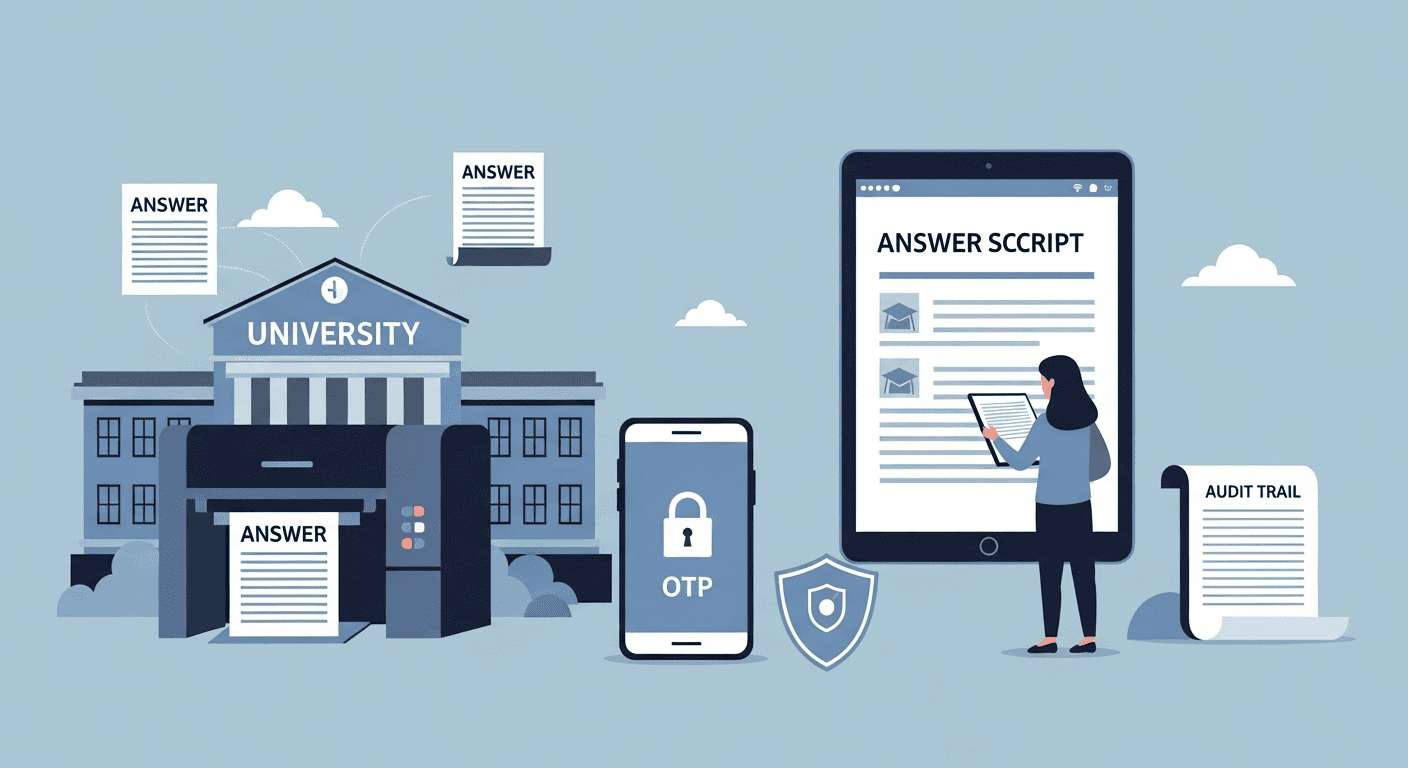
Mangalore University, the affiliating university for colleges across Dakshina Kannada and Udupi districts in Karnataka, has introduced digital valuation for postgraduate course examinations starting June 2026. Under the new system, physical answer booklets are scanned after the examination and uploaded to a secure platform. Evaluators access the digitized scripts using mobile-based one-time passwords, removing the need for physical transportation of answer booklets to evaluation centres.
The shift affects students appearing for PG semester examinations in courses including MBA, MCA, M.Sc, M.Com, and M.Ed. Undergraduate examinations remain on the paper-based valuation model for now, given the significantly higher volume of scripts — Mangalore University affiliates over 200 colleges with a large undergraduate candidate count that makes a simultaneous PG+UG digital transition operationally complex.
The decision to start with PG courses is a deliberately staged approach, and one that other affiliating universities should study closely.
How the System Works
The operational model Mangalore University has deployed follows the standard onscreen digital evaluation architecture used by institutions that have adopted the practice nationally:
Scanning and upload. After examination, answer booklets are collected at the university's scanning facility. Scripts are scanned and digitized, with each booklet assigned a barcode or unique identifier that replaces the student's personal identification. The anonymization step is critical — evaluators receive a script with no information linking it to a specific student.
Evaluator authentication. Evaluators log in to the platform using a mobile OTP sent to their registered phone number. This two-factor authentication ensures only authorized evaluators access the system and creates a complete log of who accessed which script and when.
Onscreen evaluation. Evaluators navigate the digital interface to view the script page by page, enter marks for each question, and submit completed evaluations. The platform automatically aggregates question-wise marks into totals, eliminating manual totalling — one of the most common sources of error in paper-based systems.
Audit trail. Every evaluator action is timestamped and recorded. The platform logs session duration, mark entries, corrections, and final submission. This creates an end-to-end audit trail that is retrievable for revaluation requests, right-to-information queries, and institutional quality reviews.
Why PG First Is the Right Starting Point
The decision not to extend digital evaluation to undergraduate programmes immediately is not a limitation — it is sound implementation strategy. Mangalore University's undergraduate examination volume runs into several hundred thousand scripts annually across affiliated colleges. Managing that scale requires evaluator training, hardware procurement, scanning infrastructure, and vendor capacity that cannot be built overnight.
PG programmes represent a smaller, more manageable cohort. Evaluators tend to be senior faculty with greater institutional familiarity. Scripts are typically longer and more complex, which means the benefits of onscreen navigation — zooming in on specific sections, annotating pages, verifying totals instantly — are immediately apparent to evaluators.
The PG launch also functions as a proof of concept. If the system performs reliably across two or three PG examination cycles, the institutional case for UG extension becomes significantly easier to make internally. Faculty who were skeptical during the PG launch become advocates by the time the UG debate begins.
This mirrors the adoption path followed by other institutions. ICAI (the Institute of Chartered Accountants of India) began with select exams before extending digital evaluation across its full range. CBSE piloted onscreen marking in specific subjects before rolling it out system-wide.
What This Signals for Karnataka and Affiliated Universities
Mangalore University's move follows a broader Karnataka pattern. Karnataka's Department of Pre-University Education and several state universities have been incrementally expanding digital evaluation infrastructure, driven partly by the operational pressures of running large-scale manual evaluation under time constraints, and partly by the recognition that digital records generate better institutional data for NAAC and NIRF submissions.
For the approximately 200 colleges affiliated to Mangalore University, the shift to digital PG evaluation has immediate implications:
Operational Challenges to Anticipate
No digital evaluation launch is without friction, and Mangalore University's rollout will face the common set of initial challenges.
Evaluator familiarity. Senior faculty accustomed to physically handling answer booklets take time to adjust to onscreen navigation. Institutions typically see evaluator productivity dip in the first cycle before recovering as familiarity builds.
Scanning quality. Poor scanning quality — blurred pages, skipped pages, incorrect orientation — is the most common technical problem in early cycles. Institutions need to invest in scanner hardware quality and institute a quality-check step before scripts enter the evaluation queue.
Connectivity. Evaluators accessing the platform from home or from college campuses in areas with intermittent internet face session interruptions. Platforms with offline caching capabilities or session resumption features mitigate this risk.
Change management. Resistance from evaluators who are comfortable with physical systems is real. Orientation sessions, help documentation in Kannada and English, and responsive technical support during the first evaluation cycle significantly reduce dropout rates among evaluators.
The Replicability Question
What Mangalore University has implemented is not a custom-built system — it is a configuration of established onscreen digital evaluation infrastructure applied to a specific institutional context. The key institutional decisions were:
Each of these choices is replicable. Other affiliating universities in Karnataka, Tamil Nadu, Andhra Pradesh, and Maharashtra with similar profiles — large UG volumes, manageable PG cohorts, established scanning facilities — can follow the same staged model.
The Mangalore launch also adds to the evidence base that state universities, not just national boards like CBSE, can successfully implement onscreen marking. The narrative that digital evaluation requires exceptional technical capacity is losing ground as more state institutions demonstrate operational competence.
---
Related Reading
Ready to digitize your evaluation process?
See how MAPLES OSM can transform exam evaluation at your institution.