Evaluate From Home: What Kuvempu University Got Right With Remote Marking
Karnataka's Kuvempu University ran a successful pilot allowing faculty to evaluate scanned answer scripts from their own homes, with live monitoring, automated alerts, and a transparent audit trail — a model that could resolve India's chronic evaluator availability problem.
The Problem With Making 11,000 Teachers Come to One Place
India's university examination system has a staffing problem that rarely makes headlines but shapes every result cycle: experienced faculty who are qualified to evaluate a given subject are geographically scattered, personally time-constrained, and increasingly reluctant to travel to centralised evaluation centres for a week or more each semester.
The traditional model addresses this by paying evaluators to attend. But as recent events at Kuvempu, Madras, and Kerala universities have shown, when payment fails — or when the inconvenience of travel outweighs the modest remuneration — evaluators do not come. Results wait.
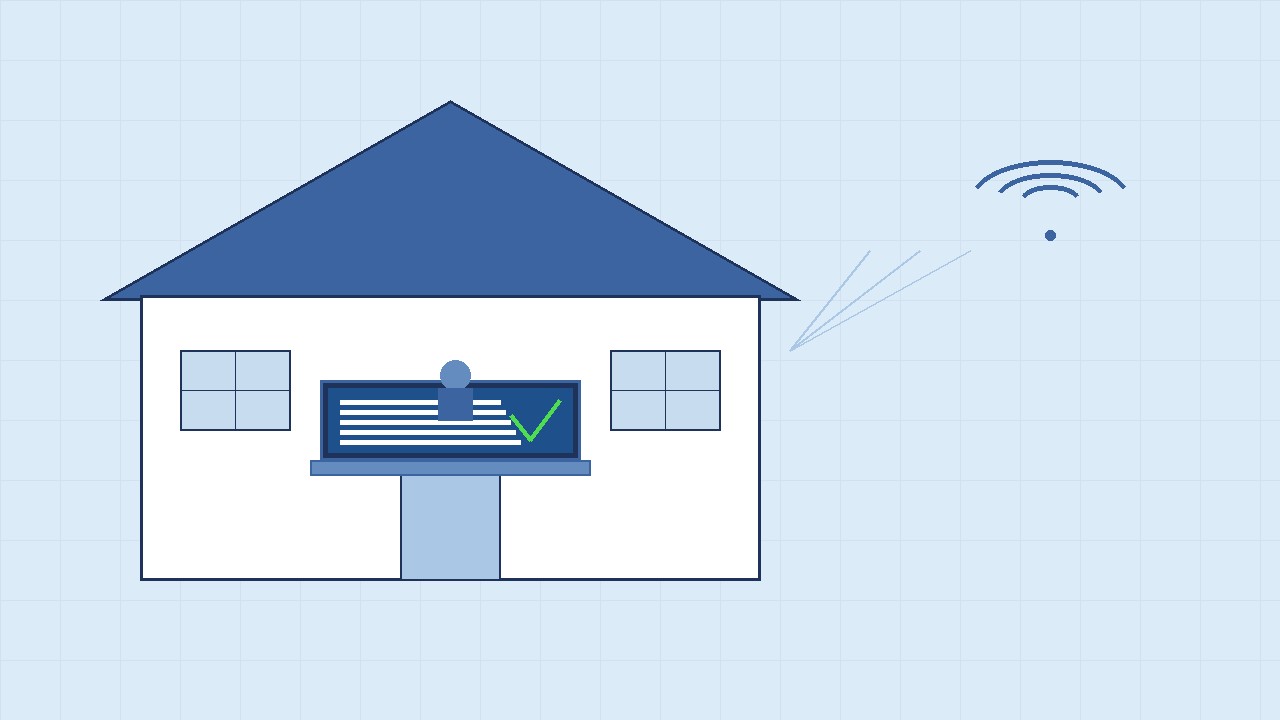
Kuvempu University in Shivamogga, Karnataka, has been testing a structural alternative: let evaluators do the work from wherever they are, by giving them secure remote access to digitised answer scripts on a monitored platform. The results, documented in a Deccan Herald report published in 2026, suggest the model is viable at scale and reproducible at other institutions.
How Remote Digital Evaluation Works at Kuvempu
The workflow begins with scanning. Answer scripts submitted by students at affiliated colleges are physically collected, barcoded, and scanned at a centralised facility. Each script is associated with a unique identifier that links it to the subject, course, and exam cycle — but not to the student's identity, which is masked. This anonymisation ensures that no evaluator can identify whose paper they are checking.
Once scanned, scripts are uploaded to the university's onscreen evaluation platform. Evaluators — typically faculty members at first-grade government and aided colleges across Karnataka — log in from any internet-connected device and receive their assigned scripts in a queue. Each question is displayed on screen alongside the marking scheme. The evaluator marks each part of the answer, awards marks, and moves to the next question.
The platform records every action with a timestamp. If an evaluator skips a question without awarding marks, the system flags it. If average marks awarded by a particular evaluator diverge significantly from the cohort median for a question, a statistical alert is generated for the chief examiner to review.
After marking is complete, marks are automatically aggregated. No manual totalling. No transfer of paper sheets. No risk of transcription error. The result flows directly from the evaluator's last action on the platform into the university's result processing system.
What Makes This Different From Standard Onscreen Evaluation
Most Indian universities that have adopted digital evaluation still require evaluators to be physically present at designated centres. The scanning happens centrally, scripts are displayed on screens at those centres, and evaluators work on-site. This is better than fully paper-based evaluation — but it retains the core constraint of physical attendance.
Kuvempu's extension was to fully decouple the evaluator's location from the evaluation process. Faculty members who might be located 200 kilometres from the university's evaluation centre in Shivamogga can log in and check papers from their own homes, college campuses, or any other location with reasonable internet access.
This matters for several practical reasons:
Availability across subjects. Subjects with small enrollments or specialised syllabi may have only a handful of qualified evaluators in a given region. Requiring those evaluators to travel to a single centre, on a schedule that may conflict with their own teaching responsibilities, creates bottlenecks. Remote access removes the geographic constraint entirely.
Speed of evaluation. When evaluators do not need to block an entire week at an external centre, they can mark scripts in shorter sessions that fit around their primary work. Daily throughput often increases rather than decreasing, because evaluators work at times when they are genuinely available rather than waiting around at a centre.
Continuity during disruptions. Physical evaluation centres are vulnerable to weather events, regional strikes, infrastructure failures, and health emergencies. A fully remote-capable evaluation system has no single point of physical failure. When Chennai experienced flooding in 2026 that disrupted transportation, universities with remote evaluation access could continue marking while those dependent on centre attendance could not.
The Monitoring Infrastructure
The concern most often raised against remote evaluation is cheating: how does the university know that the registered evaluator, and not someone else, is doing the marking? How does it verify that marks are being awarded consistently and independently?
Kuvempu's platform addresses this through a layered monitoring approach:
Live Streaming and Session Verification
Evaluators are required to enable their webcams during marking sessions. The platform streams this feed to a monitoring dashboard visible to the chief examiner. Any session where the registered user is not visible — or where a substituted person is detected — can be paused or flagged for review.
This is not a complete guarantee against fraud, but it raises the cost and visibility of any attempt significantly. The monitoring is not automated artificial intelligence detection but human supervisors watching live feeds from multiple evaluator sessions simultaneously.
Automated Marking Pattern Alerts
The platform tracks marks awarded per question, per script, and per evaluator, and generates alerts when patterns fall outside expected ranges. An evaluator who systematically awards full marks or zero marks on particular questions, or whose inter-question variance differs substantially from other evaluators of the same paper, receives a flag.
Chief examiners can pull up the specific scripts and marking decisions associated with any alert. If the deviation is genuine (some evaluators interpret the marking scheme more strictly than others, legitimately), the chief examiner can adjust. If it reflects poor evaluation, the scripts can be reassigned.
Audit Trail
Every click, mark, and time stamp is logged permanently. The university can reconstruct the complete evaluation timeline for any script: when it was first loaded, how long the evaluator spent on each question, and what marks were awarded at each step. This audit trail is available to the exam controller and, in the event of a legal challenge to a result, to courts.
The Results of the Pilot
The 2026 Deccan Herald report on Kuvempu described the remote evaluation system as a success, with the university planning to make remote access mandatory from the following semester rather than optional. Faculty participants cited:
The university's exam department cited faster result declaration timelines and a reduction in script-handling logistics (fewer physical documents to move between locations).
Implications for NAAC and NIRF
Remote digital evaluation with a complete audit trail generates documentation that directly supports NAAC Criterion 2.5 (Evaluation Process and Reforms). Specifically:
Universities going through NAAC accreditation cycles report that tangible evidence of evaluation reforms — not just stated intent — carries weight in peer team assessments. A fully documented digital evaluation workflow provides that evidence automatically, as a byproduct of normal operation.
For NIRF Teaching, Learning and Resources (TLR) scores, which carry a 30 percent weight in the overall ranking, data on student outcome distributions, pass rates, and evaluation turnaround times can all be extracted from a digital system. Universities that run on paper have to reconstruct this data manually from physical records each year.
Challenges Kuvempu Faces
The 2026 experience was not entirely smooth. Some guest faculty members who were promised remote access did not receive it before the evaluation cycle began, contributing to the standoff described in earlier reporting. The gap between announcing a capability and operationalising it for every eligible evaluator is real, and it requires administrative coordination that cannot be improvised during an active evaluation cycle.
The university's decision to defer the syndicate ratification of revised remuneration rates — combined with its simultaneous rollout of a new evaluation mode — created a moment in which evaluators were asked to adapt to new working methods while uncertain about whether their pay had changed and by how much. Getting the technology right and getting the payment policy right need to happen together.
What Other Universities Can Adapt
Kuvempu's approach is replicable with commercially available onscreen evaluation software and modest infrastructure investment:
| Component | Requirement |
|---|---|
| Scanning | Centralised high-speed scanners at the university exam department |
| Platform | Onscreen evaluation software with remote access, session monitoring, and audit logging |
| Internet | Evaluators need a stable 5 Mbps connection or better |
| Training | A one-day orientation session, plus a practice module with sample scripts |
| Monitoring | One chief examiner per 50 concurrent remote evaluators |
The scanning infrastructure is the highest capital cost. Once in place, the marginal cost of enabling remote access instead of centre-only access is primarily the monitoring capacity — which pays for itself in reduced evaluator logistics reimbursements.
Related Reading
Ready to digitize your evaluation process?
See how MAPLES OSM can transform exam evaluation at your institution.