Is AI Checking Your Exam Papers? Separating Fact from Fear in Digital Evaluation
Social media rumors claim AI is grading CBSE board exams. Here's what's actually happening with AI in digital evaluation — what it can do, what it can't, and why human evaluators remain essential.
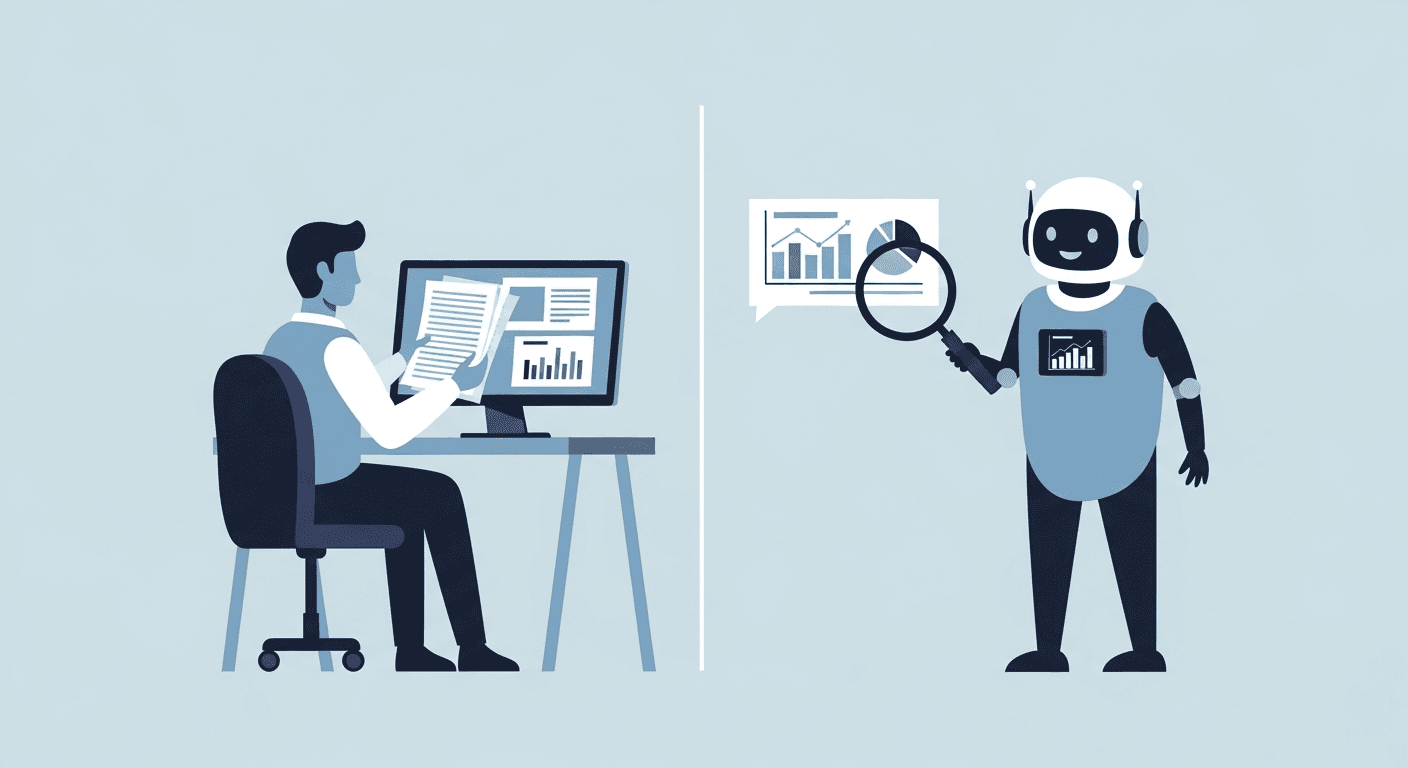
The Rumor
When CBSE announced On-Screen Marking for Class 12 board exams in 2026, social media lit up with a specific fear: *"AI is checking our papers now."* Parents worried that machines would grade their children's handwritten answers. Students feared that algorithms would replace the human judgment of experienced teachers.
CBSE has officially clarified: AI is not autonomously checking Class 10 or Class 12 answer sheets. Human evaluators continue to evaluate every answer sheet. The digital evaluation system uses AI to *support* teachers — not replace them.
But the clarification hasn't fully addressed the confusion, because people aren't sure what "AI support" actually means in practice. Let's break it down.
What Actually Happens When Your Answer Sheet Is Evaluated
Here is the actual workflow for CBSE's On-Screen Marking system:
At no point does an AI system read your answers and decide what marks to give. The evaluation is done by a human teacher — the same as it has always been.
So Where Does AI Come In?
AI in digital evaluation operates in a support role — behind the scenes, helping ensure quality and consistency. Here's what AI actually does:
1. Moderation and Anomaly Detection
After human evaluators mark answer sheets, AI systems analyze patterns across thousands of evaluations to flag potential issues:
This is not AI grading papers. It is AI monitoring the *quality* of human grading — the same function that moderators and chief examiners have always performed, but at a scale and consistency that humans cannot match across lakhs of answer sheets.
2. Scanning Quality Validation
AI helps ensure that scanned images are readable before they reach evaluators:
This is pre-evaluation quality control — ensuring that the evaluator sees a complete, readable version of the student's answer sheet.
3. OMR Sheet Processing
For objective-type questions using OMR (Optical Mark Recognition) sheets, AI reads the filled bubbles and converts them to marks. This is not new — OMR processing has been used in India for decades for entrance exams like JEE and NEET. The technology is mature and well-understood.
4. Question Paper Analysis
Some platforms use AI to analyze question papers and generate marking schemes or rubrics. This assists evaluators in understanding what to look for, but the actual marking decision remains with the human evaluator.
What AI Cannot Do (Yet)
Despite the rapid progress in AI, there are fundamental limitations in how AI can be used for exam evaluation:
Handwritten Answer Evaluation
While AI handwriting recognition has improved dramatically (with claims of 95% OCR accuracy for Indian handwriting), reliably evaluating handwritten descriptive answers requires understanding context, intent, reasoning quality, and partial credit — capabilities that current AI systems do not possess reliably enough for high-stakes examinations.
A student might write a technically incorrect formula but demonstrate sound reasoning in their approach. A human evaluator can recognize this and award partial credit. An AI system would need to understand the specific marking scheme, the intent of the question, and the student's line of reasoning — a much harder problem than simply reading the text.
Subjective Assessment
Essay-type answers, opinion-based questions, and creative responses require evaluative judgment that varies by context. Two valid answers to the same question might look completely different. Human evaluators can recognize valid alternative approaches; current AI systems struggle with this flexibility.
Cultural and Linguistic Context
Indian board exams are conducted across multiple languages. Student handwriting styles vary enormously. Regional expressions, idioms, and approaches to answering differ across states. AI systems trained on one linguistic context may not generalize well to others.
The Responsible Path Forward
AI will play an increasing role in exam evaluation over the coming years. But the responsible path is the one CBSE and other boards are taking: AI as *support* for human evaluators, not as a *replacement*.
The progression looks like this:
Stage 1 (Current): AI for quality assurance — Monitoring evaluator consistency, flagging anomalies, scanning quality control. Human evaluators make all marking decisions.
Stage 2 (Near-term): AI-assisted marking — AI suggests marks for certain objective-type questions, with human review and override. This is already happening for OMR sheets and simple short-answer questions.
Stage 3 (Medium-term): AI co-evaluation — AI provides a preliminary evaluation that a human evaluator reviews, adjusts, and confirms. This could speed up evaluation significantly while maintaining human oversight.
Stage 4 (Long-term): Selective AI autonomy — For highly objective questions with unambiguous answers, AI may evaluate autonomously. Subjective and descriptive questions would continue to require human evaluation.
We are currently at Stage 1, with elements of Stage 2 for objective questions. Full autonomous AI evaluation of handwritten descriptive answers (Stage 4) is years away — if it is ever fully appropriate for high-stakes board examinations.
What Students and Parents Should Know
If you are a student or parent worried about AI grading board exams:
Your answer sheet is evaluated by a qualified teacher. The teacher reads your handwritten answers on a computer screen instead of on paper, but the evaluation judgment is entirely human.
Your marks are auto-totalled. This is actually better for you — it eliminates the 2-5% totalling error rate that occurs in paper evaluation. Your total marks will be calculated correctly every time.
Moderation still happens. Senior evaluators and moderators review evaluations for quality, just as they do in paper-based evaluation. AI helps identify which evaluations need closer review.
No post-result verification is needed. Because marks are entered digitally and totalled automatically, the common errors that used to require post-result verification are eliminated. This is why CBSE has discontinued post-result verification for Class 12.
For Institutions Implementing Digital Evaluation
When communicating about your digital evaluation system, transparency matters:
Conclusion
AI is not checking your exam papers. Human teachers are evaluating answer sheets on screens instead of on paper. AI helps with quality assurance, scanning validation, and anomaly detection — supporting teachers to evaluate more consistently and accurately.
The fear of AI replacing human judgment in exam evaluation is understandable but premature. For now and the foreseeable future, the experienced teacher reading your answers and assigning marks is — and should be — human. The digital system around them simply makes the process faster, more accurate, and more transparent.
Related Reading
Ready to digitize your evaluation process?
See how MAPLES OSM can transform exam evaluation at your institution.