Evaluator Biometric Locks in Digital Marking: Lessons from Pakistan Punjab for Indian Universities
Pakistan Punjab's board introduced facial recognition that locks the marking interface if an unauthorized evaluator appears. Here is what Indian universities can adopt from this model.
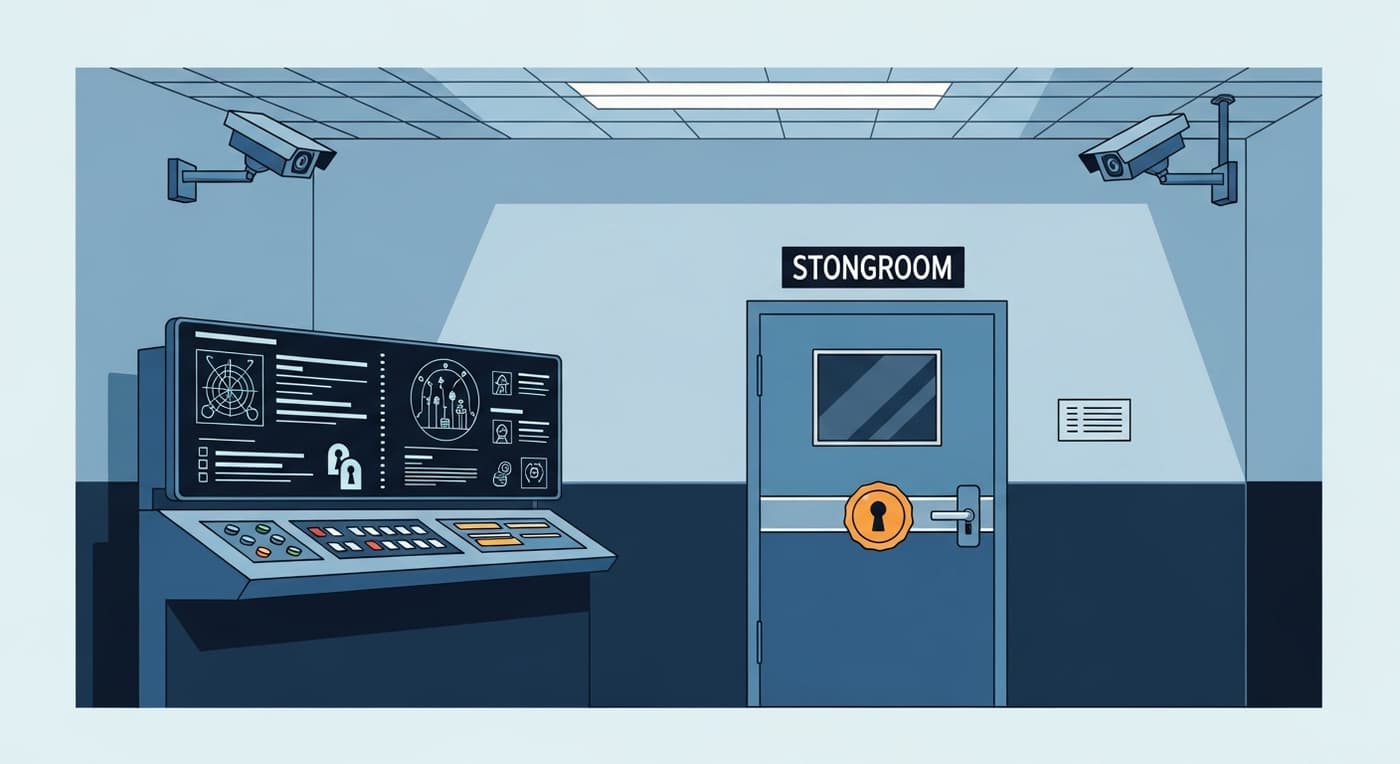
A New Kind of Security Enters the Evaluation Room
On November 26, 2026, a brief but significant report emerged from Pakistan's Punjab province: the board of education there has integrated facial recognition directly into its digital marking interface. The system does not merely log who opens the platform. It monitors the evaluator's face throughout the session and automatically locks the interface if it detects an unauthorized person at the screen.
For India's growing community of digital evaluation practitioners, this development raises a question that has remained largely unasked in the domestic conversation: while considerable attention has gone into securing answer books from candidates and preventing paper leaks at examination centres, how secure is the act of evaluation itself?
The Evaluator-Side Gap in Current OSM Deployments
Most on-screen marking (OSM) platforms deployed across Indian universities authenticate evaluators at login with a username and password, sometimes augmented with an OTP sent to a registered mobile number. After that initial gate, the session proceeds without further identity verification.
This creates a window for two specific risks. First, a logged-in evaluator can step away and allow a colleague, relative, or paid surrogate to mark scripts on their behalf. Second, in home-marking arrangements — where evaluators access the platform from personal computers, as several universities now permit to ease travel burdens — the institution has no practical way to verify who is physically present at the screen.
These are not hypothetical concerns. The Karnataka SSLC 2026 controversy involved 72,000 students affected by evaluation errors, some traced to inconsistent marking patterns that raised questions about evaluator attention during sessions. The CBSE OSM 2026 season saw investigations into anomalous marking velocity — instances where a single evaluator's logs showed implausibly fast assessment of complex ten-mark answers.
Evaluator-side verification has remained a blind spot because the infrastructure investment felt disproportionate for institutions already stretched by the first-generation work of scanning and digitizing answer books.
What Pakistan Punjab Actually Built
The Punjab school board's system, as reported, works on two layers. The first is identity-at-login: evaluators authenticate using their face matched against a pre-enrolled photograph, eliminating shared-credential abuse. The second layer is the continuous lock mechanism: a camera mounted at or near the workstation samples the evaluator's face at intervals during the session. If the detected face does not match the enrolled identity — or if no face is detected at all, as when the evaluator leaves the seat — the marking interface freezes until the authenticated user returns and re-verifies.
The board has also linked this to centralized audit trails: each marking session records a timestamped log of authentication events, which can be reviewed if a script's marking is subsequently contested.
This is not a novel technology in isolation. Continuous facial liveness detection is already embedded in India's online proctoring ecosystem for CBT examinations. What is novel is its application to the evaluator, not the examinee.
Why Indian Universities Are Positioned to Adopt This
India's OSM infrastructure, particularly in the second wave of adoption following the CBSE 2026 season, has matured considerably. Most institutions now rely on dedicated platforms that run on standard browser stacks. Adding evaluator-facing biometric verification does not require replacing the underlying OSM software — it requires either a browser-based webcam integration or a lightweight companion application that handles face verification and communicates session status to the marking platform.
Several features make this feasible at Indian university scale:
Existing hardware availability. Evaluation centres designated by universities — which typically number between 20 and 50 for a large affiliating university — almost universally have computers equipped with webcams, since video conferencing became standard practice during the 2020-21 period. No significant capital expenditure is required beyond software licensing.
DPDP Act compliance. The Digital Personal Data Protection Act 2023, which governs the processing of biometric data in India, permits institutional use for legitimate employment and assessment purposes subject to explicit consent and data minimisation. Evaluators are institutional stakeholders whose biometric data can be enrolled and stored with appropriate consent frameworks, unlike the more complex consent scenarios for student data.
Integration with audit trail requirements. NAAC's binary accreditation framework under its 2025-onward structure emphasises verifiable process evidence for Criterion 2, specifically Metric 2.5. Timestamped biometric authentication logs constitute precisely the kind of digital process documentation that strengthens institutional accreditation submissions.
The Implementation Road Map
Universities considering evaluator biometric locks do not need to implement the full continuous-verification model immediately. A phased approach is both more practical and more likely to achieve evaluator acceptance.
Phase one — identity at login. Replace the current password gate with a face-match check using a pre-enrolled photograph. This single change eliminates surrogate marking. The technical lift is modest: webcam capture at login, matched against a stored image using a standard face-comparison API, with a human override available for failure cases (poor lighting, spectacles change).
Phase two — session integrity sampling. Introduce periodic verification every 15-30 minutes during active marking. Evaluators are notified before each check. This is less invasive than continuous surveillance and sufficient to deter sustained absence from the workstation.
Phase three — anomaly-triggered verification. Use marking-velocity analytics that most OSM platforms already generate to trigger an on-demand re-verification when a session shows unusual patterns, such as a sudden drop in mark entry speed or an extended idle period.
The Broader Signal
Pakistan Punjab's experiment matters not because it is technically sophisticated — the components are off-the-shelf — but because it signals a maturing understanding of where evaluation integrity failures actually occur. Exam fraud in India has overwhelmingly been framed as a supply-chain problem: paper leaks at printing presses, WhatsApp distribution networks, impersonation at examination centres. These are real and serious, and India's legislative and enforcement response in 2026 addressed them directly.
The evaluation room itself has received far less scrutiny. As Indian universities invest in second-generation OSM infrastructure over 2026-27, building evaluator-side biometric controls into the architecture from the start is significantly cheaper and less disruptive than retrofitting them later.
Related Reading
Ready to digitize your evaluation process?
See how MAPLES OSM can transform exam evaluation at your institution.