Inside India's 2026 Evaluation Centres: CCTV, Surveillance, and Digital Accountability
Indian examination boards are deploying CCTV cameras, voice recorders, and real-time digital monitoring inside answer-sheet checking camps — transforming the accountability landscape for physical evaluation centres.
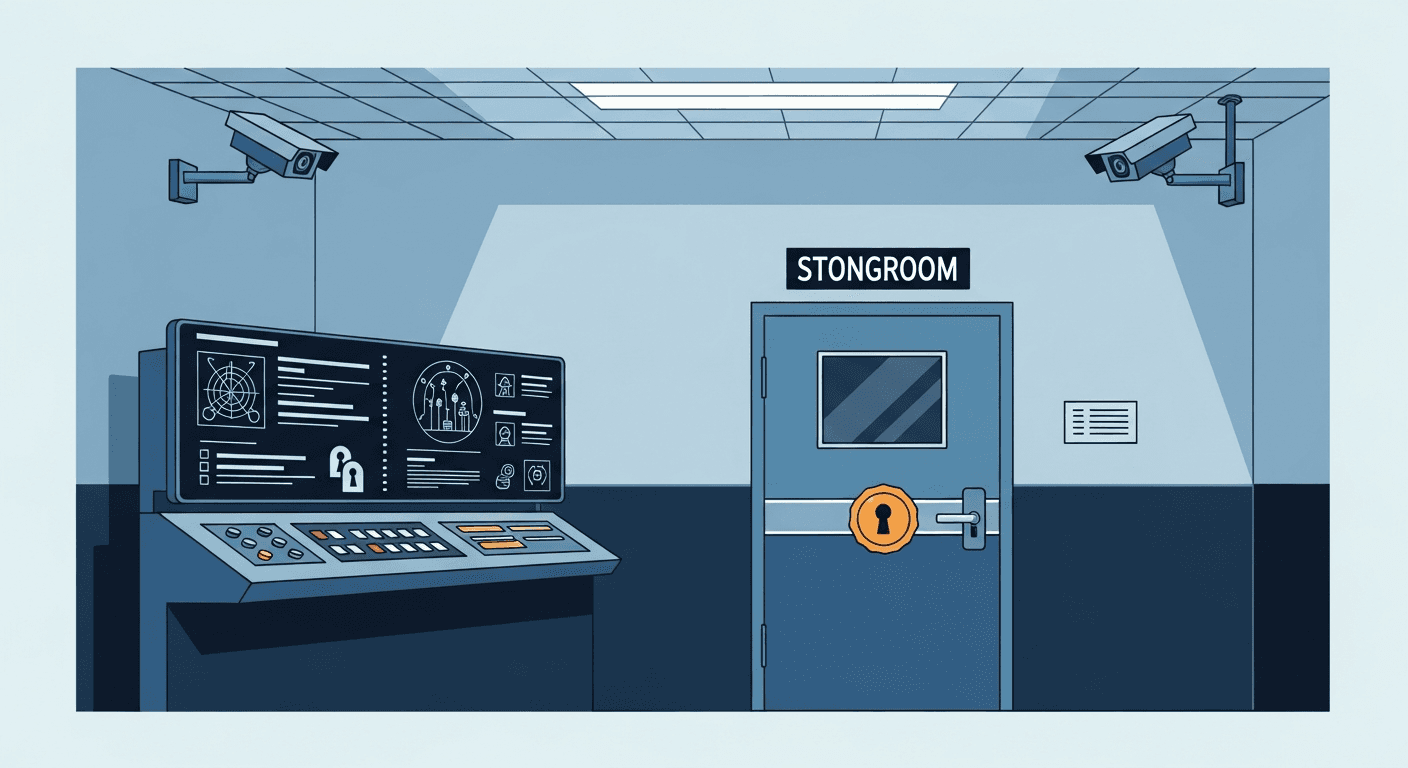
The Evaluation Camp Gets Its Own Security Layer
Every year, India's board examination season triggers an enormous logistical operation that receives almost no public attention: the answer-sheet checking camp. While exam halls have been scrutinised for decades — metal detectors, flying squads, CCTV coverage, police deployment — the rooms where teachers actually mark those answer sheets operated under far looser oversight.
That is changing rapidly in 2026. State boards across India are extending their digital surveillance infrastructure from the exam hall into the evaluation centre, deploying CCTV cameras, voice recorders, real-time digital progress tracking, and financial penalties for marking errors. The question is no longer just "did the student cheat?" but also "did the evaluation process meet verifiable standards?"
---
Uttar Pradesh: Surveillance Reaches the Strong Room
The Uttar Pradesh Madhyamik Shiksha Parishad (UPMSP) operates one of India's largest board examination systems, with results for over 55 lakh students annually. For 2026, the board extended its CCTV and webcasting infrastructure beyond examination halls into the evaluation process itself.
UP Board's digital monitoring for 2026 evaluation includes:
This represents a significant expansion of the board's existing infrastructure, which previously focused surveillance on examination halls during the exam period. By extending CCTV coverage to the full lifecycle of answer books — from strong room storage through evaluation through re-packing — UPMSP creates a continuous chain of custody documentation.
The evaluation phase concluded in early April 2026, with the board confirming it then moved into the "data processing" stage: scanning OMR sheets and feeding marks into digital systems under the same CCTV-monitored conditions.
---
Madhya Pradesh Board: Accountability Through Penalty
The Madhya Pradesh Board of Secondary Education (MPBSE) took a complementary approach to evaluation accountability, focusing on the financial consequences of marking errors rather than passive surveillance alone.
For 2026, MPBSE established a penalty of Rs 200 per confirmed marking error. Officials assigned between 41 and 50 answer books per evaluator to ensure manageable workloads and consistent marking standards. The board expected approximately 4 lakh answer sheets to be evaluated in Indore alone during the current cycle.
The financial penalty model operates as a deterrent against careless marking. When an evaluator knows that each confirmed error costs money — not just a note in a record — the incentive to read carefully is stronger. Combined with supervisory checks at evaluation centres, the system creates layered accountability.
Critically, the penalty only applies to confirmed errors — cases where a second review establishes that marks were awarded incorrectly. This requires the board to maintain records of each evaluator's marking that can be compared against a verified standard, which itself requires digital record-keeping.
---
Multi-Board Trend: CCTV as Standard Infrastructure
The 2026 season shows CCTV monitoring at evaluation centres moving from exception to expectation across multiple boards:
| Board | Surveillance Measure |
|---|---|
| UP Board (UPMSP) | CCTV + voice recorders in evaluation rooms, strong rooms, packing rooms |
| MP Board (MPBSE) | Supervisory digital progress monitoring + penalty per error |
| Punjab Board (PSEB) | CCTV monitoring at examination and evaluation centres |
| Maharashtra (MSBSHSE) | State-level vigilance committee, CCTV in all designated exam/evaluation classrooms |
| Rajasthan Board (RBSE) | 24-hour control room, CCTV, structured monitoring during evaluation |
The pattern is consistent: boards that began with CCTV for examinations are extending the same infrastructure to evaluation. The answer book is now under surveillance for its entire lifecycle — from the moment a student submits it to the moment it is archived.
---
Why the Evaluation Centre Was the Accountability Gap
For decades, Indian board examination systems focused anti-malpractice measures almost entirely on the student side. Copying in examination halls was a major concern, and resources were deployed accordingly — flying squads, police personnel, CCTV, biometric verification.
But the answer book, once collected, entered a relatively unmonitored space. Physical checking camps typically operated under the oversight of head examiners, but actual room-level monitoring was inconsistent. This created several known risks:
None of these risks are hypothetical. Each has been documented in cases before Indian courts and RTI responses over the years. The surveillance extension into evaluation centres is a direct response to the institutional memory of these failures.
---
Digital Evaluation as the Structural Solution
Physical surveillance at evaluation centres reduces risk but does not eliminate it. A CCTV camera records what happens but cannot prevent a determined actor from manipulating marks on paper before submission. Voice recorders capture discussions but cannot audit whether a marking scheme was applied correctly.
Digital evaluation addresses the structural vulnerabilities that surveillance can only observe:
Immutable digital records: When marks are entered on-screen and submitted via a portal, there is no physical sheet to alter after the fact. The digital record is the record of evaluation.
Automated totalling: Addition errors — one of the most common sources of mark disputes — are eliminated entirely. The system calculates totals automatically.
Question-level tracking: Digital platforms can record not just the total but the mark awarded for each question, making it possible to reconstruct exactly how an evaluator arrived at a total. This granularity is impossible with paper-based systems.
Real-time monitoring: Evaluation administrators can see, in real time, how many scripts each evaluator has completed, at what pace, and whether marks are being awarded within expected ranges. Anomalies trigger review before results are finalised.
Chain of custody without physical movement: Because answer books are scanned centrally and accessed digitally, the physical book remains in a single secure location. The risk of loss or tampering during transport disappears.
---
The Convergence: Surveillance Plus Digital Equals Genuine Accountability
The boards implementing CCTV monitoring at evaluation centres and the institutions adopting digital evaluation platforms are working toward the same goal through different means. The most robust outcome combines both: digital evaluation removes the physical manipulation risk, while surveillance monitoring ensures that the humans operating the digital system do so with appropriate diligence.
For universities and colleges that run their own examination systems — as autonomous institutions do — this means the standard is rising. Students and faculty increasingly expect that evaluation will be monitored, auditable, and free from both errors and interference. Accreditation bodies including NAAC assess governance and transparency as formal criteria. Courts increasingly scrutinise evaluation records when challenged.
The evaluation centre, long an invisible part of the examination lifecycle, is becoming one of the most watched.
---
Related Reading
Ready to digitize your evaluation process?
See how MAPLES OSM can transform exam evaluation at your institution.