India's Hiring Crisis: Why Employers Are Now Demanding Verifiable Exam Records
With 32 fake universities and academic fraud flagged in 8-12 percent of pre-employment checks, Indian employers are building their own verification infrastructure. Digital evaluation creates the unbroken record that makes marks independently provable.
The Credential Problem That Employers Can No Longer Ignore
In March 2026, the University Grants Commission published its annual list of fake universities operating in India. The count was 32. These institutions issued degrees that cannot be verified through any government database, to students who may or may not have attended, assessed through processes that in many cases never existed in any meaningful form.
The UGC list captures only the entities bold enough to call themselves universities. It does not count the affiliated colleges that falsify internal assessment marks, the examination centres where answer books are substituted, or the intermediaries who insert a student's name into a result database for a fee. Multiple estimates from background verification firms place the volume of fraudulent or materially inaccurate academic credentials at hundreds of thousands per year.
For India's employers — particularly the large IT, pharmaceutical, banking, and manufacturing firms that recruit annually from hundreds of colleges — this has become a direct operational cost. Academic background verification firms operating in India estimate that between 8 and 12 percent of candidates screened present academic credentials with at least one discrepancy, ranging from a minor marks inflation to a degree from an institution that does not exist in the AISHE database. For companies with high-volume annual recruitment, maintaining a verification infrastructure runs to crores per year.
What Employers Are Currently Doing
India's major employers have built several responses to credential uncertainty, each with practical limitations.
Third-party academic verification. Firms including First Advantage, KROLL, and Mercer run academic checks as a standard part of pre-employment screening. They contact universities directly or through agents, verify enrollment status and degree conferral, and compare the marks the candidate claimed with what the institution has on record. Full academic verification turnaround runs from three to twenty-one days, depending entirely on how quickly an institution responds to verification requests.
Institutions that respond slowly — or that have paper-based records requiring manual search — cause hiring delays. Candidates from those institutions are at a practical disadvantage in fast-moving recruitment, even when their credentials are genuine.
Digilocker verification. Employers increasingly request that candidates share academic certificates via Digilocker rather than as uploaded PDFs, because Digilocker documents are digitally signed by the issuing institution and cross-verified against government databases. A Digilocker-verified marksheet takes minutes to authenticate; a scanned PDF takes days, if it can be authenticated at all.
However, Digilocker coverage is uneven. CBSE and several state boards populate certificates directly. Many universities and most affiliated colleges do not, leaving a gap that covers a large share of India's degree-holding workforce.
Direct portal access. Some large employers have built direct integrations with university result portals, allowing them to query a candidate's marks in real time. This works only for institutions with stable, accessible, machine-readable digital result databases — a minority of the country's 1,100-plus universities.
The net result is a two-tier employer experience. Candidates from institutions with verifiable digital records move through screening faster, with fewer friction points, and with higher offer-to-joining ratios. Candidates from institutions where verification is uncertain face delays, additional documentation requests, and, in some cases, withdrawn offers when an unresolved discrepancy makes a hiring manager uncomfortable.
The Audit Chain That Digital Evaluation Creates
A well-implemented digital evaluation system does not simply produce a result. It creates a layered, time-stamped record at every step of the evaluation process.
When an answer book is received at the evaluation centre, it is logged with the student's roll number, subject code, and examination centre. The physical book is scanned, and each page image receives a unique identifier computed from its content. Any subsequent alteration to the image produces a different identifier, making tampering traceable.
Every mark entered by an evaluator is recorded with a timestamp, the evaluator's identity, the question number, and the specific page of the scanned book shown during marking. If a student disputes a mark, the record can reproduce exactly what the evaluator saw and exactly what they entered. There is no ambiguity about whether a page was evaluated, and no possibility of a mark being changed without creating a traceable record of that change.
Where double valuation is applied, both independent evaluations are recorded, along with the variance between them and any moderation decision. The moderated final mark is linked to both underlying evaluations. The result computation is algorithmic, with no manual intervention between evaluation completion and result generation.
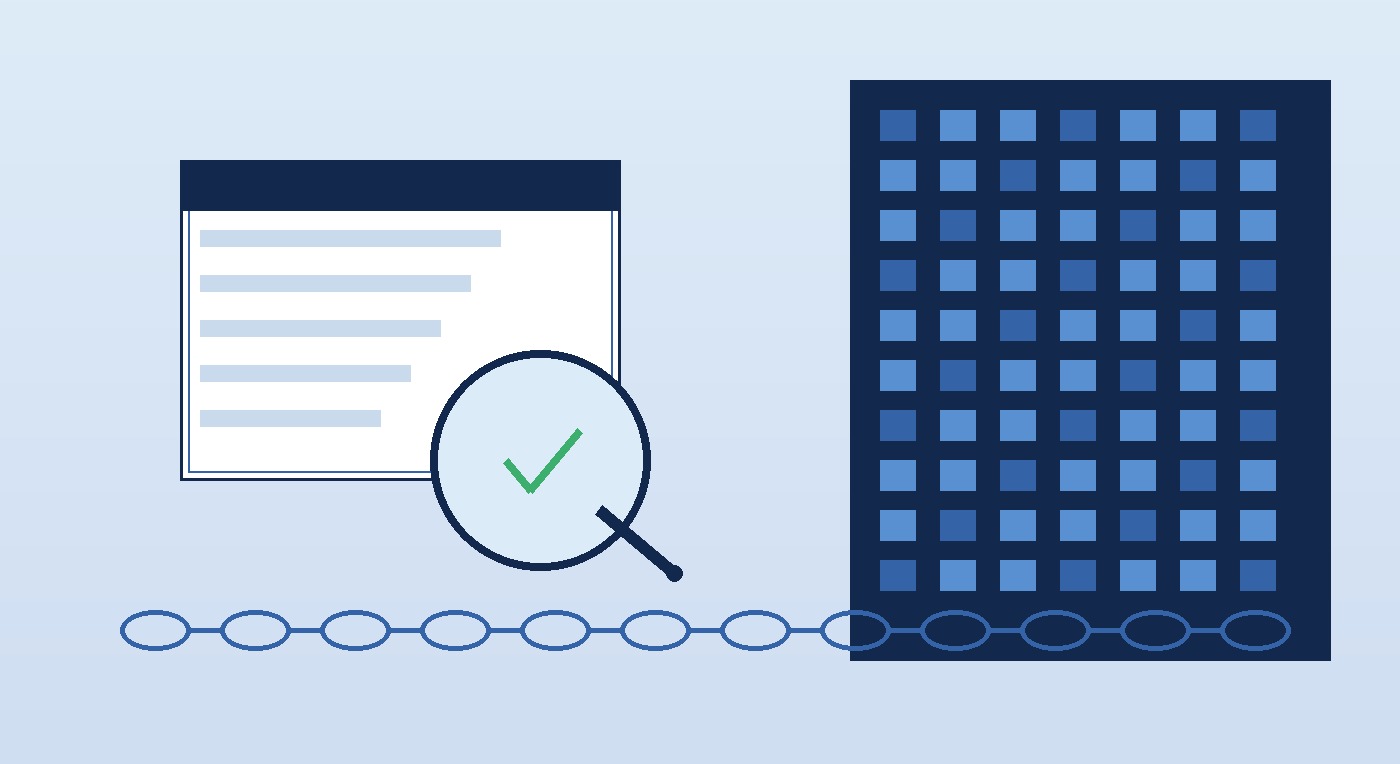
This chain is verifiable by the student, by the university, by a regulatory body, and by an employer or their verification partner. Because it is structured digital data rather than scanned images of paper registers, verification is a database query rather than a manual search.
The Recruitment Implications
For institutions that maintain this kind of record, the practical implications for campus placement are measurable and significant.
Faster hiring decisions follow directly from faster verification. An employer that can confirm a candidate's marks from a secure institutional API in under 60 seconds makes an offer decision faster and with greater confidence than one waiting for a manual verification to return in two weeks. Institutions with responsive digital records are preferred recruitment partners for firms that operate on tight hiring timelines.
Higher offer-to-joining ratios follow because background checks produce fewer unresolved discrepancies. When a background check returns clean, the candidate's offer moves forward. When it returns with an unresolved question about an internal assessment mark that cannot be traced, the offer stalls — sometimes permanently. Placement statistics at institutions with reliable digital evaluation records consistently outperform comparable institutions where records are paper-based or incomplete.
Premium employer access follows over time. Several large IT and consulting employers have stated — in placement interactions with institutions, if not in published policy — that they weight the auditability of academic records when deciding which institutions to visit for campus recruitment. The reasoning is straightforward: if they cannot verify the marks, they cannot trust the marks, and they cannot build a recruitment programme on credentials they cannot verify.
The CBSE OSM Crisis and Its Credential Dimension
The May 2026 CBSE on-screen marking controversy introduced a new dimension to the credential question. For the 1.68 lakh students who filed re-evaluation applications and the 4.04 lakh who requested scanned copies of their answer scripts, the core grievance was not just about marks. It was about the impossibility of verification: students could not confirm that their papers had been evaluated correctly, and CBSE could not initially produce the audit records to prove that they had.
The contrast with institutions that use well-designed digital evaluation systems is stark. At those institutions, a student who questions their marks can be shown the scanned image of their answer book alongside the marks entered for each question, the timestamp of each evaluation decision, and the identity of the evaluator who made it. That level of transparency does not just resolve disputes — it prevents the majority of disputes from arising, because students who can see the evidence rarely find grounds for complaint.
The employer dimension adds another layer. Students from institutions where their marks are verifiable at that level of granularity present a fundamentally different employment proposition from students from institutions where marks exist only on a paper certificate.
The APAAR and National Credit Framework Connection
India's APAAR system currently links academic records for approximately 26 crore students. Its long-term vision is a system where any employer or institution can verify a student's complete academic history — from school to postgraduate — in minutes. The National Credit Framework (NCrF) extends this, proposing that academic credits from any accredited institution should be transferable and verifiable across the system.
Both frameworks depend entirely on the integrity of the records that feed into them. A credit recorded in APAAR is only as trustworthy as the examination process that generated it. An institution that uses a digital evaluation system with a complete audit trail contributes records that APAAR can verify against its own logs. An institution that uses a paper-based process contributes records that cannot be independently verified in any automated sense.
This creates a structural incentive for digital adoption that has nothing to do with regulatory compliance and everything to do with the practical value of the credentials an institution produces. Institutions with verifiable records will be disproportionately valuable partners in the emerging credit ecosystem — and their graduates will carry a corresponding advantage in a hiring market that increasingly asks not just what your marks are, but whether they can be proven.
Two Immediate Steps for Institutions
For administrators reading this in October 2026, two concrete actions will improve verifiability before the end of the academic year.
Link certificates to Digilocker. Graduation mark sheets and degree certificates that are accessible via the Digilocker API are verifiable by employers in minutes. Contact your Digilocker integration support to confirm that your institution's certificates are populated and accessible. If they are not, initiate the integration this semester.
Ensure your examination records are queryable. Confirm that your examination platform maintains the fields required for verification — roll number, subject, marks per question, evaluator identity, evaluation timestamp, and final result — in a database that authorised queries can reach. If your current platform stores results only as scanned PDFs or printed registers, include queryable structured data as a mandatory requirement when you next review your platform contract.
Employers are building the infrastructure to distinguish between verifiable and unverifiable credentials. The institutions that offer verifiable credentials will receive disproportionate access to the employers their students most want to work for.
Related Reading
Ready to digitize your evaluation process?
See how MAPLES OSM can transform exam evaluation at your institution.