Agra's Third Exam Centre Cancellation of 2026: When Physical Infrastructure Keeps Failing
Dr. Bhimrao Ambedkar University cancelled three more exam centres for mass cheating on November 25 — the third such intervention this year. The pattern points to a structural problem that partial enforcement alone cannot fix.
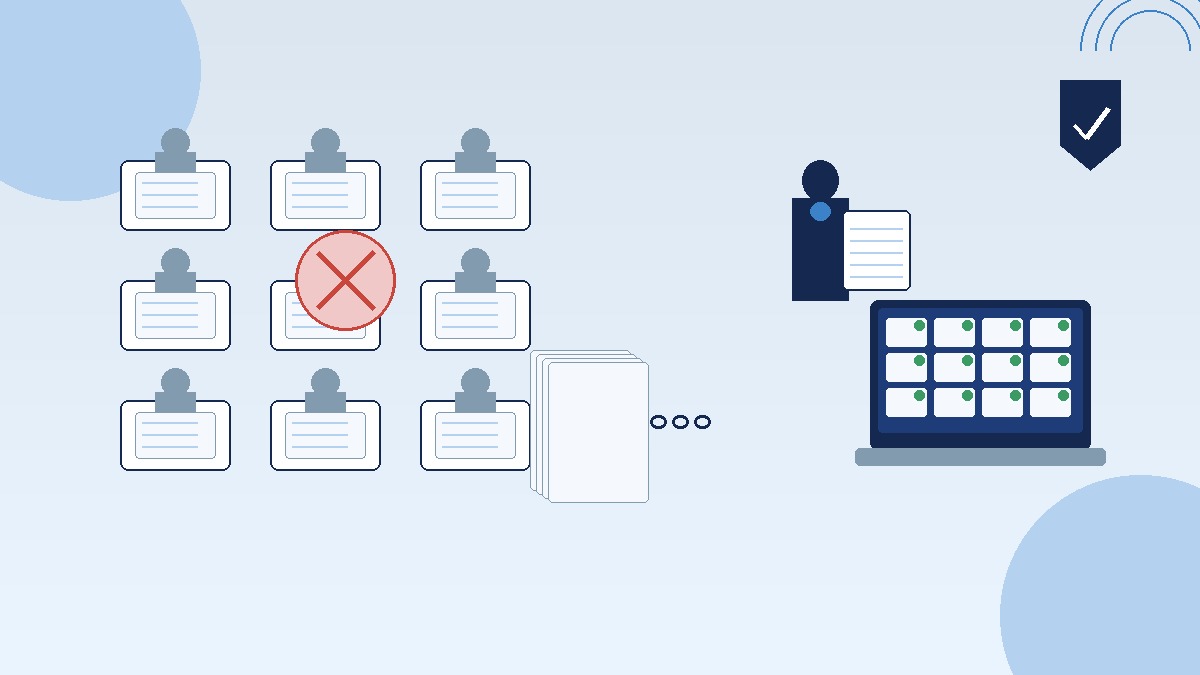
Three Cancellations, One Calendar Year
On November 25, 2026, Dr. Bhimrao Ambedkar University — the central affiliating university in Agra, Uttar Pradesh — cancelled three examination centres after flying squad teams discovered mass copying during the odd-semester examinations. Students in BA, BSc, BCom, vocational BCom, MA, and MSc programmes at two Mathura district centres and one additional location were shifted to new venues with revised admit cards issued the same week.
This was not an isolated incident. In April 2026, the same university cancelled two examination centres in Agra and Mathura under similar circumstances. In May 2026, three more centres were cancelled after raids. The November 25 round brought the total to eight cancelled examination centres across a single academic year at a single affiliating university.
Each cancellation followed the same sequence: flying squads arrived, found mass copying in progress, cancelled the centre, relocated students, and moved on. The administrative response was swift and proportionate. The underlying problem was not addressed.
Why This Pattern Persists
Mass copying at physical examination centres is not primarily a question of ethics or enforcement intensity. It is a question of geometry and information asymmetry.
A physical examination centre for a large affiliating university typically hosts hundreds of students per session across dozens of rooms. Each room may have one or two invigilators. Flying squads cover dozens of centres across a district. The ratio of monitors to students is unfavourable by design — there are not enough supervisory staff to watch everyone simultaneously, and experienced exam-takers know this.
Paper-based answer scripts compound the problem downstream. When identical answers from students who sat adjacent to one another arrive at an evaluation centre, nothing flags the similarity. Physical answer scripts do not carry metadata. An evaluator marking a bundle of thirty scripts has no view across other bundles. The evaluation chain, from exam hall to marks ledger, provides no structural check against coordinated copying.
The result is a feedback loop: mass copying at the exam stage produces inflated marks in the evaluation stage, which produces grade distributions that bear no relationship to actual learning outcomes, which undermines institutional credibility, which eventually shows up in employer mistrust, re-evaluation litigation, and regulatory scrutiny.
What Digital Evaluation Changes — and What It Does Not
Digital evaluation — the scanning of physical answer scripts and their evaluation on screen by anonymised, geographically distributed evaluators — does not prevent students from copying during an examination. It operates downstream of the exam hall. Conflating the two is a category error that leads to misallocated solutions.
What digital evaluation does change is the downstream signal processing:
Metadata visibility. Each scanned answer script carries a timestamp, a scan station identifier, and an answer book serial number. When bundles from a specific centre show anomalous patterns — unusually uniform handwriting, identical answer sequences, or statistical similarity in marks distribution — the evidence is preserved and reviewable. Paper bundles are opaque to this kind of analysis.
Evaluator anonymity and geographic separation. When answer scripts are evaluated by faculty at remote centres who have no connection to the originating institution, the second half of the marks-inflation chain breaks. Even if students at one centre copied identically, those identical scripts are assessed by evaluators who do not know the students, the centre, or the local politics.
Double valuation as a cross-check. In a double valuation system, two independent evaluators assess the same script. If coordinated copying produces very high scores from one evaluator, the second independent assessment provides a check. Moderation processes that compare score distributions across centres can flag outliers for review before marks are finalised.
Audit trails for institutional accountability. When a cancellation order is issued, university administration can pull the full evaluation record for that centre's scripts within hours. The chain of custody — from scanning to assignment to marking to moderation — is documented. In a paper system, reconstructing what happened to any given bundle of answer scripts after cancellation is frequently impossible.
None of these mechanisms prevent cheating. All of them reduce the institutional value of cheating and increase the institutional cost of covering it up.
The Systemic Arithmetic
Dr. Bhimrao Ambedkar University affiliates over 600 colleges and processes millions of answer scripts annually. At eight cancelled centres across three intervention rounds in 2026, the administrative and academic disruption is visible and measurable. Revised admit cards, relocated students, delayed results for affected batches, and the reputational cost of appearing in state-level news three times in a year for the same failing.
The less visible cost is the signal it sends to the university's academic credibility. Employers in Agra, Mathura, Aligarh, and the broader western UP region read the same news. The devaluation of degrees from an institution with a documented mass-copying problem is not confined to the students caught; it affects every student whose credentials are scrutinised by the same employer.
Universities facing this pattern have a limited set of structural responses. Physical enforcement scaling — more flying squads, more surprise visits, more cancellations — has diminishing returns and rising administrative costs. The intervention model at Dr. Bhimrao Ambedkar University already operates at a level that most affiliating universities cannot match. The same pattern recurs in April, May, and November.
The alternative structural response is to reduce the return on copying. When examinations are conducted under conditions where the evaluation phase provides no additional gain from physical proximity — because scripts are anonymised, evaluated at distance, and processed through double valuation — the incentive structure for mass copying weakens. It does not disappear. It weakens.
For an affiliating university managing 600 colleges, that weakening has compounding effects. Each evaluation cycle that processes scripts digitally is a cycle where the mass-copying-to-marks-inflation chain is broken, regardless of what happened in the exam hall.
A Decision for 2026-27 Planning Cycles
The November round of cancellations at Dr. Bhimrao Ambedkar University lands in the middle of the odd-semester examination window. Controllers of Examinations across UP's affiliating universities are currently running the same window, facing the same enforcement constraints, and reading the same news.
For those institutions still on paper-based evaluation, the question is not whether to eventually adopt digital evaluation. It is whether the current system's failure modes — mass copying, marks inflation, audit gaps, reputational risk — are acceptable costs for another cycle.
The evidence from Agra in 2026 suggests they are not.
Related Reading
Ready to digitize your evaluation process?
See how MAPLES OSM can transform exam evaluation at your institution.