Chhattisgarh Open University's AI-Assisted Evaluation: A Model for State Universities
Pandit Sundarlal Sharma Open University in Bilaspur has deployed AI-assisted digital evaluation for its answer sheets, offering a replicable blueprint for state open universities across India.
A State University Breaks New Ground
India's open and distance learning sector serves over 4.5 crore students — nearly a third of all higher education enrolments. Yet examination systems in many state open universities have remained largely paper-based, relying on physical dispatch of answer sheets, manual evaluation centres, and results that take months to process.
Pandit Sundarlal Sharma Open University (PSSOU) in Bilaspur, Chhattisgarh, has taken a significant step away from that model. The university has deployed AI-assisted digital evaluation software for its Pre-B.Ed., Pre-D.El.Ed., undergraduate, and postgraduate examinations — making it one of the earliest state open universities in India to integrate AI tooling directly into the answer-sheet evaluation workflow.
How the System Works
The process follows a structured workflow that keeps human examiners at the centre while AI handles logistics and quality control.
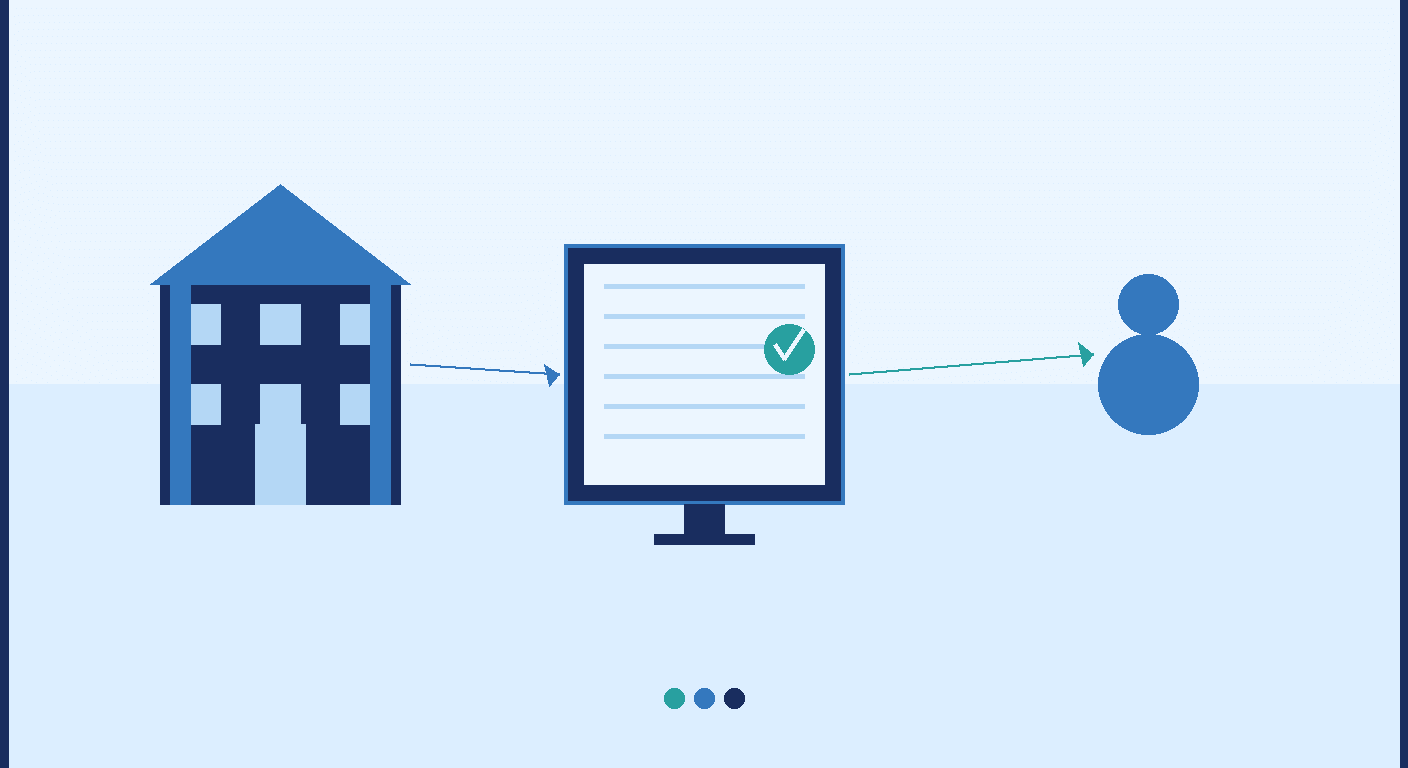
After examinations conclude, answer sheets are scanned in a designated secure room. High-resolution digital copies are uploaded to the university's evaluation software. The system then allocates batches of scripts to each evaluating teacher's account, which they access remotely.
A three-minute benchmark has been set for evaluating each answer sheet. If a teacher does not complete evaluation within the allotted window, the software automatically reassigns the script to another evaluator's queue. This prevents bottlenecks and ensures no script remains stuck in an inactive account.
AI in this model does not grade answers or determine marks. Instead, it manages workflow routing, monitors completion rates, flags incomplete evaluations, and gives administrators real-time progress tracking. Final marks rest entirely with the human examiner.
Evaluated marks flow into a central database, eliminating the manual data-entry step that is historically one of the largest sources of tabulation errors in open university systems.
Why Open Universities Face Distinct Challenges
State open universities face examination challenges that differ substantially from residential universities. Their student populations are geographically dispersed across districts and tehsils. Evaluators are often part-time or contractual faculty. Physical answer-sheet logistics — transport, secure storage, dispatch to evaluators, collection, and re-dispatch to the tabulation wing — are expensive, slow, and prone to loss.
Digital evaluation collapses these logistics. Evaluators can work from any location with internet access. Evaluation batches can be reallocated in real time. The entire script lifecycle becomes auditable.
PSSOU's model demonstrates that AI does not need to replace human judgement to deliver meaningful operational gains. By automating workflow management — the routing, tracking, and redistribution of scripts — the university has reduced the administrative overhead that traditionally slows results in open education systems.
Key Design Choices Worth Examining
Several decisions in the PSSOU implementation are worth examining for other universities considering a similar transition.
Time-bounded reassignment: The three-minute threshold is not an arbitrary speed mandate. It prevents scripts from sitting idle in evaluators who are unavailable or slow-moving, a common problem when evaluation is distributed remotely. The auto-transfer mechanism acts as a passive quality-control tool without requiring manual administrative intervention.
Secure scanning rooms: Designated strong-room scanning protocols separate the physical handling of original answer sheets from the digital evaluation process. This maintains chain of custody for the physical originals while enabling distributed digital work.
Teacher-centred AI framing: Positioning AI as an assistant rather than an evaluator has been important for faculty acceptance. Teachers retain full authority over marks. AI handles infrastructure, not assessment judgement.
The Regulatory Context
PSSOU's initiative arrives at a moment when the UGC has signalled an expectation that open and distance learning programmes maintain evaluation standards comparable to campus-based programmes. UGC's ODL and Online Programme regulations require institutions to document their evaluation processes and provide answer-book access to students on request.
Digital evaluation systems generate the audit trails needed to meet these requirements. Every script access, every mark entry, and every reassignment is timestamped and logged — a level of documentation that physical evaluation cannot match.
A key UGC compliance requirement for ODL institutions is demonstrating that evaluation is conducted by qualified subject-matter experts. Digital systems enforce this through role-based access: only evaluators with the correct subject credentials can be assigned scripts in that subject, and the access logs provide documentary evidence of compliance.
Implications for NAAC Accreditation
For NAAC purposes, a digital evaluation workflow is relevant to Criterion 2 (Teaching-Learning and Evaluation), specifically Metric 2.5. Institutions that can document a fully digital evaluation workflow — scanning, onscreen evaluation, digital mark consolidation, student access to evaluated scripts — are better positioned during peer team visits.
PSSOU's approach, with its built-in timestamping, automatic reassignment records, and centralised mark entry, generates the process evidence NAAC evaluators look for when assessing transparency and efficiency in examination management. For an open university seeking accreditation or re-accreditation, this structured evidence is difficult to produce retroactively from a physical system.
Scale and Replicability
PSSOU evaluates answer sheets across multiple programmes — Pre-B.Ed. and Pre-D.El.Ed. teacher training, undergraduate general courses, and postgraduate specialisations. This is not a pilot for a single subject; it is a system-wide shift.
Other state open universities examining this model will find that the technology barriers are lower than expected. The primary investment is in a reliable scanning station and a cloud-connected evaluation platform. Both are now commercially available from vendors serving the Indian higher education market.
The workflow benefits compound over multiple examination cycles. Training costs fall as evaluators become familiar with the platform. Scanning protocols become routine. Result timelines shorten predictably as administrative bottlenecks are eliminated.
What State Open Universities Should Do Now
Institutions that have not yet digitised their evaluation workflow can begin with a single programme or a single examination cycle. The operational lessons — scanning protocols, evaluator onboarding, time-threshold calibration — are transferable across subject areas and student volumes.
A practical starting sequence:
India's open universities collectively handle crores of answer sheets each year. PSSOU's initiative demonstrates that the operational and regulatory case for digitisation is strong — and that the transition can be managed within a single academic year.
Related Reading
Ready to digitize your evaluation process?
See how MAPLES OSM can transform exam evaluation at your institution.