CBSE Delays Supplementary Exam to July 28: 1.63 Lakh Students Race Against Admission Deadlines
When CBSE shifted the Class 12 compartment exam from July 15 to July 28, 2026, it triggered a cascade that puts more than 1.63 lakh students at risk of missing college admissions — a downstream consequence of the OSM evaluation crisis.
A Two-Week Delay With Semester-Long Consequences
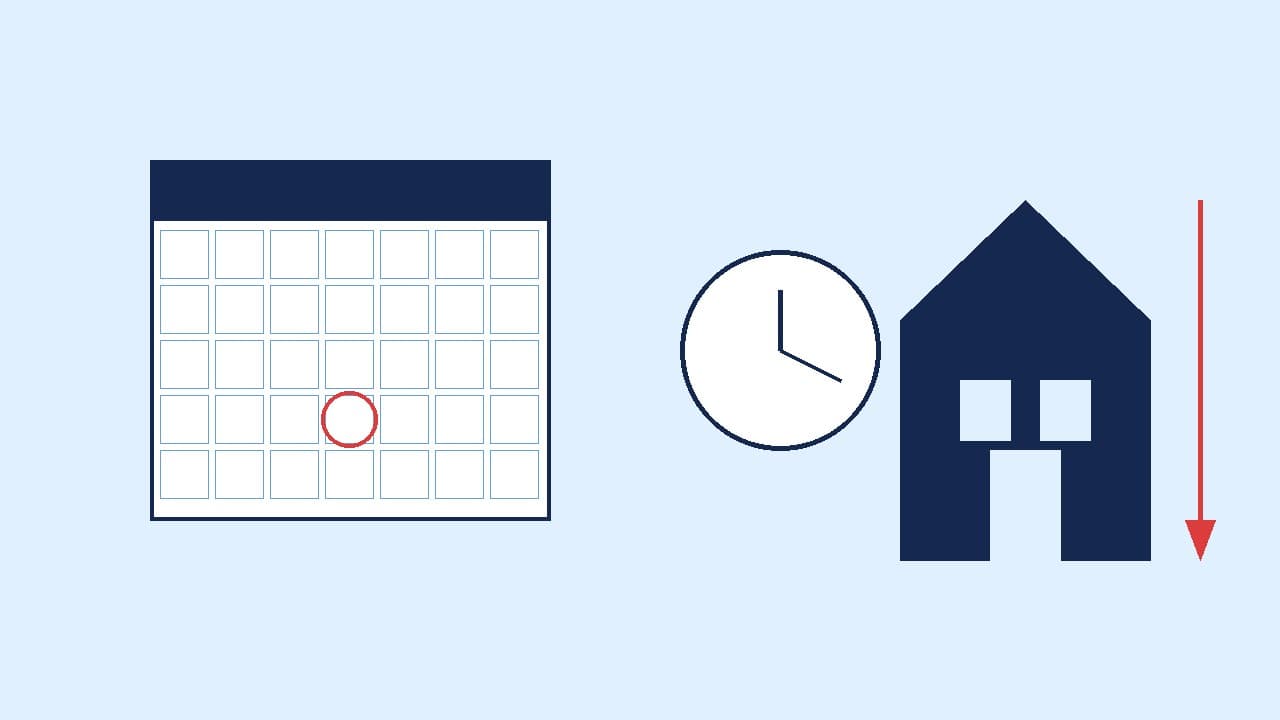
On July 1, 2026, CBSE announced a revised date for the Class 12 supplementary examination: July 28, moved back from the previously communicated July 15. For the students waiting on this exam to secure an undergraduate college seat, the two-week shift is not an administrative footnote. It is a potential semester — and in some cases, an academic year — lost.
The announcement triggered immediate and widespread backlash. Students described the delay as catastrophic. "College admissions have started and we are losing seats daily," one wrote on social media. Another called it "a step that will ruin thousands of lives." The outrage is proportionate to the problem: a delayed supplementary exam, in a year when CUET UG results are already declared and universities are processing counselling rounds, puts students on a collision course with admission deadlines they cannot control.
Understanding how this happened requires tracing the chain of decisions and disruptions that began with CBSE's first full-scale deployment of On-Screen Marking in early 2026.
The Scale: 1.63 Lakh Students and the Lowest Pass Rate in Seven Years
Out of the 17,68,968 students who appeared for the CBSE Class 12 board examinations in 2026, 1,63,800 were placed in the compartment category. This represents approximately 9.3% of the appearing cohort — not an unusual proportion by historical standards, but arriving against a backdrop that made the timing unusually consequential.
The overall pass percentage for Class 12 in 2026 was 85.20%, a drop of 3.19 percentage points from 88.39% in 2025 and the lowest figure in seven years. CBSE cited OSM's enhanced precision in mark aggregation as a contributing factor — a calibration argument that offered little practical comfort to the students now facing the supplementary exam.
For these 1.63 lakh students, the July 28 date means results arriving in late August at the earliest. The admissions calendar, which runs on university-set deadlines largely indifferent to CBSE's scheduling decisions, will not adjust automatically.
The Admissions Collision Course
The timing problem has three distinct layers.
CUET UG results are already out. The Common University Entrance Test results for undergraduate admissions have been declared. Central universities, state universities, and autonomous colleges are publishing cutoffs and running counselling rounds. For many institutions, the first counselling round — which determines seat allocation — will be complete before CBSE's supplementary results are available.
Admissions operate on hard deadlines. University counselling processes require enrolled candidates to submit mark sheets and complete fee payment within defined windows. A candidate whose CBSE supplementary result arrives in late August cannot complete fee submission for a counselling round that closed in July. Most institutions do not hold seats for candidates whose documents are pending.
Engineering and professional programmes are also affected. For students seeking engineering seats through state counselling boards, JOSAA, or other centralised processes, the supplementary result timing creates the same problem. Counselling rounds that require board marks for verification may close before CBSE's supplementary mark sheets are issued.
The students asking for a university counselling extension are not asking for special treatment — they are asking for the admissions system to recognise a scheduling conflict that CBSE created.
The Root Cause: OSM Disruption Cascading Downstream
The July 28 date is not an arbitrary scheduling decision. It is the outcome of a compressed and contested evaluation timeline that began when CBSE declared Class 12 results in May.
The sequence of events:
May 13, 2026: CBSE declared Class 12 results under the new OSM system. Students immediately raised concerns about scanning errors, missing pages, mismatched answer sheets, and suspected evaluation errors in the first large-scale OSM cycle.
Late May to early June: Revaluation requests surged beyond normal volumes. The revaluation portal was targeted by a coordinated cyberattack involving over 100,000 file access attempts simultaneously with high-volume denial-of-service traffic. CBSE extended the revaluation deadline and implemented emergency security measures.
June 2026: CBSE Chairman Rahul Singh and Secretary Himanshu Gupta were transferred as institutional accountability intensified. A Parliamentary Standing Committee on Education convened to examine OSM vendor procurement and oversight. A one-member inquiry committee under S. Radha Chauhan was constituted to investigate the tendering process.
June 30, 2026: CBSE opened the supplementary exam registration portal for schools, with a submission deadline of July 8. The examination date simultaneously shifted from July 15 to July 28.
Each disruption in the main evaluation cycle consumed time and administrative bandwidth that would normally have been available for compartment exam preparation. The July 28 date reflects the net compression of that timeline.
What Students Are Demanding
Students and parents have articulated three specific requests in public communications to CBSE and the Ministry of Education.
Restore the July 15 date, or at minimum issue a formal coordination notice to affiliating universities requesting an extension of counselling windows by 20 to 30 days to accommodate the delayed results.
Grace marks for students who narrowly missed the 33% passing threshold in one subject. Historically, CBSE has used grace marks in circumstances where marking variability or systemic issues may have affected outcomes — and the 2026 OSM cycle has generated documented concerns about evaluation accuracy.
Combined theory and practical scoring toward the 33% passing requirement, rather than requiring 33% separately in theory and practical components. Students who passed one component but narrowly failed the other — and who would clear the threshold if scores were aggregated — are disproportionately affected by the compartment designation.
At the time of writing, CBSE has not issued a formal response to any of these demands, and the Ministry of Education has not issued a coordination notice to universities.
The Institutional Lesson: Evaluation Failures Have Downstream Costs
The CBSE compartment exam delay is a specific, visible harm to a defined population. But the pattern it illustrates extends beyond this year and this exam board.
When an examination system encounters disruptions mid-cycle — whether from platform vulnerabilities, evaluation errors, revaluation surges, or cyberattacks — the consequences are not self-contained. They cascade.
A compromised main evaluation cycle delays revaluation processing. Delayed revaluation compresses the timeline for supplementary exam preparation. Compressed supplementary timelines push results past admission deadlines. Missed admission deadlines affect enrollment, fee income, and for the students involved, an entire academic year.
For institutions designing or selecting digital evaluation infrastructure, this cascade argues for treating platform reliability and security not as premium features but as baseline requirements. A system that fails at peak load, or one that proves vulnerable to disruption at the precise moment of maximum stress, does not merely inconvenience evaluators. It eventually delays 1.63 lakh students from reaching their next academic stage on time.
The cost of examination system failures is not technical. It is borne by students.
What Students Can Do Now
For students affected by the July 28 supplementary exam, the practical options are limited but worth pursuing.
The situation is not of their making. The administrative and institutional response to it remains to be seen.
Related Reading
Ready to digitize your evaluation process?
See how MAPLES OSM can transform exam evaluation at your institution.