CBSE Opens Question-by-Question Revaluation: What 4 Lakh Students and Universities Need to Know
CBSE's new June 2026 revaluation model lets students challenge specific questions at Rs. 25 each, with revised marksheets delivered automatically to DigiLocker for college admissions. Here is how the process works and what it means for DU, JoSAA, and CUET applicants.
A Portal Delayed, and Why That Matters
On May 29, 2026 — two days before it was scheduled to open — CBSE postponed the launch of its Post-Result Activities portal for Class 12 revaluation from May 29 to June 1. The delay affected more than 4 lakh students who had already requested digital copies of their answer sheets.
The board cited the need to strengthen server infrastructure and ensure a glitch-free experience for the final re-evaluation stage. The postponement came against a backdrop of widespread criticism of CBSE's first full-scale on-screen marking deployment — students had reported blurred scans, missing pages, and answer sheets uploaded under incorrect roll numbers — and followed CBSE's own controversial response to those complaints.
But once the June 1 portal goes live, it will debut something genuinely new in Indian examination history: a question-by-question digital revaluation mechanism, directly integrated with DigiLocker, at fees that are a fraction of what they were one year ago.
---
What Is New About the 2026 Revaluation Model
Previous CBSE revaluation cycles offered three stages: verification of marks (checking that all questions had been attempted and marked), obtaining a photocopy of the answer sheet, and full re-evaluation. The process was sequential, slow, and expensive. Students who disagreed with specific question marks had no mechanism to challenge individual questions — they could only request a full re-evaluation of the entire paper.
The 2026 model changes this fundamentally.
After receiving their scanned answer sheets via DigiLocker, students can identify specific questions they believe were marked incorrectly and file challenges against those questions individually. Each challenge is reviewed by a subject matter expert using the OSM system — the same platform used for original evaluation. The granularity is entirely new.
Fee Structure (2026 vs. Previous)
| Stage | Previous Fee | 2026 Fee |
|---|---|---|
| Verification of marks | Rs. 500 per subject | Rs. 100 per subject |
| Scanned copy of answer sheet | Rs. 700 per subject | Rs. 100 per subject |
| Re-evaluation per question | Rs. 100 (full paper only) | Rs. 25 per question |
The effective cost for a student who wants to challenge three specific questions across two subjects has dropped from a prohibitive level to under Rs. 500 total. This accessibility shift is significant: it removes the financial deterrent that previously kept many students — particularly from lower-income households — from pursuing legitimate revaluation requests.
---
Who Is Eligible and What the Timeline Looks Like
Eligibility for the June 1 question-by-question challenge is restricted to students who applied for and received scanned copies of their answer sheets between May 20 and May 25, 2026. Students who did not apply during that window cannot participate in the re-evaluation stage.
This sequencing — scanned copies first, challenge second — is deliberate. It prevents speculative or blanket challenges and ensures that students are filing objections based on actual review of their evaluated scripts, not on gut feeling about their marks.
The expected timeline:
Revised marksheets are legally valid documents accepted across all admission platforms: Delhi University's CSAS portal, JoSAA IIT counselling, CUET-based university admissions, and all other central and state-level admission systems.
---
The DigiLocker Integration: Why It Changes the Admissions Picture
In previous years, students who successfully obtained revised marks faced a laborious process: collect the physical revised marksheet from CBSE, submit copies to individual colleges, wait for each institution to verify the document manually, and hope the college's admission deadline had not already passed.
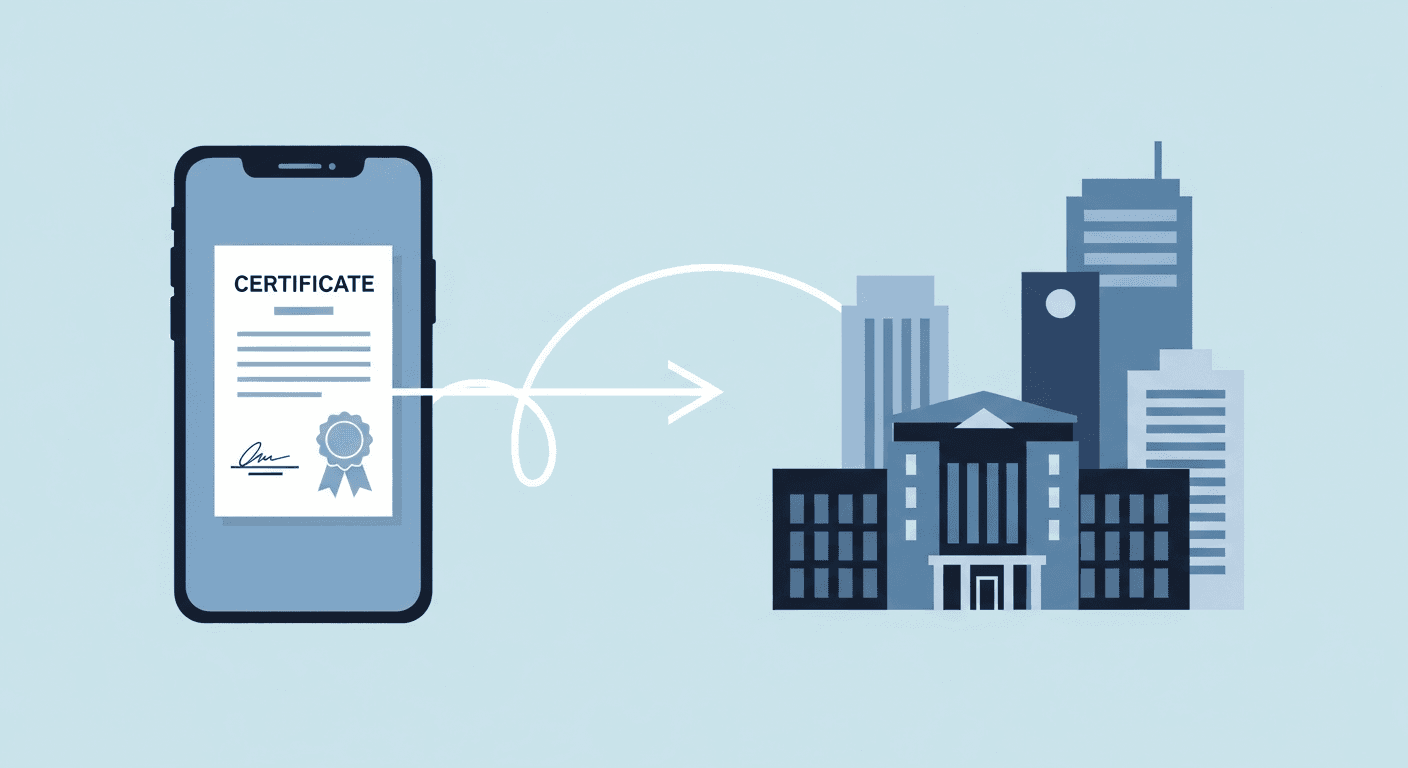
The 2026 model eliminates most of that friction. When CBSE issues a revised marksheet, it is automatically pushed to the student's DigiLocker account. Admission platforms that integrate with DigiLocker — including Delhi University's Common Seat Allocation System and the JoSAA IIT counselling portal — can pull the updated document directly, without the student needing to submit a physical copy anywhere.
For the approximately 400,000 students who requested answer sheet copies in May, this matters particularly for those applying to oversubscribed programmes at Delhi University, engineering colleges through JoSAA, and central universities through CUET. A revised marksheet arriving in DigiLocker in July 2026 will still be timely for Round 2 or Round 3 of most admission cycles.
---
What This Signals for Digital Exam Accountability
The question-by-question challenge model is not just a student-facing feature — it is a significant architectural statement about how digital evaluation systems should handle grievances.
Traditional paper-based revaluation was always a binary choice: accept the marks or request a full re-evaluation of the entire script. Digital evaluation makes granularity possible. When every mark has a digital record — which evaluator assigned it, at what time, after viewing which specific question image — it becomes technically straightforward to challenge and re-examine individual decisions rather than entire papers.
Three implications for universities adopting or upgrading digital evaluation systems:
1. Build question-level challenge into your grievance mechanism from the start. If your evaluation software records marks at the question level (which any modern OSM system should), you already have the technical foundation for this. What is needed is a student-facing portal and a defined re-examination workflow.
2. DigiLocker integration is not optional. The 2026 CBSE model demonstrates that seamless transmission of revised academic records to students' government-verified digital document wallets is the standard students and institutions will increasingly expect. Universities that issue revised marksheets only as physical documents will face growing pressure to digitise.
3. Transparency about the re-evaluation process protects institutions. When students can see their scanned scripts, challenge specific questions, and track the status of their objections, the number of escalations to courts and consumer forums drops significantly. The question-by-question model gives dissatisfied students a credible, affordable, fast-track resolution mechanism — which is a far better outcome for an institution than an RTI dispute or a writ petition.
---
Context: Why CBSE's Fee Reduction Is More Than a Gesture
The fee reductions — particularly the cut in scanned copy charges from Rs. 700 to Rs. 100 — are widely being interpreted as an implicit acknowledgment that the original OSM deployment had quality issues that students should not have to pay to investigate. Whether or not that interpretation is accurate, the practical effect is significant.
In the 2024–25 academic year, fewer than 20,000 students nationwide applied for answer sheet photocopies under the previous Rs. 700 fee structure. With the 2026 fee at Rs. 100, over 400,000 students applied in a single post-result window. That is a 20-fold increase in students exercising their right to review their own evaluated scripts.
This volume — 400,000 students actively reviewing their answer sheets — is itself a form of quality assurance. It creates a large-scale independent audit of the evaluation process. Institutions and examination boards that are confident in the quality of their evaluation should welcome this scrutiny, not fear it.
---
For Students Waiting: A Summary of Next Steps
---
Related Reading
Ready to digitize your evaluation process?
See how MAPLES OSM can transform exam evaluation at your institution.