CBSE Compartment Exam July 15: What OSM Means for 1.63 Lakh Students
With 1,63,800 students sitting the CBSE Class 12 compartment exam on July 15 under the same OSM system that triggered national controversy in May, here is what has changed and what to expect from digital evaluation.
A Second Chance Under the Same System
Twelve days from now, 1,63,800 students will walk into examination centres across India for the CBSE Class 12 compartment exam. They failed one or two subjects in the main board examination, the result of which was declared on May 13, 2026. This exam is their window to clear the qualification and keep college admission timelines intact.
What makes this compartment sitting different from any in CBSE's history is that the answer sheets will be evaluated using the same On-Screen Marking (OSM) system that generated the most significant board examination controversy India has seen in years. The main exam's pass rate fell to 85.20%, the lowest in seven years. Students documented blurred scans, missing pages, mismatched answer sheets, and evaluation portals that exposed data on misconfigured cloud storage. An ethical hacker alleged that answer sheets were accessible via a publicly reachable Amazon Web Services endpoint.
None of that has been resolved with full transparency. And yet on July 15, OSM runs again.
How the OSM Pipeline Works for Compartment Papers
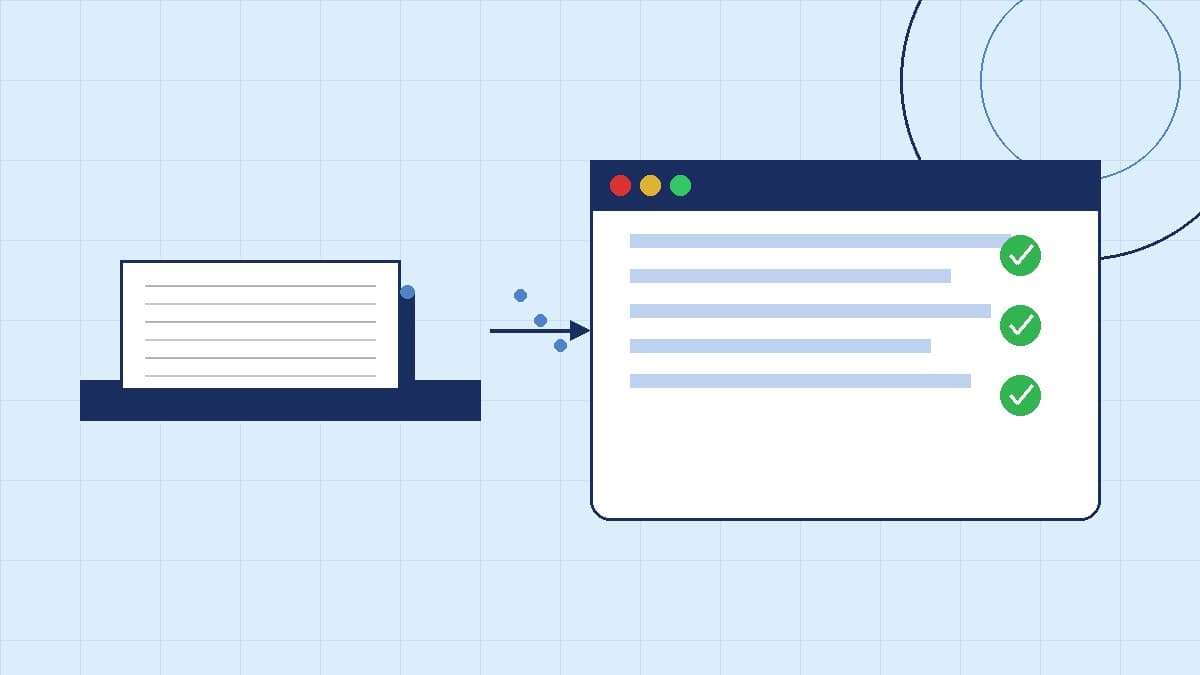
The On-Screen Marking process is structurally identical whether a student appears for the main exam or the compartment exam. CBSE scans physical answer booklets at designated scanning centres and uploads the images to a secure digital portal. Schoolteachers empanelled as evaluators log in from their schools or homes and mark answers on screen. Marks are recorded electronically per question, with automated totalling. This eliminates the manual addition errors that historically generated a large share of post-result verification requests.
For compartment evaluation, the volume is significantly smaller. Instead of 17.68 lakh scripts from the main Class 12 exam, approximately 1.63 lakh scripts will move through the OSM pipeline after July 15. The reduced volume means faster processing, a narrower evaluation window, and a result expected sometime in August 2026.
What CBSE Changed After May
CBSE has not issued a full public post-mortem of the May 2026 OSM failures, but Akashvani and ministry statements confirmed that the system "enhanced transparency and objectivity in the evaluation process" — the government's official position, maintained despite widespread student complaints and a parliamentary committee hearing.
Following the result controversy, CBSE issued internal circulars to evaluation centres reinforcing scan quality requirements. Any answer sheet that fails legibility checks must be re-scanned before upload. The vendor, Coempt Edu Teck, remains in place for the compartment cycle — no change in vendor was announced.
The security vulnerability where an ethical hacker alleged open access to stored answer sheets prompted a security review of the AWS configuration, though CBSE did not publicly disclose the outcome of that review.
What the compartment cycle has that the main exam did not is operational precedent. The evaluators, scanning centre staff, and portal administrators have already processed one full OSM cycle. The system's failure modes are now documented. Systemic scan failures at the scale of the main exam are proportionally less likely with a volume of 1.63 lakh compared to 17.68 lakh.
What Students Should Know About OSM Marking
The exam itself — writing technique, presentation, time management — remains unchanged from standard CBSE board format. However, some habits become more important when answer sheets go through a scan-upload-evaluate pipeline rather than a teacher's hands directly:
Write clearly within margins. Scanning captures content within standard booklet boundaries. Text in margins or in unusual orientations may appear cut off or distorted in the captured image.
Number questions and sub-parts explicitly. OSM evaluators review answer images on a screen and cannot easily flip back and forth across pages. Clear labelling of each answer, each part, and each numbered step reduces the risk of a question being missed or evaluated out of context.
Draw diagrams firmly in pen where permitted. Pencil lines — particularly light ones used in Physics, Chemistry, or Biology diagrams — often do not reproduce reliably in document scans. Where the question paper permits ink for diagrams, it is preferable. Where pencil is mandatory, press firmly and keep lines distinct.
Avoid dense overwriting. Corrections that involve writing over previous text become unreadable in a compressed scan image. Striking out incorrect content with a single line and rewriting clearly in the next available space is the safer approach.
These are not new best practices — they apply to any examination that is scanned before evaluation. They are simply more consequential now that scanning is the only path between a student's written answer and an evaluator's mark.
The Admission Timeline Pressure
For compartment students, the result date matters as much as the marks. Most university undergraduate admission processes run from July through September. A compartment result in early August keeps students eligible for most first and second round admissions; a result delayed to late August compresses the timeline significantly.
CBSE has historically prioritised the compartment result turnaround because of this downstream pressure. Digital evaluation accelerates the cycle: without the need to physically ship answer books to regional evaluation centres, wait for physical marking, and route completed papers back for verification, the processing window shrinks. If the OSM pipeline runs without the quality control failures seen in May, a mid-August result is achievable.
Students in the compartment category should track institution-specific deadlines for undergraduate courses they are targeting. State universities with rolling admissions and private institutions with extended deadlines typically remain accessible even for late August results. Professional courses — MBBS, engineering, law — with fixed intake windows are more sensitive to the result date.
What the Compartment Numbers Represent
The 1.63 lakh compartment figure, approximately 9.2% of the 17.68 lakh students who appeared, is above average for recent CBSE cycles. Whether this reflects genuinely tighter marking under OSM, recalibration of the marking scheme, or performance differences attributable to the post-pandemic cohort is a question that CBSE's own data will eventually clarify.
If the compartment exam produces a high pass rate among the same cohort who failed in May, it would suggest that the May evaluation marked more harshly than the underlying answer quality warranted. If the pass rate remains lower than historical norms, it supports CBSE's position that the new system is simply more precise.
Either outcome carries implications for how CBSE adjusts OSM protocols before the 2027 examination cycle. For evaluation system designers and affiliating universities watching CBSE's rollout closely, the compartment data is arguably more useful than the main exam data — it is the same student population tested twice, with the same papers evaluated under the same system, providing a cleaner before-and-after signal than raw year-on-year pass rate comparisons.
For the 1.63 lakh students sitting on July 15, the system-level analysis is secondary to the immediate task. Write clearly. Number answers. Manage 180 minutes across the paper. The exam is marked on what appears on screen, and what appears on screen is what the scanner captures.
---
Related Reading
Ready to digitize your evaluation process?
See how MAPLES OSM can transform exam evaluation at your institution.