CBSE OSM 2026: Why Universities Are Building Admissions That Don't Trust Board Marks
As DU, JNU and central universities adapt their 2026 admissions for students with contested CBSE results, a structural shift is underway — raising fundamental questions about evaluation accountability.
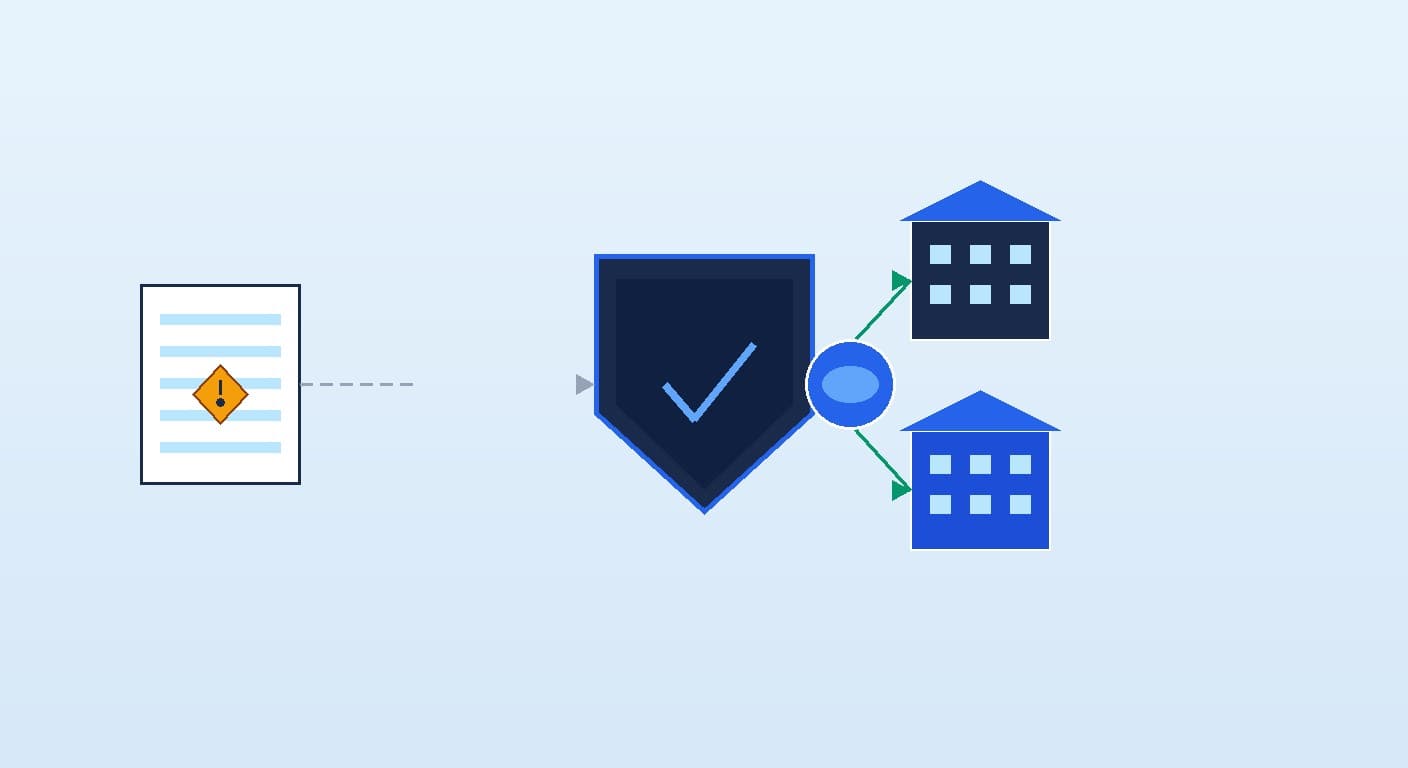
When Delhi University's Vice-Chancellor Yogesh Singh told students in late June 2026 "not to worry about changes in Class 12 results" for undergraduate admissions, it seemed like a reassurance. In practice, it was something more significant: an acknowledgement by one of India's most important universities that it had structurally insulated itself from board evaluation errors — not by design, but by circumstance.
The CBSE On-Screen Marking (OSM) controversy of 2026 has done more than trigger parliamentary inquiries and the transfer of board officials. It has exposed a fundamental vulnerability in India's admissions ecosystem: for decades, university admission has rested on the assumed reliability of board examination marks.
That assumption is now being tested as never before.
The Scale of the Problem
Following the declaration of CBSE Class 12 results on May 13, 2026, the scale of the OSM-related complaints became apparent quickly:
DU CSAS 2026: CUET as an Accidental Safety Net
Delhi University's undergraduate admissions have been conducted through the Common Seat Allocation System (CSAS) since 2022, using CUET (UG) scores rather than board examination percentages as the primary admission criterion.
This was a policy change driven by the National Education Policy 2020's vision of a common entrance framework for central universities. In 2026, this policy shift turned out to be an accidental safeguard.
Under CSAS, admissions to 73 undergraduate programmes across 67 DU colleges are based on CUET UG 2026 scores. Board marks serve primarily as eligibility verifiers, not as ranking criteria. Students with pending CBSE re-evaluation results were told by DU to complete registration using their current marks and update later.
For DU students, the CUET buffer means the OSM controversy, while distressing, does not determine their admission outcome. Their CUET score — evaluated separately by NTA in Computer Based Test mode — remains their primary admission determinant.
DU reported 82,940 registrations under Phase 1 of CSAS for the 2026-27 academic year, with Phase 2 beginning July 3. Despite the chaos in the board examination ecosystem, the DU admissions calendar has proceeded largely on schedule.
Where Board Marks Still Bite
Despite the CUET buffer, CBSE OSM errors continue to affect admissions through two channels where board marks still matter:
1. IIT Eligibility: The 75% Rule
JEE eligibility requires students to be in the top 20th percentile of their board, or score at least 75% aggregate in Class 12. For students whose marks were incorrectly evaluated below this threshold, JEE Main and JEE Advanced qualification remained at risk even with competitive CUET scores. JOSAA counselling for IIT seats was directly affected, with students in a legal and procedural limbo between examination result corrections and counselling deadlines.
2. State University Admissions
Many state universities, particularly autonomous and affiliated colleges outside the CUET framework, still use board marks directly in their merit lists. Students seeking admission to these institutions faced compounded uncertainty: incorrect board marks, pending re-evaluations, and admission deadlines that could not accommodate delays. Unlike DU, these universities had no structural buffer.
Central Universities at PG Level: A Parallel Example
At the postgraduate level, a similar dynamic played out. The CUET PG 2026 result was declared on April 24, 2026, for over 4.11 lakh candidates across 191 participating universities. With the result available before the CBSE Class 12 controversy peaked, PG admissions at central universities proceeded through their own digital merit lists.
JNU opened its PG admission portal on May 25, 2026, with applications accepted until June 15 and counselling beginning in July. BHU, HCU, Jamia Millia Islamia, and Pondicherry University similarly managed their CUET PG-based admissions without being drawn into the board examination dispute.
The pattern at both UG and PG levels is the same: universities that had adopted standardised entrance-based admissions — whether by mandate or early adoption — were insulated from the OSM fallout. Those still depending directly on board marks were not.
The Structural Lesson: Admissions Must Be Evaluation-Resilient
The 2026 crisis has demonstrated a design principle that admission systems must incorporate going forward.
Admissions that directly convert board marks to merit positions are fragile. When the evaluation system produces errors at scale — as CBSE OSM did — every admission downstream is affected. A student's years of preparation, and a university's ability to fill seats on schedule, become contingent on the reliability of a marking system they do not control.
Admissions that use separate standardised scores as the primary criterion — with board marks as eligibility filters — are more resilient. The CUET model demonstrates this. The weakness is that board marks still matter for eligibility, so evaluation errors can still block access even when they don't distort rankings.
The most resilient model uses digital evaluation infrastructure that produces reliable, auditable outputs in the first place. This means every institution in the chain — boards, central examination authorities, and individual universities conducting their own assessments — needs evaluation systems with verifiable quality controls, not just digital processes.
What Universities Conducting Their Own Examinations Can Do
For universities and autonomous colleges that conduct their own entrance examinations or internal assessments, several structural safeguards are available:
These measures protect students and the institution's reputation simultaneously. An institution that can demonstrate reliable evaluation output — where "wrong marks" is not a systemic complaint category — builds trust with students, parents, and accreditation bodies together.
The Accountability Gap
What the CBSE OSM controversy also reveals is a gap in examination accountability. When an individual evaluator makes an error on a physical answer sheet, the error is localised. When a digital evaluation system has a systematic flaw — poor scanning, incorrect page assignment, software that fails to flag unmarked questions — the error can propagate across thousands of answer books before anyone identifies the pattern.
India does not yet have a standardised framework for evaluating the performance of digital examination systems themselves: their error rates, their audit completeness, their recovery procedures. The CBSE case is likely to accelerate the development of such standards.
For universities and examination authorities already operating digital evaluation systems, this is an opportunity to build and publish their own quality metrics before external standards are imposed — demonstrating leadership in examination integrity rather than being pulled into the accountability debate reactively.
A Clarifying Moment
The CBSE OSM controversy of 2026 is not an argument against digital evaluation. Forty-two lakh answer books cannot be evaluated reliably at scale by any other means. It is an argument for the difference between digitising a process and building a digital system.
Digitising a process means scanning paper answer sheets and displaying them on screens. Building a digital system means designing for reliability at scale, with error detection, quality controls, audit trails, recovery procedures, and a governance structure that can diagnose and correct problems before they affect 3.8 lakh students.
Universities across India are watching the CBSE experience and drawing their own conclusions. The ones most likely to benefit are those that use the clarity it provides to build evaluation and admissions infrastructure that is not only digital but genuinely reliable.
Related Reading
Ready to digitize your evaluation process?
See how MAPLES OSM can transform exam evaluation at your institution.