CBSE's 2026 Digital Evaluation Infrastructure: IPS Payments and OECMS Explained
CBSE's first full-scale digital evaluation cycle covers 3 lakh+ evaluators under its Integrated Payment System and OECMS portal — here is what the complete administrative infrastructure looks like and why it matters for universities.
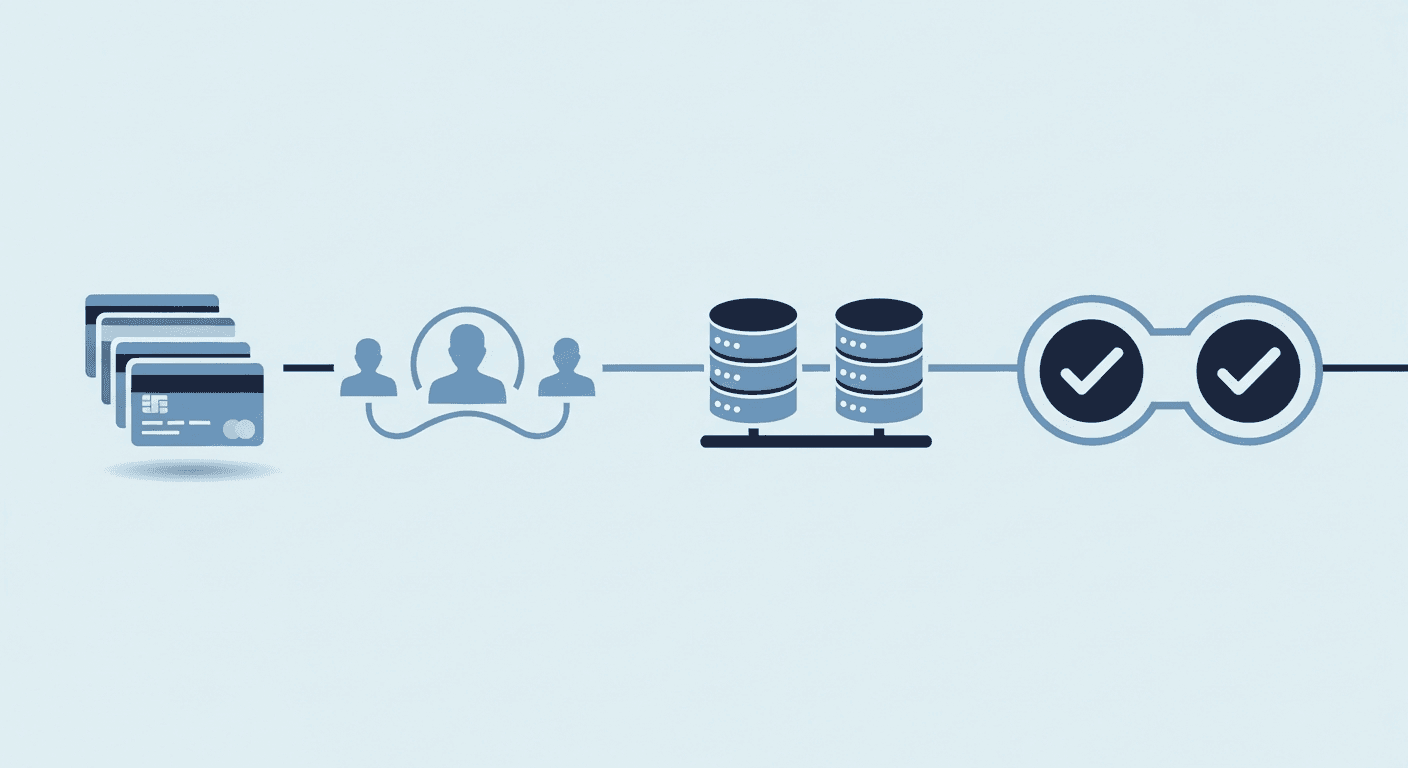
The Exam is Over. The Digital Work Has Just Begun.
When CBSE concluded its Class 10 and Class 12 board examinations on April 10, 2026, attention immediately shifted to one question: when will results be declared? But behind that deadline lies an administrative machine of remarkable complexity — one that has, for the first time in CBSE's history, gone almost entirely digital.
The 2026 cycle is not just about on-screen marking (OSM) for Class 12 answer sheets. It is about a complete end-to-end digital pipeline that begins at the scanning station and ends with verified payments to over 3 lakh evaluation staff. Two systems sit at the heart of this: the Integrated Payment System (IPS) and the Online Exam Centre Management System (OECMS).
Understanding how these systems work — and what they signal for university examination management broadly — is essential for any institution planning its own digital evaluation transition.
---
The Scale of the Problem CBSE Had to Solve
With roughly 46 lakh students appearing across Class 10 and 12 in 2026, CBSE coordinates evaluation across thousands of centres, managed by tens of thousands of teachers drawn from affiliated schools. Until recently, paying these evaluators — and reimbursing examination centres for their operational costs — involved a tangle of paper-based claims, manual bank transfers, and frequent disputes.
The numbers alone justify a digital approach:
Doing this via manual processes would take weeks after results. Digital systems compress the entire cycle.
---
What Is IPS (Integrated Payment System)?
The Integrated Payment System is CBSE's digital financial layer for examination administration. It links evaluation activity directly to payment disbursal, replacing the older system of manual claims and paper vouchers.
Under IPS:
The CBSE activated IPS for practical examination payments well before the conclusion of theory examinations — a deliberate sequencing that ensures evaluators see timely compensation regardless of when theory results are declared.
---
What Is OECMS (Online Exam Centre Management System)?
The Online Exam Centre Management System is CBSE's portal for examination centre administration. Every school that serves as a CBSE examination centre — either for conducting examinations or for hosting evaluation — must maintain accurate data on OECMS.
After the conclusion of the 2026 board examinations, CBSE directed all Centre Superintendents and Heads of Schools to log into the OECMS portal and verify their data. The board set a deadline of April 16, 2026, for this verification — making it a pre-condition for IPS payment processing.
OECMS captures:
The system serves a dual purpose: it provides CBSE with a real-time administrative dashboard, and it creates an auditable record that can be used to resolve disputes about payments or evaluation irregularities.
---
The Complete Digital Pipeline
The 2026 CBSE evaluation cycle follows a digital chain that most board systems have never achieved at this scale:
| Stage | System / Tool |
|---|---|
| Answer book collection at centre | OECMS inwarding |
| Scanning of answer sheets | Central scanning infrastructure |
| Digital upload to evaluation portal | Secure OSM platform |
| Evaluator login and on-screen marking | OSM interface with automated totalling |
| Marks submission and verification | Real-time portal with head examiner oversight |
| OECMS data verification by schools | School portal portal |
| IPS payment calculation | Automated, linked to evaluation records |
| Electronic payment to evaluators | Direct bank transfer via IPS |
| Result compilation | Digital marks aggregation |
Every step produces a log. Every log is auditable. The theme CBSE chose for the 2026 evaluation season — "Error-Free Evaluation: A Target and Task for All of Us" — is not just an aspiration. It is a description of what a fully digitised pipeline makes structurally possible.
---
Why This Matters for Universities
CBSE's infrastructure is the most visible implementation of a principle that university examination systems are increasingly being asked to adopt: that digital evaluation is not only about replacing paper with screens, but about re-architecting the entire administrative workflow around digital data.
For a university or affiliated college, the equivalent of IPS and OECMS would look like:
Universities that build these capabilities gain more than efficiency. They gain a defensible record of evaluation that can respond to RTI queries, court challenges, or NAAC inspection requirements without scrambling through physical files.
---
The Shift From Honour-Based to System-Based Accountability
The traditional Indian examination system relied heavily on evaluator integrity. Rules were clear, but enforcement depended on the good faith of teachers who marked in physical checking camps, often under minimal supervision.
Digital systems like OSM, IPS, and OECMS shift accountability from individuals to systems. The question is no longer "did this evaluator follow the rules?" but "does the system permit non-compliance?" — and in a well-designed digital environment, the answer is increasingly no.
Automated totalling eliminates addition errors. Digital submission prevents missing marks. IPS links payment to verified activity rather than paper claims. OECMS ensures centre data is recorded before payments flow.
Each element closes a gap that existed in the paper-based system.
---
What Comes Next
CBSE has signalled that Class 10 evaluation — still conducted in physical mode for 2026 — is a candidate for digital transition in coming years. If CBSE moves Class 10 to OSM, the IPS and OECMS infrastructure will need to scale further. The groundwork is already in place.
For state boards and universities watching this transition, the lesson is straightforward: the technology for end-to-end digital evaluation exists, functions at scale, and produces measurable improvements in speed, accuracy, and administrative transparency. The CBSE 2026 cycle is evidence.
---
Related Reading
Ready to digitize your evaluation process?
See how MAPLES OSM can transform exam evaluation at your institution.