When the Wrong Student Gets Your Answer Sheet: Inside CBSE's May 2026 Identity Crisis
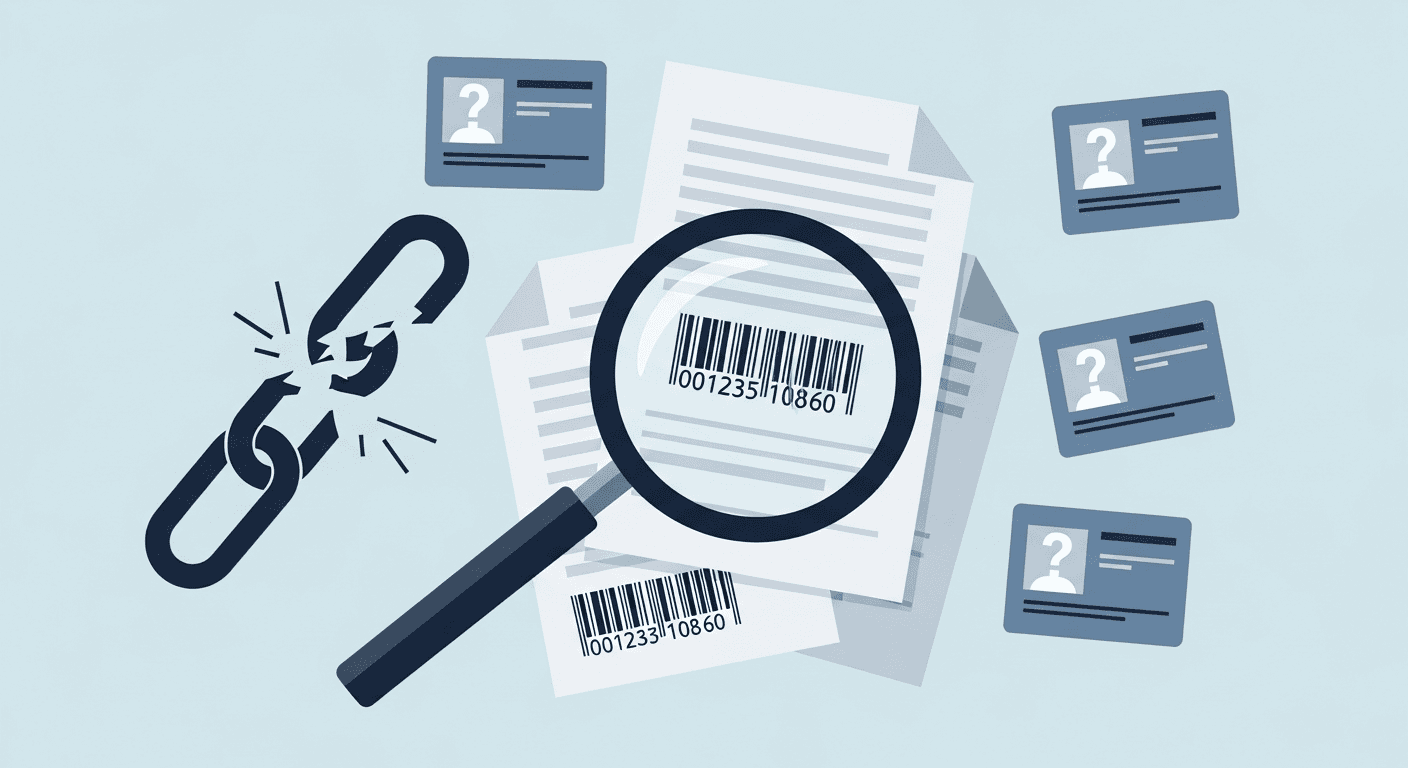
CBSE admitted this week that a student's answer sheet was sent to a different student during Class 12 revaluation, exposing a fundamental failure in scanning chain-of-custody — and what every exam board must fix.
A Viral Post That Shook India's Exam System
On May 23, 2026, a Delhi student named Vedant Shrivastava posted on social media with a claim that quickly went national: the Physics answer sheet CBSE sent him during revaluation was not his. The handwriting was different. The questions answered did not match the ones he had attempted.
The consequences were immediate and severe. Marked on a stranger's paper, Vedant received only 50 percent in Physics — pulling him below the 75 percent PCM aggregate required for premium engineering college admissions. He was locked out of a critical eligibility threshold on account of an exam board's processing error.
The incident escalated when social media users, noticing unfamiliar script patterns on the uploaded sheet, began trolling Vedant with "Pakistani writing" remarks. The student had become collateral damage in a double failure: first by the system that mixed up his answer sheet, then by the mob that misread a clerical error as something sinister.
By May 26, CBSE officially acknowledged the discrepancy and confirmed that marks would be revised. A second case — chemistry student Sanjana, whose scanned sheet showed different handwriting and different responses from what she had written — had also surfaced. Two confirmed cases. An unknown number of undetected ones.
The Scale CBSE Was Operating At
To understand how this could happen, the numbers matter. For the Class 12 board examinations 2026, CBSE scanned approximately 98.6 lakh physical answer scripts. Over 77,000 teachers were trained to evaluate digitally. When results were processed, the board flagged approximately 68,000 scanning anomalies. Of these, around 13,000 answer scripts were deemed unreadable and had to be evaluated manually as a fallback.
These are not small numbers. At 98 lakh scripts, even a 0.01 percent mix-up rate translates to nearly 1,000 affected students. The confirmed cases of two students represent the visible tip of a problem whose true depth won't be known until every revaluation request is processed.
What Failed in the Scanning Pipeline
The root cause of an identity mix-up at this stage is not a software glitch in the evaluation interface — it is a failure in the physical-to-digital handoff. Here is how answer sheet identity should work in a well-designed OSM pipeline, and where CBSE's process appears to have broken down.
Step 1: Booklet-level barcode assignment
Each answer booklet is supposed to receive a unique barcode or QR code at the time of distribution during the exam. This code links the booklet to a specific candidate registration number.
Step 2: Scanning and digital capture
When booklets are scanned at evaluation centres, each barcode is read and the corresponding image files are tagged with student identity metadata. The problem arises with multi-page or stapled booklets: if individual pages become separated, or if the cover page is scanned as part of a different booklet sequence, the remaining pages may be attributed to the wrong student.
Step 3: Quality verification after scanning
A properly designed system should perform a post-scan integrity check — verifying that all pages attributed to a given student's registration number show consistent handwriting signatures or at minimum appear to belong to a contiguous booklet. This step, if performed at CBSE, did not catch the discrepancy in at least two confirmed cases.
Step 4: Evaluator review
Evaluators accessing the digital script are the last line of defence before marks are locked. If an evaluator notices that a booklet appears incomplete, inconsistent, or unusual — for example, handwriting that changes dramatically mid-booklet — the platform should provide a simple flagging mechanism. Whether any evaluator flagged the affected scripts and was ignored, or whether no flag was raised at all, is not yet public.
The Privacy Dimension India Is Not Discussing
The CBSE answer sheet mix-up is being discussed primarily as an evaluation accuracy problem. It is also a data privacy incident.
India's Digital Personal Data Protection Act 2023 (DPDP Act) defines personal data as any data that identifies or can identify an individual. A handwritten answer booklet — with a student's name, registration number, examination responses, and personal writing style — is personal data. When CBSE sent one student's scanned answer sheet to another student's revaluation portal, it disclosed that student's personal data to an unrelated third party without authorisation.
The DPDP Act places obligations on data fiduciaries — organisations that determine the purpose and means of processing personal data — to implement appropriate technical and organisational measures to protect it. An exam board handling 98 lakh digital scans of student documents is unambiguously a data fiduciary under this framework.
India's data protection ecosystem is still maturing. The DPDP Board, which will hear complaints and impose penalties, is not yet fully operational. But the legal framework exists, and as students and parents become more aware of their rights, exam boards that cannot account for data mix-ups will face increasing scrutiny.
What This Means for Affiliated Universities
CBSE's OSM crisis is a useful reference point for every affiliating university now planning or piloting digital evaluation. The scale is different — a university evaluating 2 to 5 lakh answer books faces a more tractable problem than CBSE at 98 lakh — but the failure modes are identical.
Several lessons apply directly:
Identity verification must be multi-layered. Barcode at the booklet level is necessary but insufficient. Systems should verify identity at the page level for multi-page submissions, and should include a post-scan QA check before scripts are distributed to evaluators.
Students should be able to verify their scanned copies before evaluation begins. One structural improvement that would catch mix-ups early is allowing students to confirm — through a brief preview window — that the scanned copy attributed to them is indeed theirs. This would shift error detection from post-result revaluation to pre-evaluation, when correction is low-cost.
Fallback routing must be pre-defined. CBSE's 13,000 manually evaluated scripts show that scanning failures at scale are not exceptional events — they are predictable. Institutions must have a documented fallback process that triggers automatically when a script fails quality checks, rather than leaving anomaly handling to ad hoc decision-making under result-declaration pressure.
Audit trails for every script assignment. When something goes wrong, the system must be able to answer: which scanning operator processed this booklet, at which centre, on which date, and which identity tag was applied at what time? If that audit trail does not exist, root cause investigation becomes guesswork.
The Revaluation Demand Surge
One downstream consequence of the OSM controversy was a sharp surge in demand for scanned copies. CBSE had to extend the deadline for obtaining scanned photocopies of answer books multiple times. The Ministry of Education stepped in to monitor the situation.
This demand is not anomalous — it is the rational response of students who, having seen a viral post about a wrong answer sheet, are now motivated to check whether their evaluation was similarly compromised. The system's response to that demand — extending deadlines, issuing refunds for erroneous revaluation fees, revising marks in confirmed cases — is exactly the kind of resource-intensive remediation that better upfront quality control would eliminate.
India processes hundreds of thousands of revaluation requests every year. A significant fraction of those exist because students have no confidence that their papers were evaluated correctly. Digital evaluation, done well, should reduce that volume by providing students with verifiable evidence of how marks were awarded. CBSE's first-year stumble demonstrates that the technology, by itself, is not sufficient — the operational rigour around it determines whether student trust rises or falls.
Related Reading
Ready to digitize your evaluation process?
See how MAPLES OSM can transform exam evaluation at your institution.