Bihar's August 2026 Exam Protests: Why State Boards Cannot Afford to Ignore Digital Evaluation
Students clashed with police in Bihar on August 25, 2026, over state-level exam paper leaks. The recurring crisis exposes a persistent gap in digital evaluation adoption outside national examination bodies.
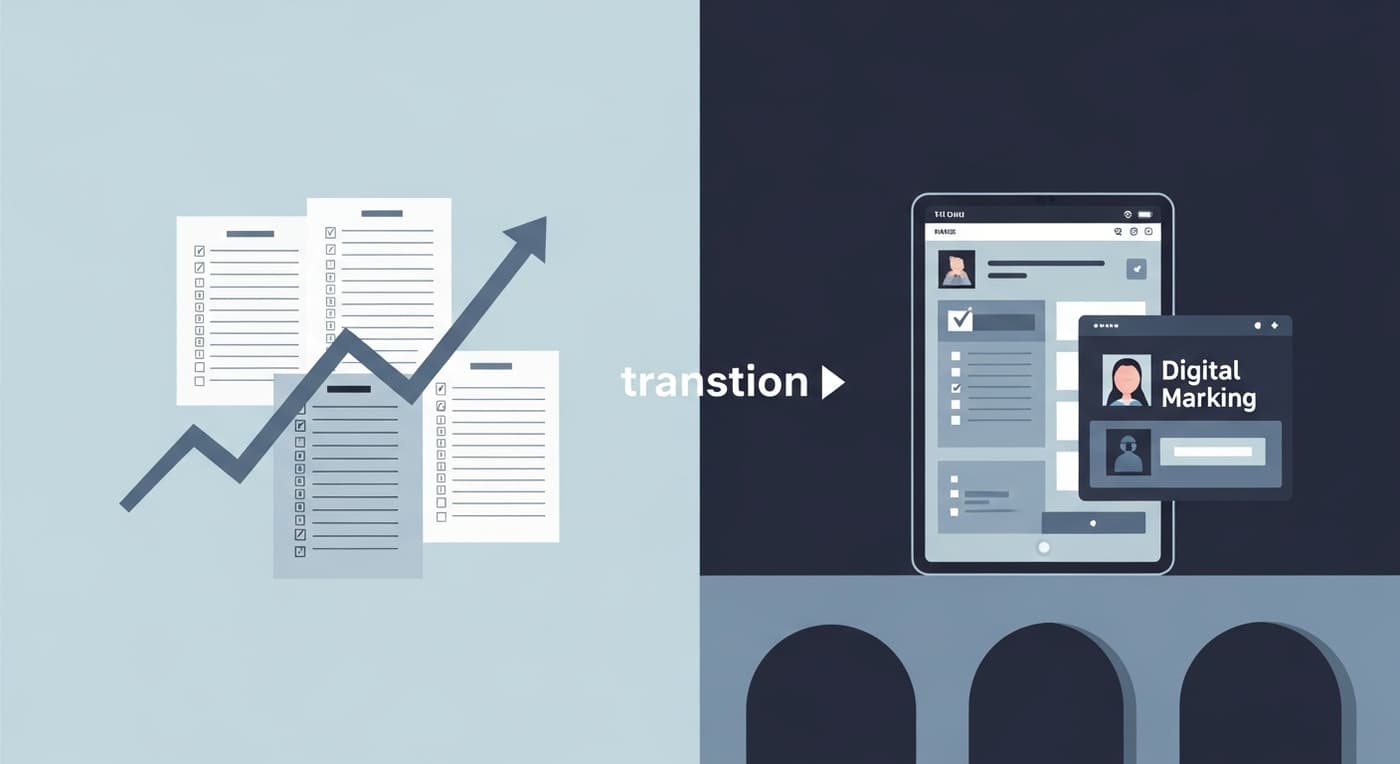
What Happened on August 25
On August 25, 2026, students clashed with police in Bihar after a state-level competitive examination paper was allegedly leaked through WhatsApp. The footage—baton charges, tear gas, student barricades—was broadcast by Al Jazeera and other international outlets. A CNBC report from August 2 had already framed the broader wave: India's exam scandal crisis, linked by the State of Working India 2026 report to a 40% graduate youth unemployment rate, was generating sustained international coverage.
Bihar was not isolated. In 2026 alone, documented paper leak incidents at the state board and state competitive exam level include the Chhattisgarh Board Hindi paper in March, the Maharashtra HSC three-paper Nagpur WhatsApp leak in April, and the Uttar Pradesh Board English paper in March. The pattern is consistent and recurring.
Why State Boards Are More Vulnerable Than National Bodies
National examination bodies like CBSE and NTA operate with significantly greater resources, tighter procurement controls, and more recent technology investments. Their paper distribution networks are more controlled; their evaluation processes are increasingly digitized.
State boards operate differently. Many still rely on:
The Bihar, Maharashtra, and Chhattisgarh incidents all followed a recognizable pattern: a photograph of a question paper or answer sheet, taken at a printing press, distribution point, or evaluation centre, reaches WhatsApp groups before the exam begins or before results are finalized.
The Two Distinct Failure Points
It is important to distinguish where paper leaks occur and where evaluation fraud occurs, because they require different solutions and are often conflated in political and media coverage.
Paper leaks are pre-exam failures. They occur in the question-paper setting, printing, storage, and distribution chain. Digital answer-script evaluation does not prevent a paper from being photographed at a printing press.
Evaluation fraud and post-exam tampering are separate failures. They occur in the answer book collection, transportation, evaluation, and results processing chain. This is where digital evaluation makes a structural and verifiable difference.
After students have written their papers, the physical answer book faces a second chain of vulnerabilities:
Digital evaluation closes every one of these post-exam vulnerabilities. When answer books are scanned at a controlled central facility and evaluated on a secure online platform by anonymized evaluators—each marking only a section of the script, with automatic double-valuation and a timestamped audit trail—the post-exam chain becomes tamper-proof.
The Scale of the State Board Problem
India's state boards collectively process hundreds of millions of answer books per year. The digitization gap between national bodies and state boards is large and growing.
| Parameter | CBSE / CISCE | Typical State Board |
|---|---|---|
| Central scanning infrastructure | Yes | Rare |
| On-screen marking adoption | Partial to full | Minimal |
| Evaluator anonymity | Standard | Exception |
| Double valuation | Standard | Selective |
| Timestamped audit trail | Digital | Paper-based |
| Result challenge mechanism | Online, fee-based | Manual, delayed |
The Bihar situation is a direct consequence of this infrastructure gap. And the political cost is becoming clearer each year: student protests, international media coverage, opposition questions in state assemblies, and court petitions are the price of continued inaction.
The Positive Signal: States That Have Moved
The gap is real—but so is the direction of travel. State bodies that have moved toward digital evaluation have demonstrated results.
Uttarakhand state universities mandated on-screen marking for affiliated colleges in 2026. Punjab Board completed its first full OSM season in 2026. Jain C. Bose University in Haryana published 30-day result turnaround times after implementing digital evaluation—a benchmark that was previously impossible under manual processing.
The BSEB Bihar board itself, in previous cycles, has explored digital components of its examination infrastructure. The technology and the proven models exist. What has lagged is the institutional decision to deploy them across the full evaluation chain.
A Phased Roadmap for State Boards
The resource constraints are real. State boards face procurement complexity, political sensitivity, and workforce transition challenges. A phased approach is achievable within existing budget frameworks:
Phase 1 — Centralized Scanning (Year 1)
Begin scanning answer books at central evaluation hubs immediately after collection. Even before full OSM implementation, centralizing the physical-to-digital conversion removes the transit vulnerability and creates a verifiable record of every script received.
Phase 2 — OSM for High-Stakes Exams (Year 2)
Run Class 12 board examinations and state public service examinations through on-screen marking first. These are the papers with the highest political exposure and the highest consequences for individual students.
Phase 3 — Full Coverage (Year 3)
Extend to Class 10 and supplementary examinations. At full scale, the state board achieves complete chain-of-custody integrity from script collection through result declaration.
The Cost of Continued Delay
The CNBC reporting from August 2026 draws a direct line from India's exam fraud epidemic to credibility loss in the graduate labour market. Employers who cannot rely on degree grades to signal genuine competence shift their recruitment toward alternative signals—coding tests, referrals, tier-1 institution preferences. Students from tier-2 and tier-3 colleges, who depend most heavily on their degree credentials, bear the heaviest cost.
State boards that continue to operate on paper-based manual evaluation workflows in 2026 are not making a neutral decision. They are choosing to remain exposed to a recurring scandal cycle with documented economic consequences for the students they serve.
The protest in Bihar will not be the last. The question is whether the institutional response will be reactive again, or whether it will be structural.
---
Related Reading
Ready to digitize your evaluation process?
See how MAPLES OSM can transform exam evaluation at your institution.