AISHE 2025-26: How Your Examination Records Shape India's Higher Education Data
The All India Survey on Higher Education is a mandatory annual submission that feeds NIRF rankings, NAAC evidence portals, and UGC funding decisions. Institutions with digital examination systems submit better, faster, and more accurately.
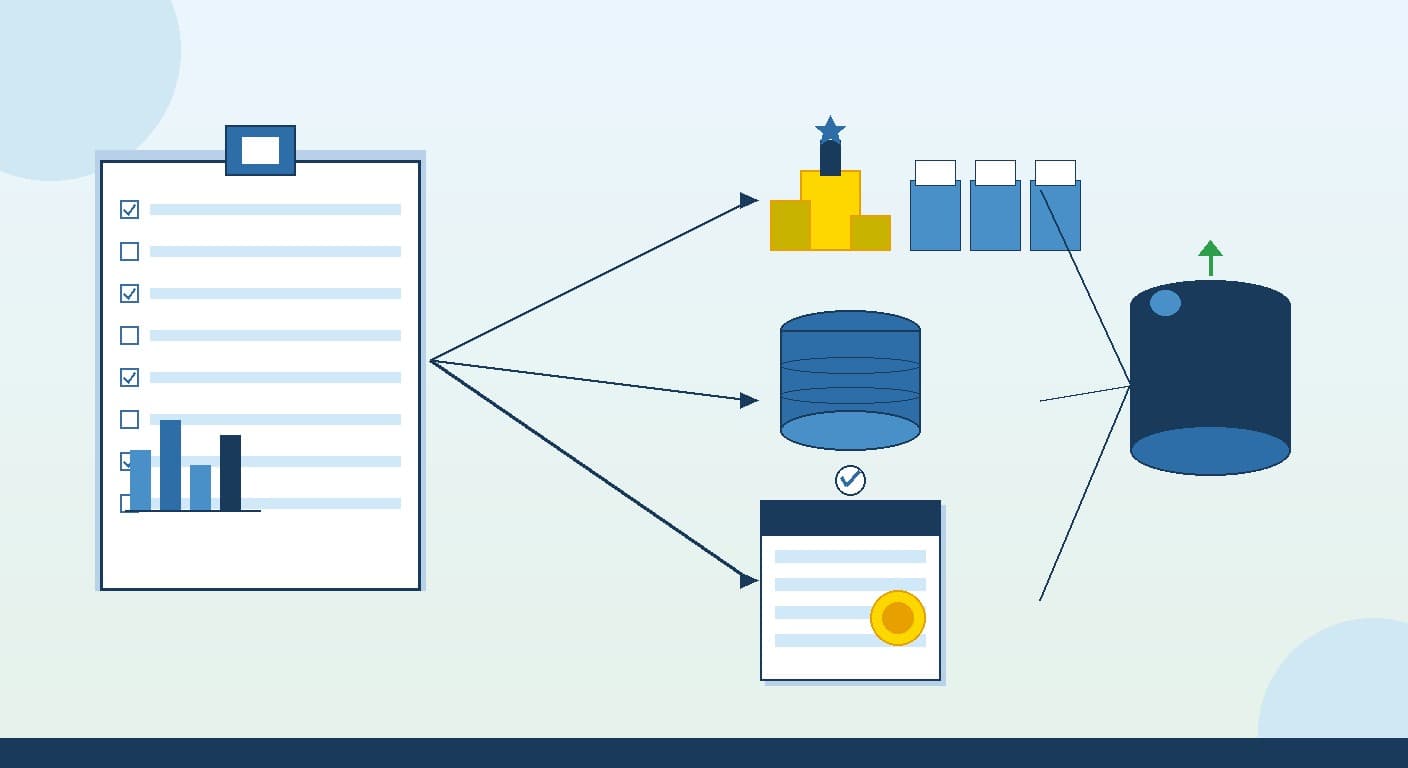
The Survey That Runs Everything
Most college administrators know AISHE — the All India Survey on Higher Education — as an annual obligation that arrives in their inbox around October and demands several weeks of data compilation. What is less widely understood is the downstream influence of that submission.
AISHE data, collected by the Ministry of Education and published by the Department of Higher Education, is the primary national dataset on Indian higher education. It is the source from which the Ministry derives its policy statistics, upon which the NIRF ranking methodology draws several parameters, and against which NAAC's One Nation One Data Platform cross-checks institutional claims during accreditation.
The survey covers student enrolment, faculty profiles, infrastructure, financial resources, and — most significantly for examination departments — student examination outcomes. The accuracy of what your institution submits to AISHE has consequences that extend well beyond the survey itself.
What AISHE Collects From Your Examination System
AISHE's examination-related data fields include:
Enrolment versus examination appearance. The number of students enrolled in each programme versus the number who actually appeared for the year-end or semester examination. The gap between these figures — students who enrolled but did not appear — is a metric that feeds into dropout and retention analysis at the national level. If your examination system cannot reliably distinguish enrolled-but-absent students from enrolled-and-appeared students, your AISHE submission will carry an error that propagates through every downstream system.
Pass rates by programme and level. AISHE requires pass rate data disaggregated by programme type (UG, PG, MPhil, PhD), by gender, and by student category (SC, ST, OBC, others). For institutions managing hundreds of programmes across affiliated colleges, this level of disaggregation is impossible to produce accurately without a digital examination system that stores results with the required categorical fields.
Examination attempt distribution. How many students passed in their first attempt? How many required a second? How many sought supplementary examination? These figures feed into NIRF's Graduation Outcomes parameter, which assesses the percentage of students completing their programme within the minimum stipulated duration.
Result declaration timelines. AISHE does not directly ask for result declaration dates in most of its fields, but the data consistency requirements create an implicit time constraint. Institutions must reconcile their AISHE submission figures with the results actually published — and if results for the academic year covered by AISHE have not been finalised and digitised before the submission window opens, the data submitted is either incomplete or estimated.
The Error Cascade in Paper-Based Systems
Institutions using paper-based evaluation and manual result compilation face a predictable sequence of data quality problems when preparing AISHE submissions.
The root issue is that marks recorded on physical mark sheets pass through multiple transcription steps before reaching the format required for AISHE entry. A physical mark sheet is compiled by an evaluation centre, checked by a section officer, entered into a department-level spreadsheet, forwarded to the controller of examinations, and then aggregated at the institutional level before being formatted for AISHE.
Each transcription step introduces error potential. Research on manual data entry consistently finds error rates between 0.5% and 1% per transcription event. Across the examination records of a mid-sized university processing 50,000 answer scripts per semester, a 0.5% error rate means 250 incorrect entries. When these errors appear in pass/fail fields, they distort pass rate figures. When they appear in student category fields, they distort the equity metrics that NAAC and PM-USHA monitoring teams scrutinise.
The further problem is that errors introduced in manual transcription are difficult to detect and correct. Without a digital audit trail linking a student's final mark back to the individual evaluated answer script, identifying which records are wrong requires re-tracing physical paper chains — a process that may take weeks and is often simply not attempted before the AISHE submission deadline.
How Digital Evaluation Improves AISHE Data Quality
In a digital evaluation environment, marks are entered once — at the point of evaluation — and flow through the system without transcription. The evaluator's input is logged against the script ID, which is linked to the student's application and examination roll number from the moment of registration. Totalling is automated. Moderation, where applied, adjusts marks within the same system.
By the time results are published, every student's marks record is a direct descendant of the evaluator's digital input, with no manual transcription between them. The resulting pass rate data, disaggregated by programme, gender, and student category, can be extracted for AISHE in a single query.
The practical differences this creates are significant:
Preparation time. Institutions with digital examination systems typically complete AISHE data compilation in two to four days. Institutions reconciling manual records typically spend three to six weeks.
Category-wise accuracy. Digital systems link examination results to student registration records from day one. Student category is recorded at registration and flows through to the marks record. Disaggregating results by SC/ST/OBC/others is a filtered report, not a manual cross-referencing exercise.
Historical consistency. AISHE requires data for the current academic year, but NAAC and NIRF cross-checks draw on multiple years. Institutions with a continuous digital examination record maintain consistent definitions and data structures across years. Institutions managing each cycle in separate spreadsheets find that fields and definitions drift, making multi-year comparisons unreliable.
The AISHE-NIRF-NAAC Triangle
The three major assessment frameworks that affect institutional funding and reputation — NIRF, NAAC, and PM-USHA — all use AISHE data as a reference point.
NIRF's Teaching, Learning and Resources (TLR) parameter and its Graduation Outcomes (GO) parameter both draw on enrolment, pass rate, and completion data that originates in AISHE or is verified against it. A 2024 analysis by the Ministry's NIRF cell found that institutions with significant discrepancies between NIRF submissions and AISHE figures received reduced scores on data reliability grounds, independent of their actual performance.
NAAC's One Nation One Data Platform, introduced under the binary accreditation framework, cross-checks institutional claims submitted in the Self-Study Report against AISHE data held at the national level. An institution that claims a 90% pass rate in its SSR but has submitted a different figure to AISHE creates a DVV (Data Verification and Validation) discrepancy that requires resolution before accreditation can proceed.
The practical implication is that AISHE accuracy is not merely a compliance matter — it is the foundation on which institutional performance across all three frameworks is assessed.
Preparing for AISHE 2025-26
The AISHE 2025-26 data collection window typically opens in October-November 2026. The examination cycle it covers — the 2025-26 academic year — is either concluding now or will conclude in the coming weeks for most institutions.
The preparation window from July to October is the critical period for ensuring data quality. Specific actions for examination departments:
Verify that all examination result records for 2025-26 are finalised in digital format before October. Pending revaluations, supplementary results, or backlogs in result entry should be resolved during this window, not after the AISHE portal opens.
Cross-check enrolment data against examination appearance data. Pull the list of enrolled students for each programme and compare against the list of students who appeared for the final examination. Resolve discrepancies — students who withdrew, transferred, or are on medical leave should be classified correctly, not simply missing from both counts.
Confirm that result records include student category fields. If your examination system does not currently store SC/ST/OBC classification against marks records, this is the critical improvement to make before AISHE 2025-26. Without it, the disaggregated data required by both AISHE and NAAC must be compiled manually each year.
Check your 2024-25 AISHE submission for figures you cannot independently verify. If last year's submission included estimated figures, identify which fields were estimated and put in place the records management process to avoid estimates in 2025-26.
A Note on Downstream Consequences
AISHE submission errors, when they affect pass rates or enrolment figures significantly, can alter NIRF rank band outcomes. A university in the 151-200 NIRF band may find that corrected AISHE data — showing lower pass rates than previously submitted — pushes it below band thresholds. Conversely, institutions that have historically underreported pass rates due to manual data quality problems may find that accurate digital reporting improves their NIRF position.
The survey is mandatory, but its value to individual institutions goes beyond compliance. For decision-makers in examination departments, AISHE is the annual reset — the moment when the quality of your data infrastructure becomes a number that government agencies, accreditation bodies, and peer institutions can compare.
Related Reading
Ready to digitize your evaluation process?
See how MAPLES OSM can transform exam evaluation at your institution.