One University, Three Hundred Colleges: The Case for a Shared Digital Evaluation Model
India's affiliating university system creates unique examination bottlenecks that isolated college-level deployments cannot solve. A centrally managed digital evaluation platform — shared across all affiliated colleges — changes the economics, the compliance posture, and the quality of results at scale.
The Scale No One Talks About
India's examination problem is fundamentally a scale problem, and the scale sits inside the affiliating university model.
An average affiliating university in India is affiliated with 150 to 400 colleges. Some — like Osmania University in Telangana, Dr. Bhimrao Ambedkar University in Uttar Pradesh, and Chaudhary Charan Singh University in Meerut — manage affiliations with over 500 colleges. Each of those colleges conducts semester examinations. Each produces answer books. Each answer book must be evaluated. Each mark must be tabulated, verified, and declared as a result.
For a mid-size affiliating university with 250 affiliated colleges and an average of 2,000 students per college per semester, that is 5,00,000 answer books per examination cycle. If each student appears for five papers, the university is coordinating the evaluation of 25,00,000 answer scripts in a 60-day window.
No manual system built for this scale works well. And no system built by individual colleges working in isolation solves the problem either.
Why Individual College Deployments Fall Short
When digital evaluation discussions arise, the instinct is often for each college to procure its own scanning station, its own software, and manage its own evaluation process. This approach has significant structural limitations in the affiliating university context:
Fragmented evaluator pools. Evaluators for affiliated college students are typically appointed by the university, not by the individual college. Deploying separate software instances at each college means evaluators must navigate dozens of different portals, different interfaces, and different login credentials. The result is training overhead, errors, and resistance.
No standardization. When 200 colleges run evaluation on 200 different setups, the university cannot enforce consistent marking protocols, moderation workflows, or double-valuation standards. Students in College A and College B may receive systematically different treatment even for the same paper.
Duplication of cost. Scanning hardware, software licensing, server infrastructure, and IT support are duplicated across hundreds of institutions. The aggregate spend across 300 colleges for isolated deployments is many times higher than the cost of a single shared platform for the same volume.
Compliance gaps. NAAC and NIRF require university-level evidence of examination quality. If 200 colleges run independent systems with no common data layer, the university cannot produce consolidated evidence of evaluation transparency, double valuation rates, or revaluation outcomes. Each college's data exists in a silo.
No central oversight. The Controller of Examinations at the university has no visibility into evaluation progress, evaluator completion rates, or pending work across affiliated colleges. Delays are discovered only after they have already become crises.
The Shared Model: How It Works
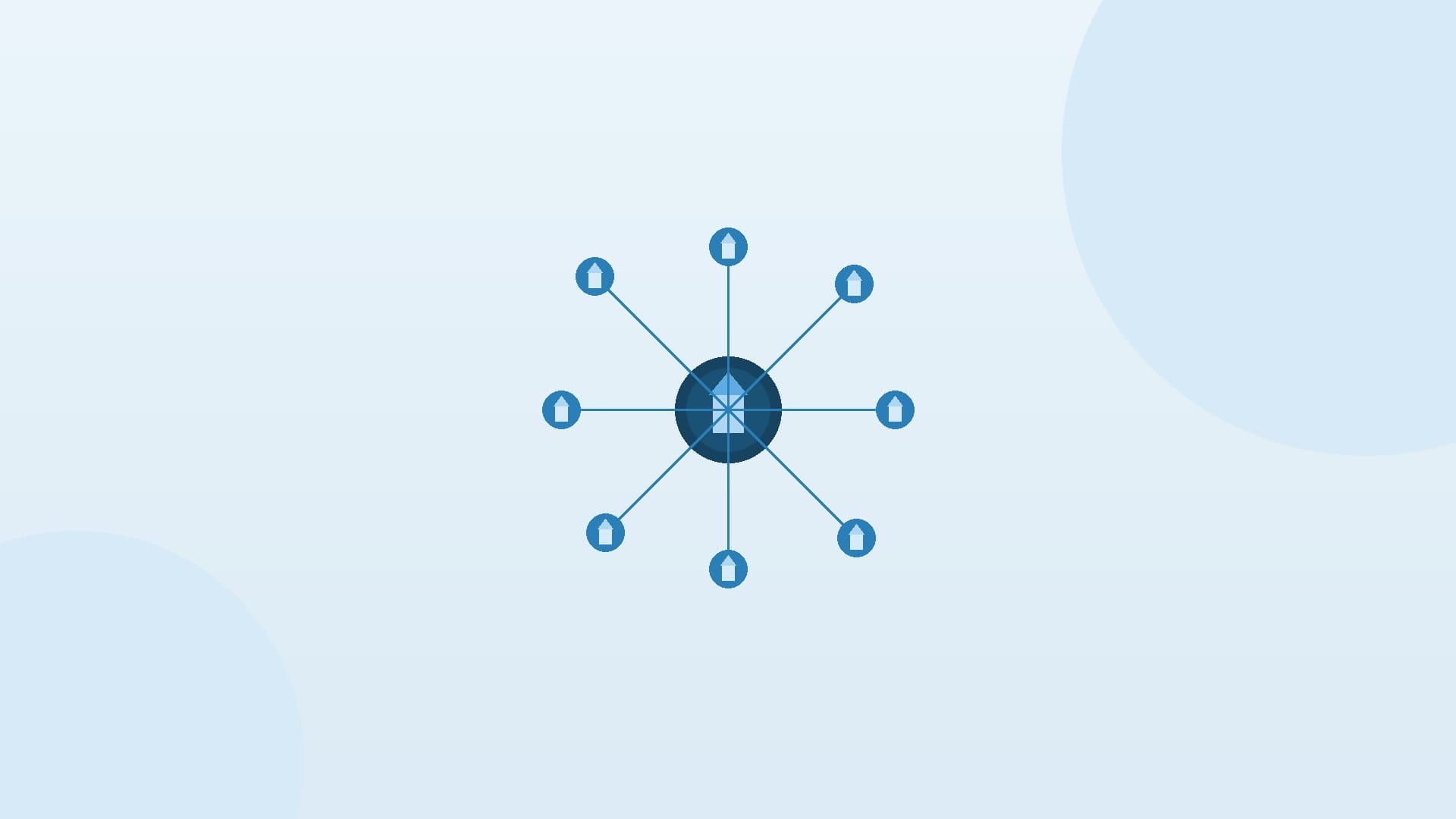
A shared digital evaluation platform in the affiliating university context is structured differently from a single-institution deployment. The university operates the platform as the host, and affiliated colleges are tenant institutions within a common architecture.
The core structure:
The Cost Case
The cost case for shared infrastructure is straightforward.
A scanning station capable of processing 10,000 answer books per day costs roughly Rs 8-12 lakh to set up including hardware, software, and training. An affiliating university with 300 colleges, if each college were to set up its own station, would collectively invest Rs 240-360 crore in equipment that sits idle for most of the year.
Five shared scanning hubs at regional locations, each capable of handling the volume for 60 colleges, represent a capital investment of Rs 40-60 lakh. The shared software platform, licensed per-university rather than per-college, is licensed at a fraction of the aggregate per-college cost.
Operating costs follow the same logic. Maintenance, IT support, and backup systems provided once for a shared platform cost far less than the same services replicated across 300 independent deployments.
The economic argument alone is compelling. In practice, the governance and compliance benefits matter equally or more to university administrations.
What This Means for NAAC and NIRF
NAAC's automated DVV process cross-references institutional data against UGC, AICTE, AISHE, and NIRF databases. An affiliating university that operates a shared digital evaluation platform can generate, at the university level, a complete and auditable dataset covering:
These are exactly the data fields that NAAC's DVV verification will check against submitted SSR claims. Universities that cannot produce this data at the institutional level — because it is fragmented across 300 individual college systems — are exposed to DVV failures and SSR score reductions.
For NIRF, the GO parameter requires accurate graduation outcome data. A shared platform that tracks every examined student, every declared result, and every re-appearing student creates the continuous outcome record NIRF needs without manual reconstruction at submission time.
Implementation: A Phased Approach
Universities considering this model do not need to mandate it for all affiliated colleges simultaneously. A phased rollout reduces risk and builds internal confidence:
Phase 1 (Months 1-6): Deploy shared scanning hubs and the evaluation platform for postgraduate examinations only. PG evaluation is simpler — smaller volumes, more centralised, fewer colleges involved. Use this phase to establish the workflow, train evaluators, and resolve infrastructure issues.
Phase 2 (Months 7-18): Extend to undergraduate final-year examinations for autonomous colleges. These colleges already manage more of their own examination processes and will adapt more easily than fully affiliated colleges.
Phase 3 (Months 19-36): Full deployment across all affiliated UG examinations. By this point, the platform is stable, the evaluator pool is trained, and the university can mandate adoption through its affiliation conditions.
The Controller's View
From the perspective of a university's Controller of Examinations, a shared platform changes daily operations fundamentally. Instead of managing 300 separate examination departments with 300 separate processes, the COE manages one process running at 300 locations simultaneously.
The day the examination cycle begins, the COE can see how many answer books have been received from each college, how many have been scanned, how many have been assigned to evaluators, and how many have been evaluated. Delays are visible in real time, not discovered at the end of the cycle. Evaluators who have not completed their allocation can be followed up directly.
This level of operational visibility is not achievable when 300 colleges run 300 separate manual processes and report to the university only when they have completed — or failed to complete — their work.
Getting Started
For universities considering the shared model, the starting point is a data assessment: how many answer books are processed per examination cycle, across how many colleges, and over what timeframe? This volume-and-timeline mapping determines the scanning infrastructure required and the platform configuration needed.
The second step is stakeholder alignment — specifically, engaging college principals and examination in-charges early to address concerns about control, data privacy, and operational changes. Colleges initially resist centralisation of examination processes. Evidence from early adopters — showing that colleges retain access to their own data, that results are faster, and that revaluation disputes drop significantly — addresses the most common objections.
The third step is vendor selection based on the university's specific affiliation structure and volume. A platform that works well for a university with 80 affiliated colleges may not scale appropriately to one with 400.
The affiliating model is not going away. India's higher education system is structured around it. The question is not whether to modernise examination evaluation within that structure, but how to do it at a level of scale that matches the model's actual size.
Related Reading
Ready to digitize your evaluation process?
See how MAPLES OSM can transform exam evaluation at your institution.