Odisha BSE 2026: QR Codes, DigiLocker, and the Digital Credential Revolution in State Boards
BSE Odisha has introduced QR-coded digital marksheets and DigiLocker integration for its 2026 results cycle. Here is why this matters for students, employers, and the broader push toward tamper-proof academic credentials across India.
From Paper to Pixel: A State Board Takes a Decisive Step
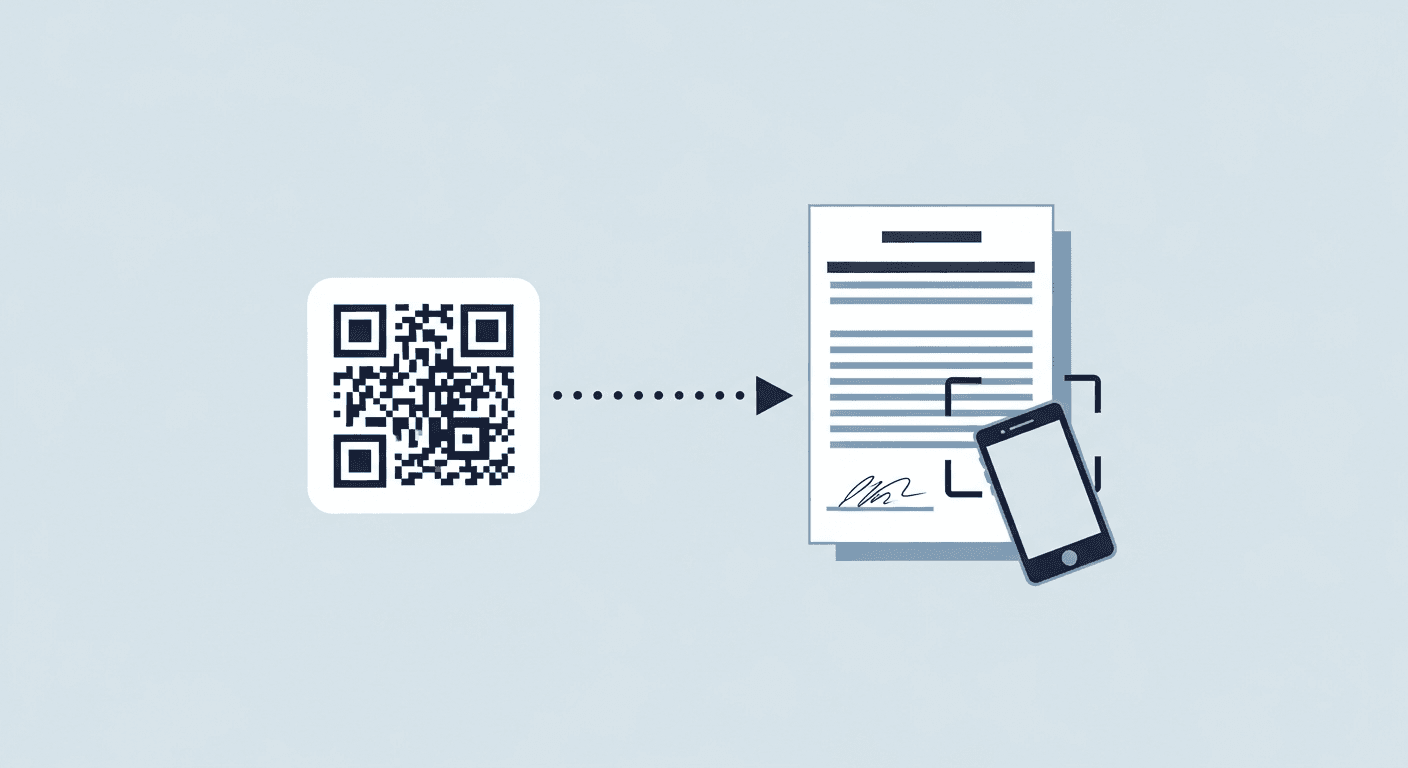
When BSE Odisha announces its Class 10 results in May 2026, students will receive something meaningfully different from previous years: a marksheet embedded with a QR code that can be scanned to instantly verify the authenticity of the document. This is not a cosmetic change. It is part of a growing infrastructure shift across India's state boards — one in which the final output of an examination cycle is a digitally verifiable, tamper-resistant credential rather than a piece of printed paper.
Odisha's move in 2026 places it in the company of Maharashtra, Karnataka, and West Bengal — states that have taken concrete steps to digitize the marksheet layer of the examination pipeline. Understanding what BSE Odisha has implemented, and why it matters, requires looking at both the technical architecture and the broader examination ecosystem in which it sits.
What BSE Odisha Has Actually Implemented
For the 2026 results cycle, BSE Odisha has introduced QR codes on its digital marksheets. Each QR code is linked to the candidate's unique examination roll number and, when scanned, connects to a verification endpoint that confirms the genuineness of the document.
In parallel, the Board has integrated with DigiLocker — the Government of India's official digital document storage platform — allowing students to access their marksheets and certificates directly from the DigiLocker app or web portal. DigiLocker documents are treated as equivalent to original documents under the Information Technology Act, 2000, making them legally valid for admissions, employment verification, and other formal purposes.
This combination — QR code on the physical document plus a secure digital copy in DigiLocker — addresses two distinct failure modes in traditional marksheet systems:
Forgery of the physical document. A forged marksheet cannot carry a valid QR code, since generating a valid code requires access to the Board's issuing systems. Any scan of a forged document either produces an error or leads to a verification result that does not match the printed figures.
Loss or damage of the original. Students who have misplaced original documents, or whose documents have been damaged in floods, fires, or migration — a non-trivial concern in Odisha, which is periodically affected by cyclones — can retrieve a legally valid digital copy at any time.
Why the Timing Matters in Odisha's Context
Odisha is among India's larger states by number of students appearing in board examinations. For 2026, several lakh Class 10 candidates are expected to receive results. The sheer scale means that even a small percentage of fraudulent marksheets in circulation represents thousands of forged documents — and the employment, admission, and public service consequences of credential fraud are severe.
Odisha has also historically faced challenges with out-of-state migration for employment, primarily to Gujarat, Maharashtra, and Kerala. When workers from Odisha seek formal employment in distant states, their educational credentials are often verified by employers who have no relationship with BSE Odisha and no easy mechanism to confirm document authenticity. A QR code that can be scanned by any smartphone, and a DigiLocker record that any institution can access online, eliminates the asymmetry between document holder and document verifier.
The Examination Pipeline: From Answer Script to Verified Credential
A verifiable digital marksheet is, in one sense, the last step in a long examination pipeline — but it is only as trustworthy as the integrity of everything that precedes it.
The chain runs roughly as follows: answer books are collected from examination centers, transported to evaluation hubs, evaluated by trained examiners, moderated, marks entered into the board's central database, totaled, results published, and certificates issued. A QR code on the marksheet authenticates the final output. But if any step in the preceding chain is unreliable — if marks are entered incorrectly, if totaling errors occur, if examiners are biased — the QR code simply certifies a flawed record.
This is precisely why the shift toward digital evaluation at the answer script stage matters for credential integrity. Boards that have moved to on-screen marking (OSM) systems have built-in error elimination at the source: auto-totaling replaces manual summation, blind review by multiple evaluators is systematically enforced, and every mark entry is logged with an auditable timestamp. When that clean data feeds into a marksheet system that then generates a QR code, the verified credential reflects a genuinely robust evaluation process.
BSE Odisha currently evaluates answer books through a physical process. The DigiLocker and QR code initiative is an important step, but completing the chain — and maximizing the integrity of the credential — ultimately requires addressing the evaluation stage as well.
The DigiLocker Ecosystem: Broader Context
DigiLocker was launched in 2015 and has since grown to more than 300 million registered users, with over 7.5 billion documents issued through the platform as of 2025. The system is interoperable with a large number of central and state government document issuers, including CBSE, CISCE, NTA, several state boards, UIDAI, the Ministry of Road Transport (for driving licenses and vehicle registration), and income tax authorities.
For students, having board results in DigiLocker removes a practical friction point that has long complicated the admission process: producing certified copies of marksheets for every institution applied to. With DigiLocker, the candidate grants the receiving institution access to their documents digitally, and the institution verifies directly against the issuing authority's record.
For higher education institutions — universities, colleges, and deemed universities — the integration reduces the administrative burden of physical document verification and lowers the risk of admitting students on the basis of forged credentials. This is particularly relevant for institutions that receive large numbers of out-of-state applicants and cannot easily contact the issuing board for manual verification.
State Boards Adopting Digital Credential Infrastructure: A Pattern
Maharashtra was among the first state boards to introduce QR codes on HSC marksheets, and the initiative generated significant positive response from students, parents, and employers. Karnataka has similarly digitized its PUC credential issuance. West Bengal's WBCHSE, which has moved toward a semester-based system, has coupled that structural reform with digital result dissemination.
What is emerging is a mosaic of state-level initiatives rather than a single coordinated national rollout. Each board has implemented at its own pace, with varying levels of integration depth. Some have gone only as far as QR codes on printed documents; others have achieved full DigiLocker integration with dynamic verification. A few are piloting Aadhaar-linked credential issuance.
The central government's Academic Bank of Credits (ABC) initiative — a digital repository of credits earned by students across institutions, underpinning NEP 2020's vision of academic mobility — depends on this credential infrastructure being in place at the board level. A student who wishes to transfer credits from one institution to another needs their prior educational records to be in a machine-readable, verifiable format. QR codes and DigiLocker are foundational to making ABC practically functional.
What Institutions and Employers Should Do Now
For colleges and universities receiving applications from Odisha and other states with QR-coded marksheets:
For employers:
The Road Ahead
BSE Odisha's 2026 initiative is a meaningful step. The QR code and DigiLocker integration will benefit students immediately when results are declared in May 2026. Over time, the value compounds: every employer, admissions office, and government agency that scans rather than visually inspects a document reduces the space for fraud.
The next steps — tighter integration of the evaluation pipeline with the credential issuance system, and eventual alignment with the Academic Bank of Credits — will determine whether Odisha becomes a model for digital examination infrastructure in eastern India or remains a partial implementation waiting for the next push.
---
Related Reading
Ready to digitize your evaluation process?
See how MAPLES OSM can transform exam evaluation at your institution.