One Nation One Data: Why NAAC's 2026 Reforms Demand Digital Examination Records
NAAC's shift to binary accreditation and the One Nation One Data platform means institutions must now maintain verifiable, machine-readable examination records — or risk DVV compliance failures.
The Accreditation Landscape Has Changed
On February 10, 2025, NAAC announced the most significant overhaul of its assessment methodology since 2007. Driven by recommendations from the Dr. K. Radhakrishnan Committee, the reforms introduced binary accreditation outcomes, an AI-powered evaluation system, and — most consequentially for examination administrators — a centralised data infrastructure called One Nation One Data (ONOD).
For institutions still running paper-based examination evaluation, these reforms create a structural compliance problem. Data that cannot be digitally verified cannot be trusted by the system. Understanding what this means in practice is essential for every IQAC coordinator, examination controller, and academic administrator in India preparing for the 2026–27 accreditation cycle.
What Changed: Binary Accreditation and the End of Grade Inflation
Under the old CGPA-based system, NAAC issued grades from A++ to C. The new framework replaces this spectrum with a binary outcome: Accredited or Not Accredited. Institutions either meet the minimum threshold across seven criteria or they do not. There is no middle band of grades that previously allowed institutions with weak examination governance to compensate through strong research or infrastructure scores.
The methodology shift is equally significant. Historically, peer team visits were qualitative exercises where the impressions of visiting faculty carried substantial weight. The 2025 reforms move 75% of the total weightage to process and output metrics, with only 25% assigned to inputs. Every institutional claim must now be backed by data that can be independently verified — and verified at scale.
One Nation One Data: What It Is and Why It Matters
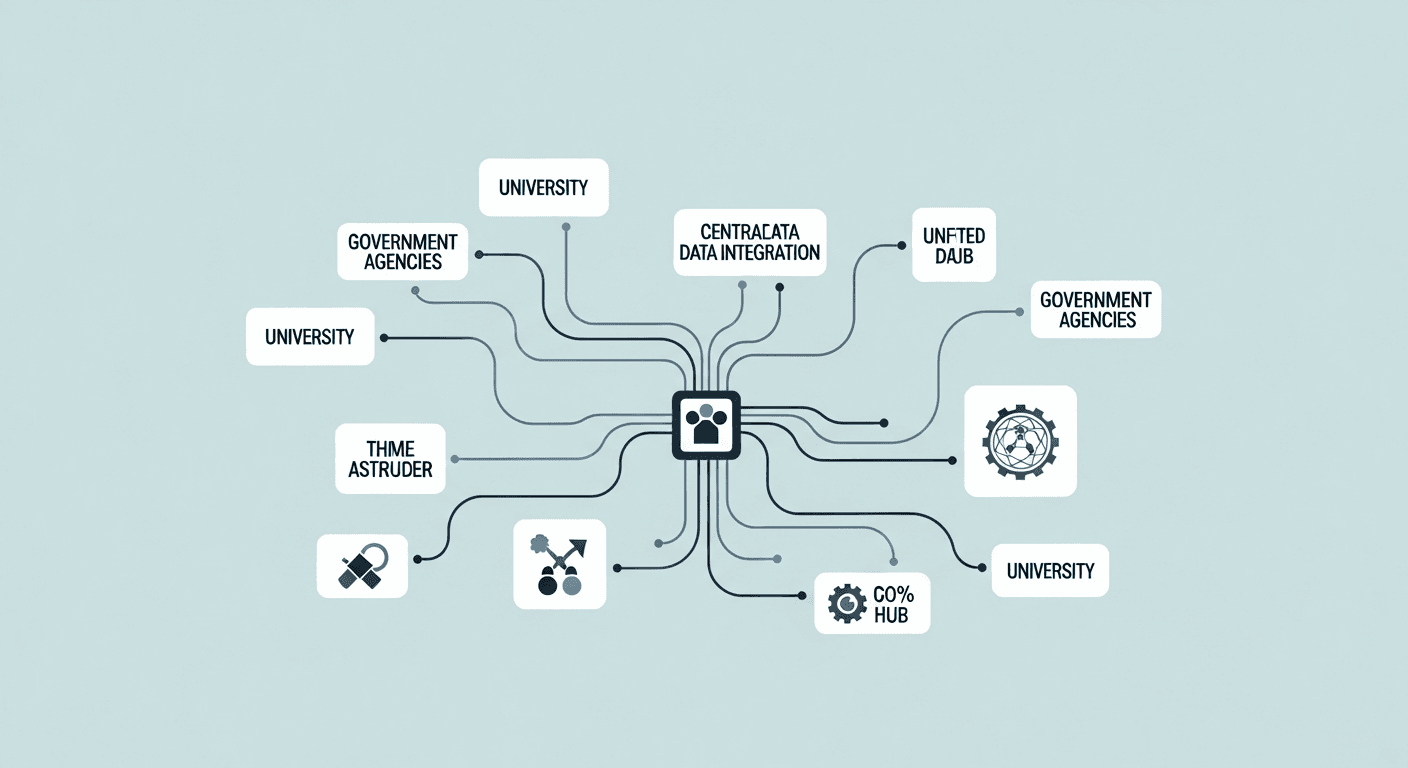
The One Nation One Data platform is a centralised repository that aggregates institutional data across all major accreditation and ranking agencies. Until now, institutions submitted similar data to AISHE, NAAC, NBA, AICTE, NIRF, UGC, and state governments separately — often with minor inconsistencies between versions. ONOD changes this to a single annual submission from which all agencies draw.
The implications for examination data are direct. Under ONOD:
An institution claiming a 78% pass rate in its Self-Study Report now faces automated cross-referencing against AISHE enrolment figures. If the examination management data cannot be queried digitally, the DVV process must rely entirely on scanned documents — and any discrepancy generates a compliance flag.
The Examination Records Institutions Must Now Maintain
Under NAAC Criterion 2 (Teaching-Learning and Evaluation), institutions are expected to demonstrate performance across several key metrics. The 2026 reforms have sharpened the evidence requirements for each:
Criterion 2.6 — Student Performance and Learning Outcomes
Pass rates, distinction rates, and subject-wise score distributions must be available over a minimum five-year period. Under paper-based evaluation, this data exists in physical registers and printed tabulation sheets. Under ONOD, it must be exportable in a format that can be cross-referenced against AISHE enrolment records.
Criterion 2.7 — Student Satisfaction with Evaluation
Survey data linking student experience to evaluation workflows must be documented and time-stamped. Institutions that can demonstrate structured quality assurance in their evaluation process — including formal mechanisms for re-evaluation and moderation — score better on this metric.
Criterion 6.5 — Quality Assurance in Examination
This criterion specifically weights documented processes, audit trails, and internal quality measures. Double valuation records, moderation logs, and evaluator assignment documentation fall directly under this heading.
The table below shows how these evidence requirements translate into practical data:
| NAAC Criterion | Evidence Required | Paper Evaluation Produces | Digital Evaluation Produces |
|---|---|---|---|
| 2.6 — Pass rates | 5-year subject-wise data | Physical registers | Queryable database export |
| 2.6 — Re-evaluation outcomes | Count and result of re-evaluations | Manual log | Structured audit trail |
| 2.7 — Evaluation quality | Process documentation | Narrative description | System-generated reports |
| 6.5 — Audit trail | Evaluator identity and action log | Physical register | Timestamped digital log |
Why Paper-Based Workflows Create a DVV Compliance Gap
The fundamental problem with paper-based examination records is that they produce evidence that cannot be automatically validated. A printed tabulation sheet can be audited by a person, but the ONOD platform's automated DVV cannot cross-reference it against AISHE data in real time. A physical answer book store demonstrates custody but not chain-of-custody with evaluator identity attached.
Digital evaluation systems produce a continuous data exhaust as a by-product of their normal operation:
This data exhaust is precisely what the ONOD platform's AI tools are designed to verify. Institutions with digital evaluation records will produce consistent, cross-referenceable data. Institutions without them face a compliance gap that cannot be bridged with supplementary scanned documents.
The ONOD Platform and Multi-Agency Compliance
The strategic significance of ONOD extends beyond NAAC accreditation. The platform integrates NAAC with NIRF, NBA, AICTE, and UGC. Institutions seeking NBA accreditation alongside NAAC accreditation face a parallel requirement: NBA's Outcome-Based Education framework requires documented evidence of student attainment of Course Outcomes (COs) and Programme Outcomes (POs) at the subject level.
This evidence is substantially easier to produce from a digital examination system than from paper records. A digital system that captures subject-wise marks against individual students can generate CO attainment calculations automatically. The same data that satisfies NAAC Criterion 2.6 feeds into NBA's OBE compliance matrix.
For institutions targeting both NAAC accreditation and NIRF rankings, the overlap in data requirements is significant:
What Institutions Should Do Before the Next Accreditation Cycle
The 2026–27 NAAC accreditation cycle operates under the fully binary framework. Institutions presenting for first-time accreditation or re-accreditation are operating under new rules. The following steps directly address the examination records compliance gap:
The institutions that enter the 2026–27 accreditation cycle with digital examination infrastructure are doing more than complying with a process change. They are producing the category of evidence that the new accreditation architecture is built to evaluate. That structural alignment cannot be replicated through documentation effort in the weeks before a peer team visit.
Related Reading
Ready to digitize your evaluation process?
See how MAPLES OSM can transform exam evaluation at your institution.