Maharashtra's Three-Paper Leak Chain: What the Nagpur Scandal Reveals About Exam Security
In February 2026, Class 12 Physics, Chemistry, and Mathematics papers in Nagpur were leaked via WhatsApp before exams began, exposing deep vulnerabilities in paper-based exam delivery.
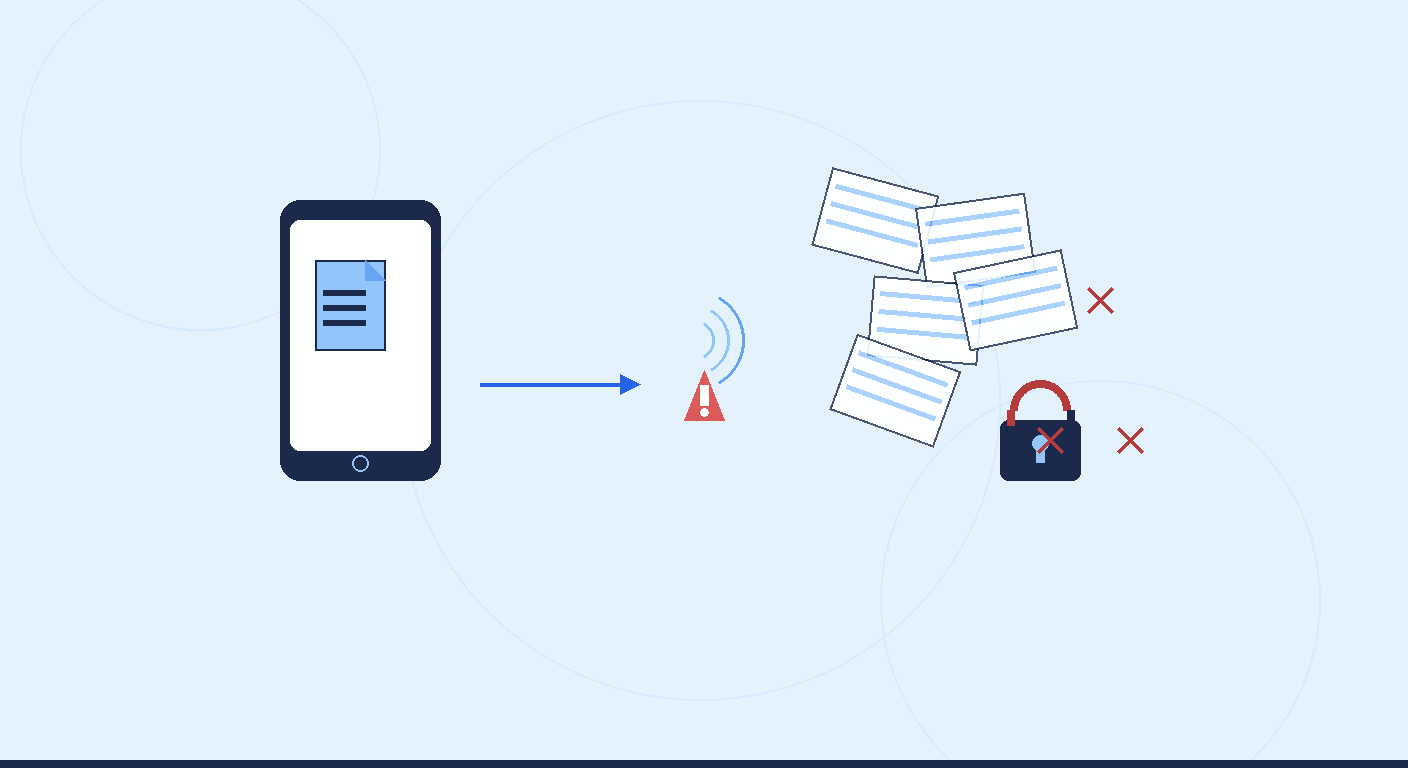
Three Exam Papers. One WhatsApp Group. A Systemic Failure.
On the morning of February 18, 2026, an invigilator at St. Ursula's College in Nagpur noticed something unusual. A female student had spent nearly 20 minutes in the washroom during the Class 12 Chemistry examination, which was scheduled to begin at 11 AM. When investigators later examined her smartphone, they found the Chemistry question paper had been circulating on a WhatsApp group between 10:37 AM and 10:40 AM — while students were still being seated in the examination hall.
That single observation triggered what became one of Maharashtra's most damaging board examination controversies of the 2026 cycle. By the time a technical probe concluded, investigators had confirmed that not one, but three subjects — Physics, Chemistry, and Mathematics — had been leaked from examination centres in Nagpur ahead of the Higher Secondary Certificate (HSC) exams.
How the Chain Worked
The investigation revealed a coordinated operation. A teacher from a private tuition centre in Nagpur was identified as the mastermind. Approximately 13 students were implicated across the affected centres. The method was direct: the question paper was obtained before the official distribution window closed and transmitted via WhatsApp to a closed group. Students in that group received not just the paper but a set of prepared answers, reducing the cognitive barrier to cheating significantly.
Nagpur Police arrested two individuals under the Maharashtra Prevention of Malpractices at Examinations Act, 1982. The technical probe — ordered by the board after the initial Chemistry incident — subsequently confirmed that Physics and Mathematics papers had also been shared through the same network in the days surrounding their respective examination dates.
What made the Nagpur incident distinctive was its cascading nature. Paper leaks in India are frequently isolated — a single subject at a single centre, quickly contained. Here, three sequential subject leaks across the same examination cycle were confirmed by the board's own investigators.
The Board's Contradictory Response
The Maharashtra State Board of Secondary and Higher Secondary Education (MSBSHSE) adopted an unusual position in the aftermath. The board confirmed that the Chemistry paper had been "shared" on WhatsApp and that police had made arrests, yet simultaneously ruled out a re-examination. Its official communication stated that the incident did not "qualify" as a question paper leak in the formal, board-regulatory sense — a position it maintained even as criminal proceedings continued.
For students who prepared without advance access to the papers, the board's stance raised immediate fairness questions. The no-re-exam decision meant that the entire cohort — those who benefited from the leak and those who did not — were assessed on the same result cycle. No supplementary examination was offered.
This contradiction — acknowledging a leak while declining to act on its outcome implications — reflects a recurring administrative pattern in Indian board examinations. Cancelling and rescheduling exams for hundreds of thousands of students carries immense logistical, financial, and reputational costs. Boards routinely absorb the unfairness of a partial leak rather than face system-wide disruption. The Public Examinations (Prevention of Unfair Means) Act, 2024 creates criminal liability for those who orchestrate leaks, but it does not compel boards to cancel examinations, leaving the remediation calculus unchanged.
What the Nagpur Sequence Reveals
The Maharashtra board administers HSC examinations for approximately 14 lakh students annually — one of the largest single board examination systems in the world. The Nagpur sequence highlights vulnerabilities that are endemic to physical paper-based delivery at scale:
Distribution chain opacity: Physical question papers travel through multiple human hands — printing presses, district storage centres, transport personnel, examination centre staff — before reaching students. Each handoff creates a potential interception point. The chain from printing facility to examination desk is rarely under continuous, documented surveillance.
WhatsApp as an amplification vector: In previous decades, a paper leak might benefit a few dozen students near a single leakage point. With end-to-end encrypted messaging applications, a single photograph taken at any point in the distribution chain can be in thousands of hands within minutes. The digital speed of distribution has no corresponding digital security in the physical paper delivery architecture.
Tuition centre ecosystems: The Nagpur mastermind was a private tuition teacher — a pattern seen in multiple previous Indian paper leak cases, including the NEET 2024 controversy, UGC-NET December 2025, and Chhattisgarh Hindi 2026. Private tuition centres have structural incentives tied to student performance and frequently maintain access to examination infrastructure that individual students do not.
Prepared answers as compounding factor: Distributing the question paper ahead of the examination grants a preparation advantage. Distributing prepared model answers removes almost all of that preparation requirement. The Nagpur investigation found both circulating in the same WhatsApp group.
The Post-Examination Evaluation Blind Spot
A dimension of paper leak controversies that receives less analytical attention is what happens during answer sheet evaluation after a suspected breach. When evaluators assess answer sheets for an examination that may have been compromised, grade distributions can look anomalously high at affected centres without triggering automatic alerts — because no mechanism exists to compare expected score distributions against actual distributions at the subject-and-centre level in real time.
Digital evaluation platforms that track grade distributions, evaluator scoring patterns, and centre-level outcome metrics can surface these statistical anomalies. If Chemistry results from Nagpur's affected centres showed markedly higher mean scores than the state distribution, a digital evaluation system capturing all marking data centrally would flag this as part of standard quality checks. Investigation could begin during the evaluation process, not months after results are declared.
Physical evaluation processes — answer scripts sent to individual examiners' homes, marks recorded on paper sheets, totals manually compiled — generate no queryable dataset. Statistical anomalies at the centre or subject level are effectively invisible until someone specifically commissions an analysis, which typically happens only after a controversy has already entered the public domain.
What Changed, and What Did Not
Maharashtra's HSC 2026 results will be declared in the coming weeks. The arrested individuals will face proceedings under the Maharashtra malpractices legislation. Some subset of students who participated in the leak may face academic action.
But the physical paper delivery architecture that made the Nagpur sequence possible is not being replaced. The WhatsApp groups used to distribute the papers cannot be prospectively monitored. The tuition centre ecosystem that provides the coordination layer for such operations faces no structural reform.
Leakage-resistant examination design — whether through computer-adaptive testing, last-minute paper generation, or post-examination digital evaluation that limits the value of advance paper access — requires institutional investment that most state boards have not committed to. Until that investment is made, the prevention strategy remains primarily punitive: deter by arrest, contain by denial, and manage the fallout by declining to cancel examinations that have been compromised.
The Nagpur investigation continues. The questions it raises about India's paper delivery infrastructure have not been answered.
---
Related Reading
Ready to digitize your evaluation process?
See how MAPLES OSM can transform exam evaluation at your institution.