KCET 2026: Karnataka's Digital Admissions Blueprint That Other States Should Study
With 2.92 lakh qualified candidates, 86,000+ seats, and a fully digital pipeline from exam to seat allotment, Karnataka's KCET 2026 offers a replicable model for transparent, tamper-proof engineering admissions that directly supports NAAC and NBA accreditation goals.
On July 6, 2026, the Karnataka Examinations Authority (KEA) published the first mock seat allotment results for KCET 2026. By July 15, qualified candidates will know their final round 1 seat allotment across more than 86,000 seats in engineering, pharmacy, agriculture, nursing, and other professional programmes.
This timeline — examination in April, results in June, mock allotment in July, final allotment by mid-July — represents something that appears unremarkable in Karnataka but is genuinely exceptional in the broader context of India's examination ecosystem in 2026.
When most of the country is watching the CBSE On-Screen Marking controversy unfold across parliamentary committees, transferred officials, and Supreme Court hearings, Karnataka quietly demonstrates what a well-designed digital examination and admissions pipeline looks like in practice.
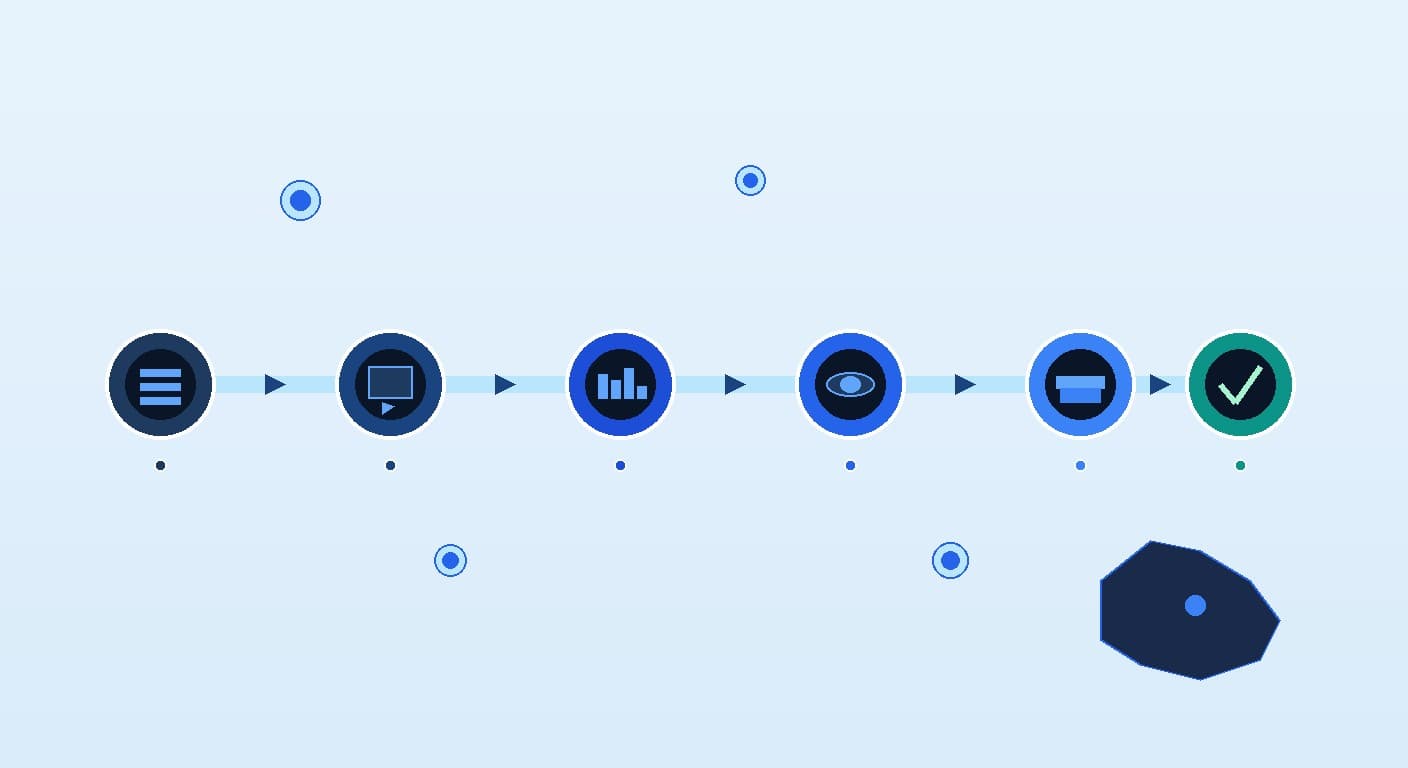
The KCET 2026 Pipeline: Stage by Stage
Understanding why Karnataka's model works requires looking at each stage of the pipeline.
Stage 1: Examination (April 22-24, 2026)
KCET 2026 was held across three days covering Biology, Mathematics, and Physics-Chemistry. Approximately 3.11 lakh candidates appeared at examination centres across Karnataka. The examination was conducted in pen-and-paper mode, with physical answer sheets collected and processed centrally by KEA.
Stage 2: Digital Evaluation and Results (June 9, 2026)
Answer sheets were evaluated using KEA's scanning and on-screen marking infrastructure. Results were declared on June 9, 2026. Of the 3.11 lakh candidates who appeared, approximately 2.92 lakh qualified — meeting the minimum cut-off for at least one programme category. Tanisha Karthik topped the engineering stream.
The result declaration was notable for what it did not generate: no significant controversy, no parliamentary questions, no protests about evaluation errors. In 2026, this is not a trivial outcome. It is a distinguishing achievement.
Stage 3: Digital Counselling Registration and Option Entry
Following results, KEA opened its online counselling portal for document verification, option entry, and payment of counselling fees. The entire process is digital: candidates log in, rank their preferences from available courses and colleges, and the system locks choices at the deadline.
Stage 4: Mock Seat Allotment (July 6, 2026)
The mock allotment released on July 6 shows candidates the seat they would receive based on their current rank and preferences. This is a preview — it gives candidates a three-day window (July 6-9) to modify preferences before the system locks choices for the final round.
Stage 5: Final Round 1 Allotment (July 15, 2026)
The final allotment determines which candidates receive a confirmed seat in round 1. Candidates who are not allotted their first preference may receive another choice, or participate in subsequent rounds. The entire process from examination to seat confirmation is expected to be complete within approximately 85 days of the examination date.
Why This Pipeline Matters for NAAC Accreditation
Criterion 6: Governance and Administration
NAAC's binary accreditation framework evaluates institutions on governance and administration quality. One of the key attributes under this criterion is the existence of transparent, documented institutional processes. For engineering colleges in Karnataka, the KCET pipeline provides exactly this evidence:
NAAC peer teams reviewing NAAC SSR submissions expect governance documentation of this quality. Colleges that can reference the KCET digital pipeline — and show that their own institutional processes are integrated with it — are demonstrably easier to accredit than those managing admissions through informal merit lists.
Criterion 2: Teaching, Learning and Evaluation
NAAC's Criterion 2 evaluates the quality of the institution's student intake, teaching practices, and evaluation systems. For KCET-participating colleges, the standardised intake data generated by KEA forms a clean baseline: every admitted student has a documented KCET rank, score, and subject-wise marks on record.
This data enables outcome analysis — tracking whether students admitted in different KCET rank bands perform differently in internal assessments or board examinations — which is precisely the kind of evidence NAAC seeks under the learning outcomes attribute.
Criterion 5: Student Support and Progression
The KCET counselling process also generates evidence for Criterion 5. KEA's digital counselling portal records every step of the seat allotment: when a student registered, what preferences they submitted, when they accepted their seat. This timeline creates a documented record of the admissions journey that supports student support evidence in NAAC SSRs.
NBA Programme Accreditation: Intake Quality Documentation
For NBA programme accreditation, engineering colleges must demonstrate transparent admissions processes, student intake quality documentation, and clear academic records from the point of admission. KCET-based admissions produce exactly this documentation:
NBA's Graduate Attributes and Professional Competencies (GAPC) Version 4.0, which updated the Self-Assessment Report format for Tier I engineering programmes, explicitly requires outcome traceability from student intake through graduation. KCET-based admissions provide the intake anchor for this traceability chain.
Colleges that manage their own admissions through informal merit lists face significantly more difficulty producing this documentation convincingly during NBA visits.
NIRF Rankings: Student Quality Metrics
NIRF's Teaching, Learning and Resources (TLR) parameter includes student quality metrics. The Graduation Outcomes (GO) parameter, weighted at 20% of total NIRF score, tracks the proportion of students who complete their programmes on time and proceed to employment or higher education.
KCET data provides the intake baseline for GO calculations. Colleges that can cross-reference their KCET admission cohorts with graduation and placement outcomes have a complete data pipeline for NIRF submissions. Those without clean intake records struggle to demonstrate the input-output relationship that NIRF GO metrics require.
Replicable Design Principles
For state examination authorities and institutions developing their own admission systems, the KCET model demonstrates several principles that can be replicated:
1. Centralise examination and evaluation under a single dedicated authority
KEA manages both the examination and the admissions process. When issues arise, there is a single authority with full visibility and responsibility. Compare this to models where examination is managed by one body and admissions by another, creating accountability gaps when errors occur.
2. Use mock allotments as a transparency mechanism
The mock allotment on July 6 gives candidates full visibility into how the algorithm is allocating seats, with an opportunity to modify preferences. This single design decision significantly reduces post-allotment disputes and associated administrative burden.
3. Position the correction window before the final allotment, not after
Unlike systems that handle complaints post-allotment — creating cascading disruptions across academic calendars — KCET's three-day preference modification window after mock allotment is a pre-emptive correction mechanism. It converts potential disputes into preventable adjustments.
4. Maintain complete digital records throughout every stage
Every step — application, option entry, mock allotment, final allotment — generates timestamped digital records that can be retrieved for accreditation or audit purposes years later. This is the accreditation dividend of digital infrastructure: evidence is generated as a byproduct of operations, not separately assembled.
5. Separate examination evaluation from counselling management
The quality of evaluation and the quality of counselling are two distinct operational challenges. KCET handles them sequentially, with dedicated timelines for each. This prevents counselling pressure from compromising evaluation quality, or evaluation delays from compressing the counselling window.
The Contrast with Less Digitised State Models
Karnataka's model is not the national default. Across India, several states still manage large-scale professional admissions through processes that are partially manual, incompletely documented, or vulnerable to error. The consequences are visible in:
The 2026 CBSE OSM experience shows what happens when digital evaluation is implemented without adequate infrastructure and quality controls. The KCET 2026 experience shows what happens when it is implemented well.
The difference is not technological — both systems use digital scanning, online portals, and data-driven allotment. The difference is operational design, quality control, and institutional clarity about what the system is meant to achieve.
What Engineering Colleges Can Do Right Now
For colleges participating in KCET or similar state-level admission processes, the digital pipeline should be matched on the institutional side:
The KCET exam was conducted in April. The seats will be filled by late July. The evidence for NAAC Criterion 6 and NBA programme accreditation is already being generated — the only question is whether colleges are capturing and organising it systematically.
The 85-day pipeline from examination to seat allotment is a technical achievement. Translating that achievement into institutional accreditation advantage requires deliberate data governance on the college side.
Related Reading
Ready to digitize your evaluation process?
See how MAPLES OSM can transform exam evaluation at your institution.