From Exam Hall to Cloud: How India's Universities Are Modernising Their Examination Infrastructure
India operates the world's largest higher education system by institutional count. Moving its examination infrastructure from physical halls to digital systems is one of the largest operational transformations in global education.
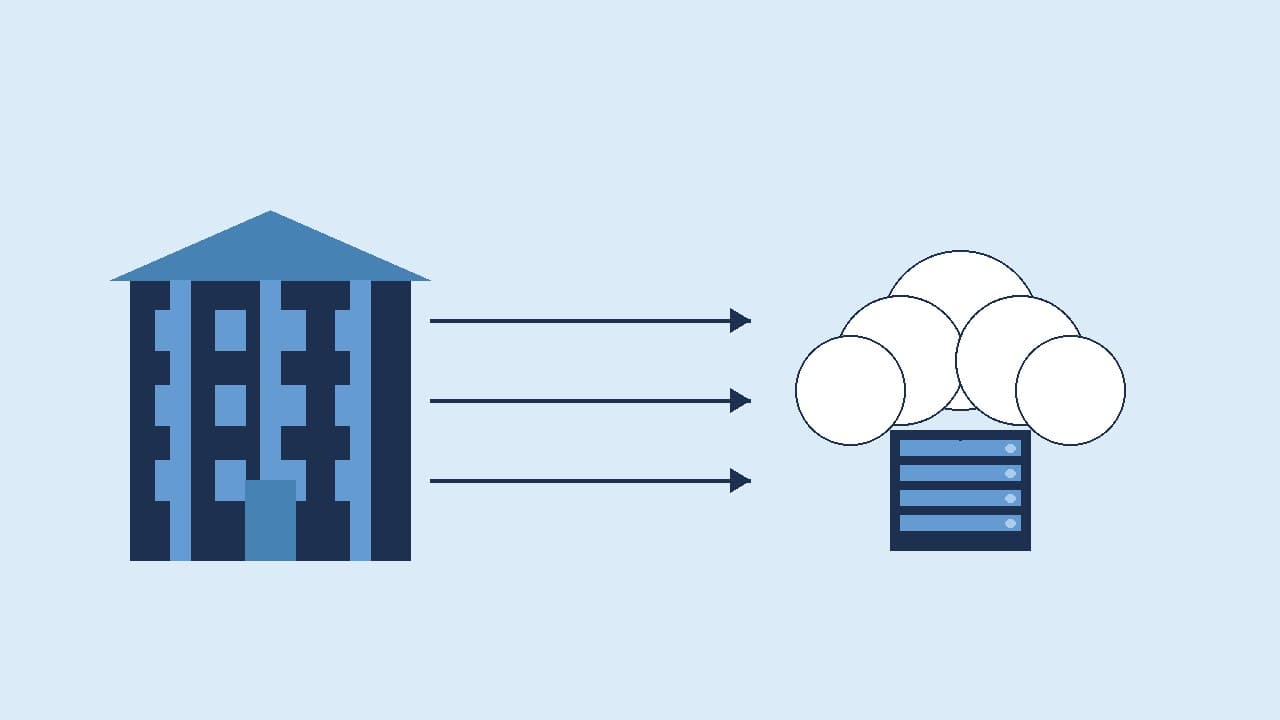
The Scale Problem That Is Forcing Change
India's higher education system operates at a scale that has no close parallel anywhere in the world. More than 1,000 universities and 40,000 colleges run examination cycles that collectively process tens of millions of answer sheets each academic year. Until recently, every one of those answer sheets followed a path recognisable to an examiner from any decade of the past century: physical papers, physical evaluation centres, physical transportation, physical filing.
That model is ending — not primarily as a policy preference, but as a practical necessity. The combination of the National Education Policy 2020's push toward continuous assessment, growing enrolments, an evaluator shortage, and mounting evidence of systematic failure in paper-based evaluation logistics has forced institutions across India to begin the transition to cloud-based digital examination infrastructure.
The transition is uneven, contested, and ongoing. But its direction is settled.
The Policy Driver: NEP 2020's Assessment Architecture
The National Education Policy 2020 introduced structural changes to assessment that are difficult to implement within a purely paper-based framework. The shift from single high-stakes annual examinations to continuous, competency-based evaluation — including the CBSE's implementation of two board examination cycles per academic year — multiplies the volume of evaluation work that institutions must manage.
CBSE's 2026 academic year illustrated this concretely. The board ran Phase 1 examinations in February-March, processed Class 12 results on May 13, and simultaneously managed Phase 2 evaluations for 6.68 lakh Class 10 students whose results are expected by mid-June. In a traditional paper-based model, this sequential evaluation volume would have required either a doubling of the evaluator workforce or an unworkable evaluation calendar compressed into the same number of weeks. Digital evaluation — where evaluators access scanned scripts remotely, marks aggregate automatically, and moderation is triggered algorithmically — made parallel processing feasible.
For affiliating universities running semester systems under the NEP-mandated four-year undergraduate programme, the multiplication effect is even larger. A university running four semesters per year for a 40,000-student intake generates a volume of evaluation work that makes digitisation a capacity requirement, not an administrative preference.
What "Going Digital" Actually Means
The phrase "digital evaluation" covers a spectrum of implementations, and institutions at different points on that spectrum face different challenges.
At the base level, digitisation means scanning physical answer sheets and displaying them to evaluators on screen. This eliminates the physical transport of scripts between evaluation centres, removes the risk of misplaced or damaged papers, and creates a permanent digital archive with timestamp-linked access logs. CBSE's onscreen marking system operated at this level in 2026, processing 98.66 lakh answer sheets evaluated by approximately 70,000 evaluators distributed across the country.
At an intermediate level, digitisation means workflow management: automatic routing of scripts to evaluators with verified subject assignments, real-time marking progress dashboards, automated totalling across question-wise marks, and built-in moderation triggers when individual evaluator scores diverge from cohort norms beyond defined thresholds.
At the most advanced level, digitisation means cloud-delivered examination — where candidates sit exams at secure terminal-equipped centres, question papers exist only as encrypted data objects, and there is no physical supply chain for a question to leak through. JEE Advanced has operated at this level for several years. NEET-UG has committed to transitioning to this model by 2027.
India's university system is currently distributed across all three levels, with most affiliating universities at the first or second stage and a small number of technology-forward autonomous institutions beginning to pilot the third.
The Four Infrastructure Categories
Moving from physical examination halls to cloud-based systems requires investment in four distinct infrastructure categories. Institutions that treat these as a single procurement decision consistently underestimate the complexity involved.
Document digitisation infrastructure: High-capacity scanners, scanning supervision protocols, quality control for legibility and page completeness, and metadata tagging that links each scanned page to the correct student roll number. CBSE's 2026 experience — in which some students discovered mismatched answer sheets or blurred scans when they accessed their answer books — demonstrated that this foundational step is where most implementation failures originate. Scanning quality is not a hardware decision alone; it requires documented protocols, trained scanning supervisors, and real-time quality checks before scripts enter the evaluation queue.
Evaluator-side access infrastructure: Secure login credentials with multi-factor authentication, evaluation portal with subject-specific question paper display, structured mark entry forms per question, evaluator activity logging with session timestamps, and automatic timeout management. The platform must handle several thousand concurrent evaluators, each accessing multi-page image files over variable broadband connections, without performance degradation.
Administration and workflow infrastructure: Real-time marking dashboards, automated escalation when scripts remain unevaluated beyond threshold periods, moderation workflows that surface statistical outliers, and result compilation pipelines that generate verified mark ledgers from distributed evaluator inputs with a complete audit trail at every step.
Data security and archival infrastructure: Encrypted storage of all scanned scripts, role-based access controls that prevent evaluator-student identity cross-referencing, tamper-evident audit logs, and long-term retention policies that satisfy regulatory requirements for re-evaluation windows and RTI requests.
The Market Numbers
Global demand for digital examination infrastructure is growing at a rate that reflects the scale of the underlying need. The online exam proctoring market — one component of the broader digital examination ecosystem — was valued at $868.95 million in 2024 and is projected to reach $2.34 billion by 2031. The Asia-Pacific region is the fastest-growing segment, with an 18% compound annual growth rate projected through 2033, driven largely by India and Southeast Asia's large-population higher education expansions.
Within India, 82% of educational institutions had implemented hybrid learning models by 2025, creating the digital literacy baseline that makes examination system digitisation operationally feasible at the evaluator level. Institutions that completed AI-proctored examination pilots reported improvements of up to 48% in examination integrity metrics. More than 60% of universities globally are now expanding their digital examination programmes, and over 55% of students in surveyed populations prefer flexible digital examination formats.
These figures matter for administrators not as marketing statistics but as evidence that the operational knowledge base for large-scale digital examination implementation exists and is growing.
The Resistance Points
The transition is not without friction. Three resistance patterns appear consistently across institutions undertaking digital evaluation implementations.
Evaluator adoption barriers: Faculty accustomed to evaluating on physical scripts report discomfort with on-screen evaluation, particularly for subjects with complex diagrams, mathematical notation, or answer formats that extend across multiple pages. Institutions that have successfully managed this transition have invested in structured training, screen ergonomics, and evaluation interface design that minimises cognitive friction — rather than assuming that evaluators will adapt without support.
Connectivity at remote campuses: Cloud-based systems assume reliable broadband access. Institutions in regions with inconsistent connectivity require hybrid implementations — local servers that synchronise to cloud infrastructure when bandwidth is available — rather than pure cloud deployments that fail when connectivity drops.
Governance and change management: Digital evaluation changes the distribution of control within examination administration. Centralised audit trails and real-time dashboards make individual evaluator performance visible in ways that physical evaluation does not. This transparency is administratively valuable, but it requires careful change management to avoid creating adversarial dynamics with evaluator communities who may perceive monitoring as punitive rather than quality-focused.
The Institutions Moving Fastest
The digital evaluation transition is not uniform across India's 1,000+ universities. Institutions leading the transition share common characteristics: strong IT governance, accreditation aspirations that reward documented process quality, and leadership that has framed digital examination infrastructure as a long-term institutional capability rather than a one-time vendor procurement.
Private autonomous universities in Tamil Nadu, Maharashtra, and Karnataka have moved fastest, driven partly by competitive pressure and by the documentation requirements of NAAC's Binary Accreditation framework, which assesses evidence-based quality management. Several state universities — including mandates from Uttarakhand, Andhra Pradesh, and Punjab — have announced OSM implementation following CBSE's national-scale deployment.
The institutions that will be best positioned in 2028 and 2029 are those building digital evaluation infrastructure and its data record now — not because of a specific policy deadline, but because the accreditation evidence, the evaluator training base, and the institutional knowledge that infrastructure generates compounds over time.
Related Reading
Ready to digitize your evaluation process?
See how MAPLES OSM can transform exam evaluation at your institution.