India's Examination Accountability Gap: The 2026 Crisis and the Case for Independent Audit Infrastructure
The CBSE OSM controversy and NEET 2026 cancellation share a root cause — no independent body audits India's examination delivery. Digital evaluation platforms can embed the audit trails that governance has not mandated.
The Pattern That Keeps Repeating
By June 2026, India had experienced the cancellation of NEET-UG 2026 following a major paper leak, the collapse of CBSE's On-Screen Marking portal under revaluation demand, and the transfer of the CBSE Chairman and Secretary following alleged procurement irregularities. A Parliamentary Committee was hearing testimony — including from a 17-year-old student who had personally audited CBSE's tender documents and found 15 alleged discrepancies.
The pattern is recognizable because it has repeated across India's examination ecosystem for years. Each crisis is treated as an isolated failure of a specific technology, vendor, or official. After investigation, a new technology is procured, a new vendor selected, and the next crisis arrives from a different direction.
What these crises share is not a common technology failure but a common governance failure: India's examination bodies operate without independent external audit of their examination delivery processes. Every major examination authority — the National Testing Agency, CBSE, state boards, university exam controllers — is effectively self-regulated on examination integrity.
What Self-Regulation Looks Like in Practice
Self-regulation in examination governance manifests in predictable ways.
The vendor selection process for examination technology is conducted entirely by the examination body, without independent technical oversight. In CBSE's 2026 OSM tender, Sarthak Sidhant — a 17-year-old Class 12 student from Ranchi — identified alleged irregularities in how successive tenders were modified in ways that appeared to benefit the eventual vendor, Hyderabad-based Coempt EduTeck. He presented a seven-page analysis to the Parliamentary Committee for Education, Women, Children, Youth and Sports on June 2, 2026. This analysis required only publicly available documents. No official body had performed it.
When security vulnerabilities are discovered, disclosure is managed by the vulnerable party. Nisarga Adhikary, also a Class 12 student, reported serious security flaws in CBSE's OSM portal to the Indian Computer Emergency Response Team (CERT-In) in February 2026. By May, when results were declared, most vulnerabilities remained unaddressed. No independent body had the mandate — or the access rights — to verify whether CBSE had acted on the disclosure. Answer sheets and question papers stored on an AWS server were reportedly publicly accessible online due to misconfiguration.
When results produce anomalies, the examination body investigates itself. The 87,000+ revaluation applications filed after CBSE Class 12 results were processed under a system rebuilt by a committee the board assembled, staffed by IIT teams the board selected. The new portal received a clean security clearance from IIT Kanpur's red team — a positive outcome, but one that occurred because CBSE chose to seek it, not because any independent body required it.
The Prosecution Gap
India's examination integrity enforcement faces a documented structural problem. Despite approximately 148 examination fraud cases recorded between 2015 and 2025, successful prosecutions leading to conviction remain extremely rare. The Public Examinations (Prevention of Unfair Means) Act 2024 was enacted to address this — but the Act focuses primarily on individual misconduct, such as impersonation and use of unfair means, rather than systemic governance failures such as inadequate vendor oversight or procurement irregularities.
The distinction matters. Individual misconduct — a teacher selling papers, a student using prohibited materials — is addressed by criminal prosecution. Systemic failure — a vendor with documented security vulnerabilities winning a major contract without adequate technical audit, critical portal access controls left unpatched for months despite disclosed vulnerabilities — requires a different response. India currently has frameworks for the former and almost none for the latter.
The 2026 crisis illustrates this gap directly. The NEET-UG 2026 paper leak led to CBI investigation and arrests; individual actors in the supply chain faced accountability. But the procurement process, security architecture decisions, and oversight failures that created the conditions for the leak remain without a clear accountability mechanism.
What Independent Digital Audit Infrastructure Would Look Like
The governance gap is not unfillable. What India's examination system requires, alongside capable technology, is a layered audit architecture operating at four stages.
Pre-examination: Tender and vendor audit
An independent technical committee — not constituted ad hoc but standing, with defined expertise requirements in information security, examination operations, and procurement — should review examination technology tenders before award. This review should cover security architecture, data residency requirements, access control design, encryption standards, and vendor track record. The committee should have the authority to require modifications or reject awards on technical grounds.
This is not an unprecedented standard. Financial sector regulators in India require independent security audits of technology vendors before they are approved to handle sensitive financial data. Examination data — affecting the futures of millions of students — deserves comparable oversight.
During examination: Immutable real-time audit logs
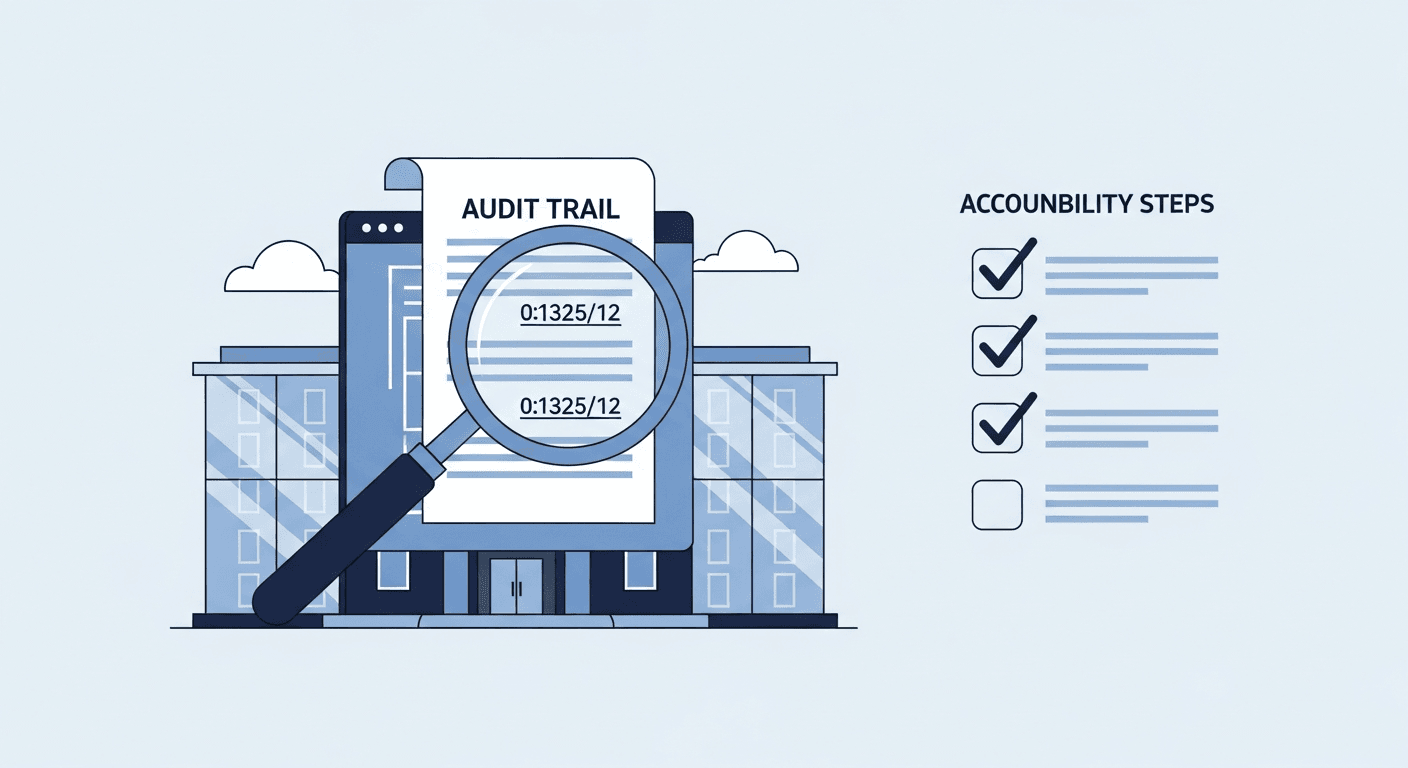
Every examination platform should maintain immutable, timestamped logs of all system actions: administrator logins, configuration changes, evaluator mark entries, mark modifications, and data exports. These logs should be cryptographically signed to prevent tampering and accessible to an independent auditor without the ability to modify them.
Most enterprise-grade digital evaluation platforms already generate such logs as a byproduct of their architecture. The governance gap is that no external party reviews them. An examination authority that could demonstrate clean audit logs to an independent body would have a concrete defence against allegations of post-evaluation tampering — a defence that is currently impossible to provide under any paper-based system.
Post-examination: Statistical anomaly detection
Statistical patterns in marking data — evaluators awarding mark distributions significantly different from peer evaluators on the same subject, sudden changes in per-question time allocation, unusual sequences of mark revisions — are detectable through programmatic analysis. Independent audit bodies should have the mandate and data access to run anomaly detection routinely, not only in the wake of controversy.
CBSE's OSM system, for example, generates per-question marking records for every evaluated script. These records could support sophisticated quality assurance analysis. Currently, no independent body has access to this data or a mandate to analyse it.
Post-result: Structured whistleblower mechanisms
The CBSE crisis of 2026 was surfaced primarily through student investigation, not institutional channels. Sarthak Sidhant and Nisarga Adhikary performed functions that a properly constituted audit system should perform proactively. A structured whistleblower mechanism for examination irregularities — with legal protection, a defined escalation path to an independent body, and a guaranteed response timeline — would reduce dependence on individual student activism.
Such mechanisms exist in financial regulation (SEBI's Informant Mechanism), in corporate governance (Companies Act provisions), and in public sector vigilance. There is no structural reason they cannot be adapted for examination governance.
Where Digital Evaluation Fits
Digital evaluation platforms do not automatically resolve governance failures, but they create the technical preconditions for audit infrastructure to function.
Answer sheets held in immutable digital storage cannot be physically altered after evaluation the way paper answer books can be. Per-question mark trails record exactly what each evaluator awarded and when — a record that does not exist in manual systems where a final mark sheet is the only artefact. Evaluator login records provide timestamps and action sequences that are difficult to falsify in a well-architected system.
This auditability is a structural advantage of digital evaluation that has received less attention than its speed or accuracy benefits. A university or board that implements digital evaluation is simultaneously building the raw material that independent audit requires. The audit infrastructure does not come pre-configured — institutions and regulators must build the governance layer — but it becomes possible in a way that paper-based evaluation structurally cannot allow.
The CBSE OSM experience of 2026 demonstrates both sides of this point. The platform generated audit data — logs, marksheets, evaluator records — that enabled the IIT Kanpur security team to assess the rebuilt portal. But the same platform had security vulnerabilities that went unaddressed for months because no independent body had the mandate to verify that CERT-In disclosures had been remediated. The technology enabled accountability; the governance layer failed to exercise it.
The Opportunity in 2026
The Parliamentary Committee examining CBSE's OSM implementation has an opportunity to recommend structural governance change, not only technology standards. A standing examination audit body — with independent authority, defined technical expertise requirements, access rights to examination systems, and a mandate covering both computer-based testing and on-screen marking — would represent a more durable response to the 2026 crisis than a replacement vendor.
Several features of the current moment make this recommendation particularly timely. The CBI is already investigating NEET-UG 2026. The Ministry of Education has transferred senior CBSE officials. Parliamentary attention is focused on examination governance. Public credibility in major examination bodies is at a measurable low.
The policy window for structural reform — as opposed to reactive technology change — is open. Whether it is used for governance reform or for replacing one examination technology vendor with another will determine whether 2027 produces a different pattern or the same one from a different angle.
Digital evaluation is a necessary component of a trustworthy examination system. It is not a sufficient one. The audit infrastructure that makes digital evaluation genuinely accountable — independent oversight, immutable logs, anomaly detection, whistleblower protection — needs to be built alongside the technology, not after the next crisis.
---
Related Reading
Ready to digitize your evaluation process?
See how MAPLES OSM can transform exam evaluation at your institution.