When Universities Award 120 Marks Out of 100: India's Exam Data Integrity Crisis
Two incidents in 2025 — MBM University awarding 120+ marks in a 100-mark paper and BRABU issuing 257 marks — expose a systemic breakdown in how Indian universities handle exam data. The underlying causes and the structural fix.
Numbers That Should Not Exist
In October 2025, students in the BE second-semester programme at MBM Engineering University in Jodhpur checked their results and found marks between 103 and 137 in a paper with a maximum of 100. The university withdrew the results without explanation. When a statement eventually arrived, the Vice-Chancellor attributed it to internal marks being accidentally uploaded to the live results portal during a system testing window lasting 15 to 20 minutes.
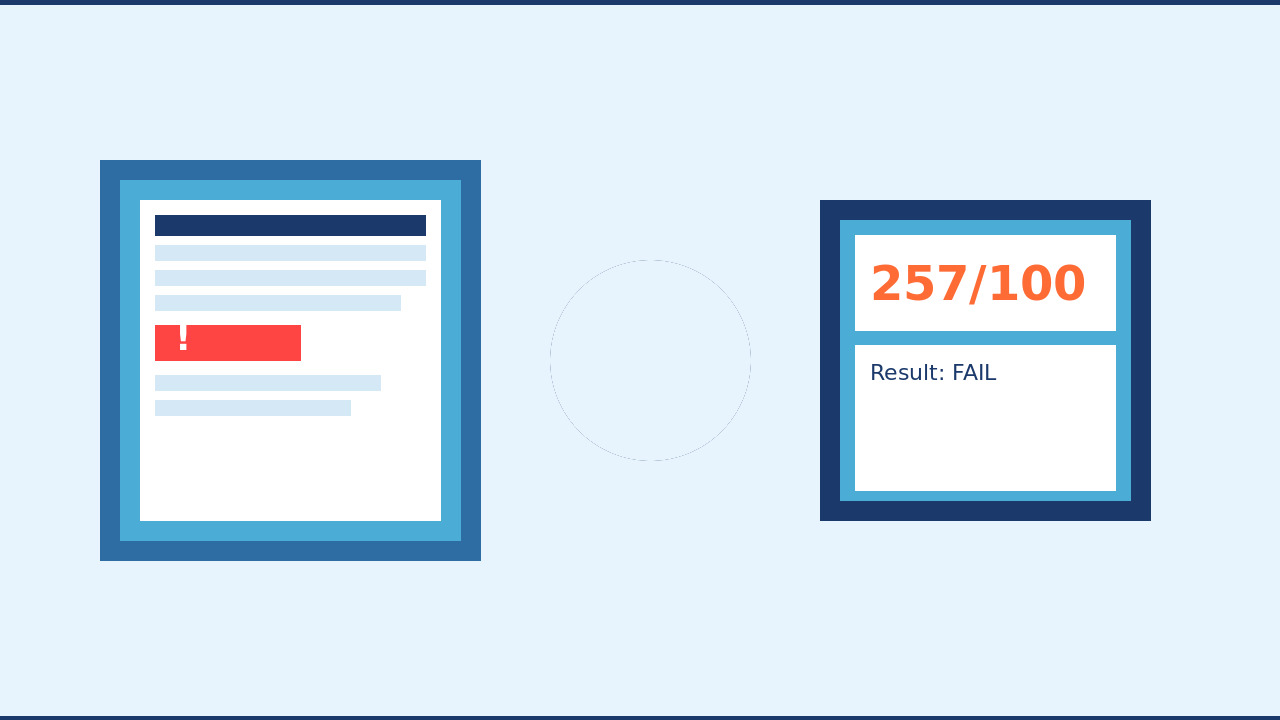
Three months earlier, in July 2025, a postgraduate student at Babasaheb Bhimrao Ambedkar Bihar University (BRABU) received 257 marks in a paper worth 100. The result sheet showing this figure also declared the student "Not Promoted." The university said a data entry error in a spreadsheet had caused the impossible total. The student, having scored 257 out of 100, had still failed — because the same spreadsheet malfunction that inflated the total had also corrupted the pass-fail logic.
These are not isolated incidents. They represent a category of failure that is distinct from evaluator bias, paper leaks, or scanning glitches. They are data integrity failures — moments when the systems that hold, process, and display marks produce outputs that are arithmetically impossible. And they point to structural weaknesses in how most Indian universities manage exam data.
Why These Errors Happen
The Spreadsheet Architecture Problem
Across Indian universities, exam results are built in layers. An examiner writes marks on paper. A data entry operator types them into a spreadsheet or a legacy desktop application. A clerk aggregates multiple components — theory, internal assessment, practicals, attendance — and totals them. The final figure is uploaded to a results portal, often by a different team, using a different system.
Each handoff is a potential failure point. The BRABU case illustrates this directly: the university's own explanation cited an Excel entry error. When marks are stored in spreadsheet cells, there is no intrinsic constraint preventing a cell from containing 257. No formula enforces the rule that a 100-mark paper cannot exceed 100. The system accepts the number because spreadsheet cells do not know what they represent.
The MBM case adds a second failure mode: the absence of a strict boundary between test environments and production systems. Internal marks — which are assigned separately from examination marks and have different maxima — were accessible in the same interface, or through the same access path, as the results portal. A mis-step in which dataset was selected during testing propagated directly to the public-facing result page.
Absent Validation Layers
Well-designed exam management systems include validation rules that fire before data is committed to a results database. These rules enforce constraints: marks cannot exceed the paper maximum, the total cannot exceed the sum of all components, internal marks cannot appear in the external results field. When a data entry operator types 137 in a field constrained to 0-100, the system should reject the input immediately — not display it to students the next morning.
Most Indian universities do not have these validation layers, for two related reasons.
The first is legacy infrastructure. Many universities have used the same results processing software, often custom-built by regional vendors in the 2000s or early 2010s, for more than a decade. These systems were designed to digitise existing manual processes, not to add logic that the manual process could not enforce. They converted paper registers to digital tables but did not introduce the constraint-checking that databases are capable of.
The second is fragmented ownership. At most affiliating universities, different offices handle different parts of the results chain: the examination cell processes marks, the IT cell manages the portal, and the registrar's office manages degree records. When a data integrity failure occurs, it is often unclear which team is responsible for detecting or preventing it. This ambiguity is not bureaucratic inefficiency — it reflects a genuine absence of defined validation ownership in the system design.
The Student Consequence
For students, marks errors are not administrative inconveniences. They alter academic trajectories.
A student at MBM who received 137 marks in a 100-mark paper may have shared that result — with family, with potential employers, in a university application. The withdrawal of that result, without explanation, creates uncertainty about whether the corrected result will appear before an admission deadline. If the actual marks are significantly lower than 100, the student may have failed; they had no way to know this during the period when inflated marks were on record.
For the BRABU student who received 257 marks and still failed: the impossibility of the number means the student cannot read the result at face value. They cannot know whether the corrected marks will produce a pass or a fail, because the corrupted figure gives no information about their actual performance. The student must wait for a manual review, during which they are in administrative limbo — unable to register for the next semester, unable to plan.
The human cost of this uncertainty is documented in Indian education research. Post-result anxiety peaks are associated with hospitalisation rates and mental health crises that fall in the weeks after result declaration. Errors that extend the period of uncertainty compound this effect.
What Digital Evaluation Changes
Platforms designed for digital answer script evaluation introduce constraint logic at the marking stage rather than the results processing stage. When an evaluator is working within a digital marking interface, the application enforces the scheme of marking in real time: the tool presents the available marks for each question, and the evaluator allocates marks within that range. A question worth 15 marks cannot receive 20 marks from within the interface — the input field is constrained.
This upstream enforcement means the figures that reach the results database have already passed validation. The aggregation arithmetic — totalling question marks to get the paper total, combining theory and internal assessment components — is performed by the same system that managed the marking, using the same data. There is no data entry step where a human types a number that the system accepts uncritically.
The direct consequence is that an impossible total — 120 marks in a 100-mark paper — cannot be generated by the system. It is not caught after the fact; it cannot occur in the first place.
Additional controls typical of digital evaluation platforms include:
None of these controls require elaborate implementation. They require a system that was designed with data integrity as a requirement rather than an afterthought.
The Accountability Gap
One feature of both incidents is the speed with which institutional explanations moved to technical accidents. In the MBM case, the Vice-Chancellor's statement emphasised the brief duration of the erroneous display. In the BRABU case, the university attributed the error to an Excel entry. Neither institution publicly disclosed which controls failed to prevent the error, which controls should have caught it before publication, or what changes had been made to prevent recurrence.
This response pattern — acknowledge the technical error, minimise duration or scope, attribute to a specific keying mistake — is not unique to these two universities. It is common because the institutional framework for exam data quality does not include mandatory post-incident reporting to any external body. There is no UGC notification that requires universities to report results processing errors above a defined threshold, no NAAC evidence criterion that asks for data integrity incident logs.
This means the same failure modes recur at different universities in different years, without any mechanism for the sector to learn from individual incidents.
A Sector-Wide Opportunity
The marks-exceed-100 failure class is completely preventable. It requires validation logic that is straightforward to implement and that scales without additional human effort. Any university that has moved its evaluation process into a system designed around exam management — rather than adapted from generic data-entry tools — will not produce these errors.
The incentive to make this change is not only about preventing the next 120/100 incident. Universities that demonstrate reliable, constraint-validated results data are better positioned for NAAC and NIRF assessments, which increasingly require evidence of evaluation accuracy and process transparency. A data integrity incident that becomes public — particularly one covered by national outlets — creates reputational damage that is disproportionate to the technical simplicity of the fix.
The fix is not complex. The barrier is not cost. It is the structural inertia of systems that were built to digitise manual processes without redesigning them.
---
Related Reading
Ready to digitize your evaluation process?
See how MAPLES OSM can transform exam evaluation at your institution.