CBSE Class 10 Phase 2 Exam: Registration Closes April 22 and What Happens Next
Registration for CBSE's second Class 10 board exam closes April 22, 2026. With 46 lakh students in the system and a compressed evaluation window, India's answer sheet infrastructure faces a stress test.
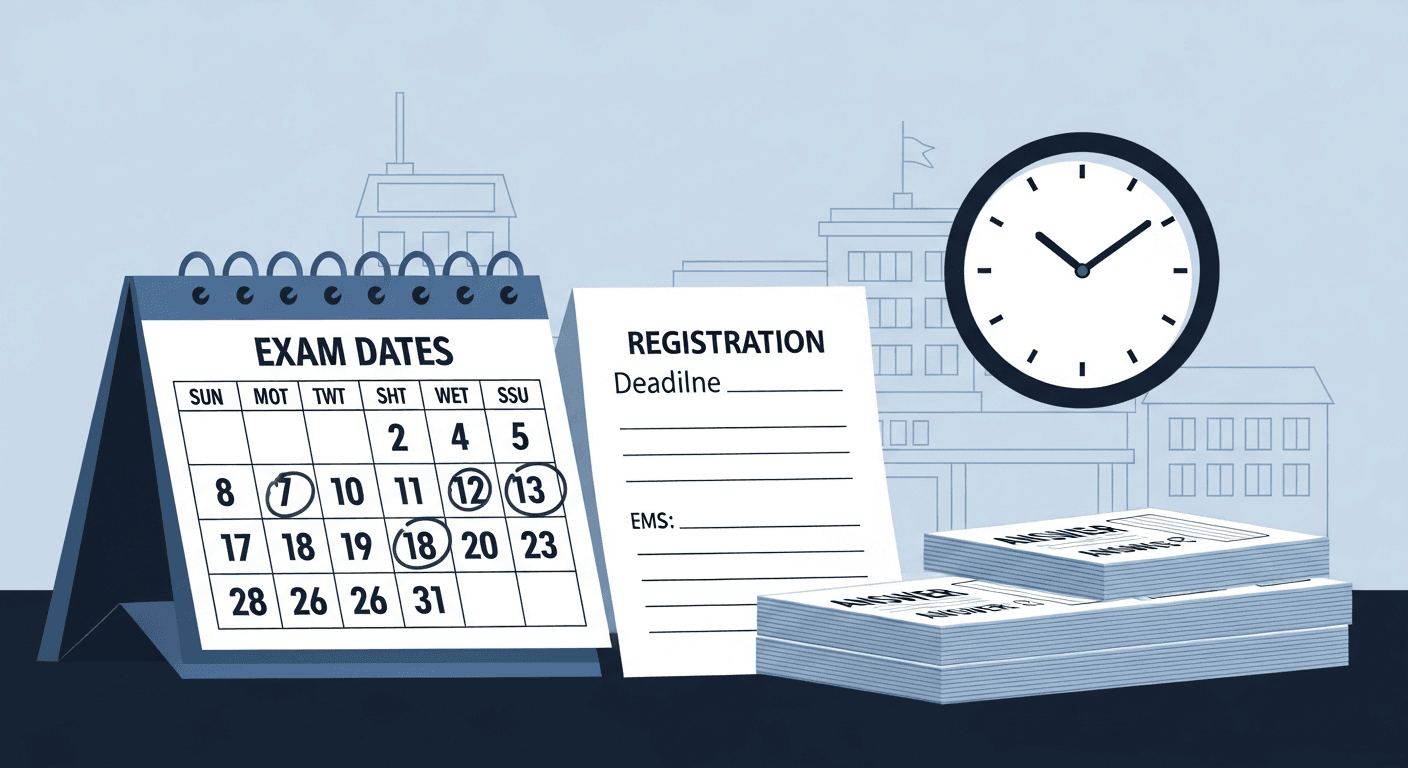
The Registration Window Is Closing This Week
CBSE opened registration for the Class 10 Phase 2 Board Examination on April 17, 2026. Schools must complete the List of Candidates process by April 20; private candidates have until April 22. After that date, no further registrations, additions, or corrections will be permitted.
The Phase 2 examinations are scheduled from May 15 to June 1, 2026. Students who appeared in Phase 1 (February 17 to March 9) and wish to improve their scores in up to three subjects — from among Science, Mathematics, Social Science, and Languages — are eligible. The fee is ₹320 per subject, rising to ₹2,000 as a late fee for the final days.
This is not a supplementary or compartment exam. It is a full second sitting of the Class 10 board, available to all students who passed Phase 1, introduced as a direct implementation of the National Education Policy 2020's vision of reducing high-stakes, single-shot assessment.
The Policy Logic and the On-Ground Reality
The two-exam system has a coherent policy rationale. NEP 2020 identified the single annual board examination as a major source of student stress, arguing that one bad day should not determine an academic trajectory. Offering a second attempt within the same academic year addresses this, at least in principle.
The ground reality is more complicated. A 2026 analysis by ETV Bharat quoted education experts warning of "twin trouble" — the risk that a second examination opportunity does not reduce pressure but redirects it. Students who performed adequately in Phase 1 may feel compelled to attempt Phase 2 anyway, fearful of missing an improvement opportunity. Private coaching centres are already offering back-to-back preparation courses for each phase. The gap between high-income students with access to structured preparation and those without access to coaching may widen rather than narrow.
These are legitimate pedagogic concerns. But the more immediate and less discussed challenge is operational: what does this policy require of India's examination evaluation infrastructure?
The Evaluation Arithmetic
CBSE has approximately 46 lakh students appearing in board examinations across India and 26 other countries. For Class 12, the board invested ₹32 crore in scanning and digitizing nearly 1 crore answer books under the new On-Screen Marking system introduced in 2026. Teachers evaluate scanned scripts on computers from designated school facilities.
Class 10, however, is not on OSM. Class 10 evaluation in 2026 continues in traditional physical mode: paper answer scripts, manual evaluation centres, and handwritten marks tabulation. This distinction matters when you consider that Phase 2 creates a second round of physical evaluation within the same academic year.
The timeline is tight. Phase 2 examinations run May 15 to June 1. Schools typically reopen for the next academic year in late June or early July. That leaves approximately three to four weeks for answer scripts to be collected, dispatched to evaluation centres, marked, moderated, and results processed. Under a physical evaluation system, with the same pool of teachers who already completed Phase 1 evaluation duties earlier in the year, this is a significant operational challenge.
CBSE has addressed part of this by directing all affiliated schools to release teachers promptly for evaluation duty when instructed by Regional Offices. Any delay in teacher deployment, the board has noted, adversely affects the overall evaluation timeline.
Why the Dual-Exam Model Stress-Tests Physical Evaluation
The challenge is not just speed. Physical evaluation also introduces risks that scale with volume and time pressure.
When evaluators work under compressed deadlines, checking quality can suffer. Calculation errors, missed sections, and inconsistent application of marking schemes become more likely when teachers are handling large bundles of scripts over long shifts. The introduction of a second evaluation cycle amplifies these risks because the same workforce must maintain accuracy across two high-volume windows in a single year.
This is precisely the structural argument for digital evaluation. An on-screen marking system does not eliminate evaluator fatigue, but it does eliminate entire categories of error: totalling mistakes, lost scripts, illegible marks in margins, and the physical logistics of transporting answer books. Systems with built-in validation — where the software prevents a teacher from submitting an answer if the sub-question marks don't add up — catch errors before they become results.
The CBSE decision to apply OSM only to Class 12 in 2026, leaving Class 10 in physical mode, reflects practical constraints. Rolling out a digital evaluation system of this scale requires scanning infrastructure, evaluator training, software reliability testing, and connectivity at evaluation centres. Class 12 had that groundwork laid; Class 10 did not in time for this cycle.
But the two-exam system has now made the case for accelerating Class 10 digital evaluation more urgent than it was before the policy changed.
What State Boards Are Watching
CBSE's decisions tend to set direction for state boards. Punjab Board adopted digital evaluation practices after CBSE's earlier OSM pilots. Other state boards have been observing the 2026 CBSE cycle carefully.
The introduction of two board examinations per year at Class 10 level may accelerate state board interest in digital evaluation infrastructure — not because they will immediately implement a second exam, but because they recognize that compressed evaluation timelines and higher answer script volumes require better systems.
A physical evaluation system designed for one annual cycle struggles when that assumption changes. Digital evaluation platforms that scan once and allow remote evaluation, automated totalling, and parallel processing by multiple evaluators across centres can accommodate increased volume without proportional increases in cost or error rate.
The Immediate Concern for Affiliated Schools
For school principals and exam coordinators, this week's registration deadline is the immediate task. Several operational points deserve attention:
The administrative burden of managing two exam cycles, two sets of registrations, two sets of fee payments, and two sets of results has landed on schools with limited additional staffing.
Related Reading
Ready to digitize your evaluation process?
See how MAPLES OSM can transform exam evaluation at your institution.