CBSE's QR Code Controversy: The Rickroll Incident and How Exam Paper Security Actually Works
CBSE issued an April 2026 advisory after QR codes on board exam papers sparked viral misinformation. The episode reveals both how modern paper security works and where its limits lie.
A QR Code, a Meme, and a National Advisory
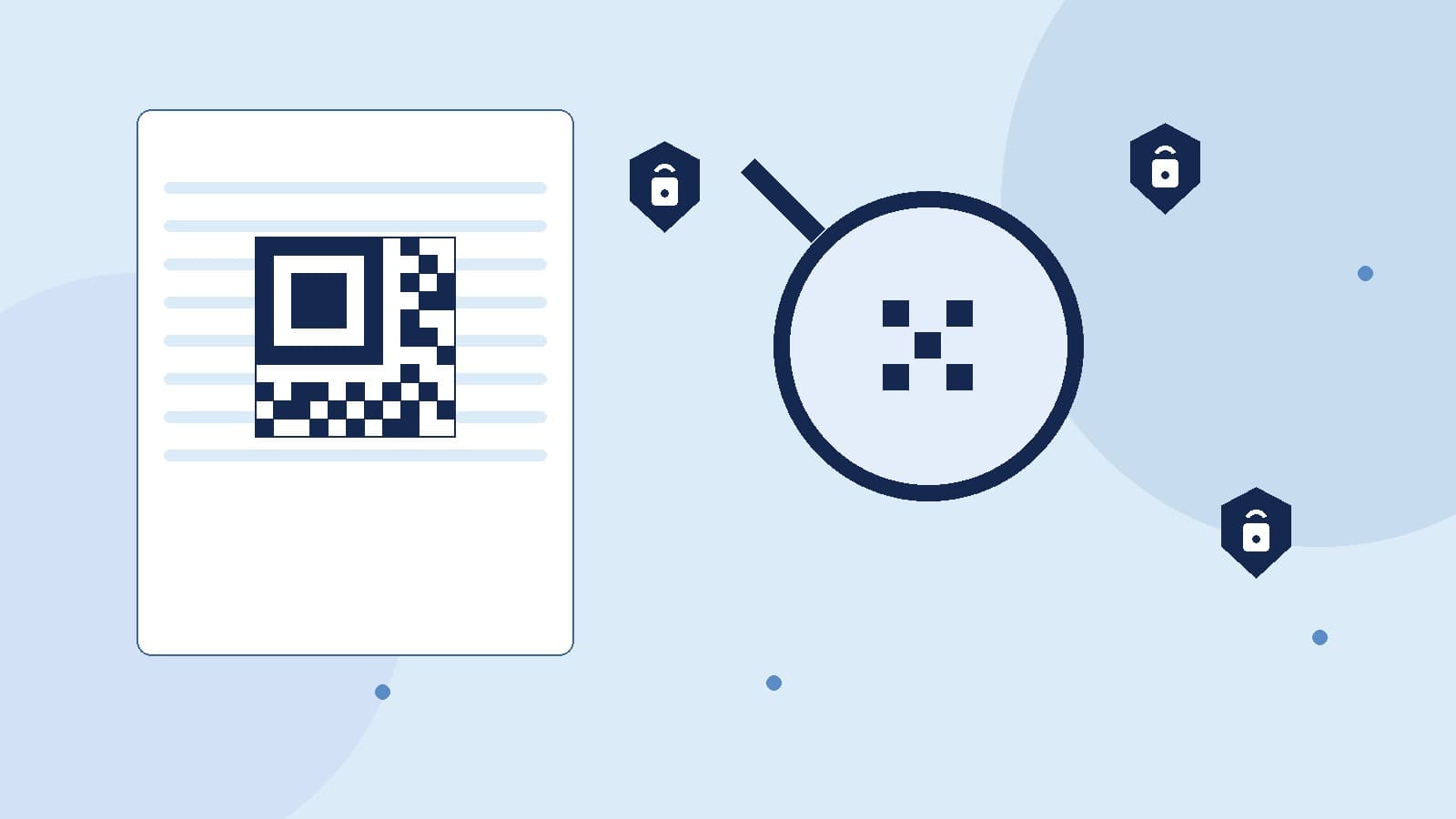
On April 4, 2026, the Central Board of Secondary Education issued an official clarification that, under normal circumstances, would have been unnecessary. The advisory addressed a straightforward fact: the QR codes printed on CBSE Class 10 and Class 12 board exam question papers are not internet links and are not meant to be scanned with a phone camera.
The context for the advisory was a wave of posts on social media claiming that scanning the QR codes redirected to meme videos — in particular, a "Rickroll" clip and images of media personality Orhan Awatramani. The posts, some originating from evaluators involved in the checking process, generated enough confusion that CBSE felt compelled to respond publicly.
The Rickroll was not real. What happened was a known quirk of certain search engines: scanning the QR code with Google Lens or a search-based scanner interprets the code's text content and suggests search queries, which can surface unrelated content. When scanned in a standard browser such as Chrome, the code does not redirect anywhere.
But the episode, while superficially absurd, points to substantive questions about exam security, evaluator conduct, and how India's examination boards communicate the purpose of security features to the people responsible for handling question papers.
What the QR Codes Are Actually For
CBSE has confirmed that the QR codes on question papers serve internal authentication and tracking functions. They are not public-facing links.
Modern examination systems use machine-readable codes on question papers for several purposes:
For these functions to work, the codes must be machine-readable by authorised CBSE systems, not scannable to external internet destinations by anyone with a phone. The confusion arose because QR codes, in their most familiar consumer form, do redirect to web pages. CBSE's use of the same visual format for a different purpose created predictable misunderstanding.
Evaluator Conduct and the Social Media Problem
Alongside the QR code clarification, CBSE had already issued a separate warning to teachers involved in the evaluation process. The board had received reports of evaluators sharing content from inside evaluation centres on social media — including photographs of answer sheets and question papers, posts about the marking process, and, in this case, posts about the QR codes.
CBSE's advisory stated that strict disciplinary action would be taken against evaluators who shared misleading information online. The board also noted that it had registered a complaint with the Cyber Crime Cell.
This is not a new problem. Evaluation centres bring together large numbers of teachers for an intensive period under examination conditions. Social media has become a vector through which internal observations — sometimes accurate, sometimes misinterpreted — reach the public quickly and without context. The QR code posts are one example; past instances have included photographed answer sheets with partially visible student information.
The challenge for examination boards is that evaluator conduct policies, even when clearly stated, are difficult to enforce in real time across dozens of distributed evaluation centres. Detection is typically retrospective, and by the time a post is identified, it has already circulated.
What Digital Evaluation Changes
When evaluation is conducted on-screen — evaluators marking scanned digital copies of answer sheets on a computer — the opportunity to photograph a physical answer book and share it is removed. Digital marking systems log every screen view, mark entry, and session. Evaluators work within software environments that can disable screen capture, restrict external application access, and generate audit logs of all activity.
This does not eliminate the possibility of misconduct, but it changes the mechanism and raises the bar. Evaluating on paper creates physical artefacts — booklets, mark sheets, handwritten totals — that can be photographed, modified, or shared. Evaluating digitally leaves a documented audit trail that makes tampering significantly harder and retrospective investigation far more straightforward.
Paper Security in Context: What Technology Can and Cannot Do
The QR code controversy is useful for clarifying what security features on examination papers are designed to accomplish — and what they are not designed to accomplish.
What Paper-Level Security Features Protect Against
Physical security features — QR codes, barcodes, holograms, watermarks, unique serial numbers — are designed to detect counterfeiting and enable tracking. If a question paper is reproduced fraudulently, the reproduced copy either lacks the security features or they are present but do not validate against internal systems. If a paper goes missing, the tracking identifier helps identify where it was last logged.
These features function well for their stated purposes. They are not, however, designed to prevent all forms of paper leak.
The Limits of Paper-Level Security
The most significant vulnerabilities in exam paper security occur at two points: at the source, where papers are printed and distributed; and at the examination centre, where multiple staff members handle papers before the examination begins.
Printed papers are increasingly downloaded and printed at the examination centre itself on the day of examination — a model CBSE uses — rather than transported pre-printed. This approach limits the distribution window during which a paper can be leaked. But it requires reliable internet connectivity, functioning printers, and power supply at every centre, which is not uniformly available across India's examination infrastructure.
Even with on-day printing, staff at examination centres see papers before candidates do. A photograph taken in the hour before examination begins can circulate before papers are distributed. Digital watermarks and serial numbers help identify the source after the fact, but they do not prevent the initial capture.
The Digital Evaluation Angle
It is worth distinguishing between the security of question papers — which relates to what happens before the examination — and the security of the evaluation process — which relates to what happens after. Both matter, but they are addressed by different mechanisms.
Digital evaluation systems address post-examination security: protecting answer books from tampering, ensuring that marks are recorded accurately, creating an audit trail for every evaluation decision. They do not directly address question paper pre-examination security, though the move to digital workflows at examination centres does create the infrastructure for more rigorous chain-of-custody tracking.
The Misinformation Ecosystem Around Indian Board Exams
The QR code posts were classified as misinformation by CBSE, but they are part of a larger pattern of misinformation that surrounds Indian board examinations annually.
Fake paper leak claims appear before most major board examinations. Encrypted group chats circulate blurred photographs and claim insider access. Rumours of grace marks, lenient checking, or result manipulation spread rapidly on social media. By April 2026, CBSE had warned 46 lakh students against fake paper leak rumours for the 2026 session, and CISCE had issued similar advisories for ICSE and ISC examinations.
The QR code Rickroll story is distinct in that it originated from evaluators — people with legitimate access to examination materials — rather than from external actors running scams. But its rapid amplification follows the same pattern: a kernel of something real (QR codes on the paper), a misinterpretation (they must be internet links), and a viral claim that travels faster than the official clarification.
For examination boards, this means that communication strategy around security features is not purely technical. The people handling examination materials — evaluators, invigilators, centre superintendents — need to understand not just what security features are present, but what they are for. A QR code that is unexplained generates curiosity and speculation. One that is understood — as an internal tracking identifier, not a web link — generates neither.
Conclusion
The CBSE QR code controversy of April 2026 will be remembered as a moment of low-stakes internet humour. Its underlying issues are somewhat more substantial: how examination security features are communicated to the people handling them, how evaluator conduct at distributed centres is managed in the social media era, and what digital evaluation infrastructure can and cannot contribute to examination integrity.
The board's response — an advisory, a cyber crime complaint, and warnings to evaluators — was proportionate to the immediate situation. The longer-term question is structural: whether India's examination infrastructure is investing in the combination of technology, training, and communication that makes examination security legible to the people it depends upon.
---
Related Reading
Ready to digitize your evaluation process?
See how MAPLES OSM can transform exam evaluation at your institution.