What CBSE Got Wrong and J.C. Bose Got Right: India's 2026 OSM Crisis
The CBSE on-screen marking crisis of 2026 exposed systemic failures in digital evaluation deployment. The same exam cycle produced a quiet success story that shows exactly what works.
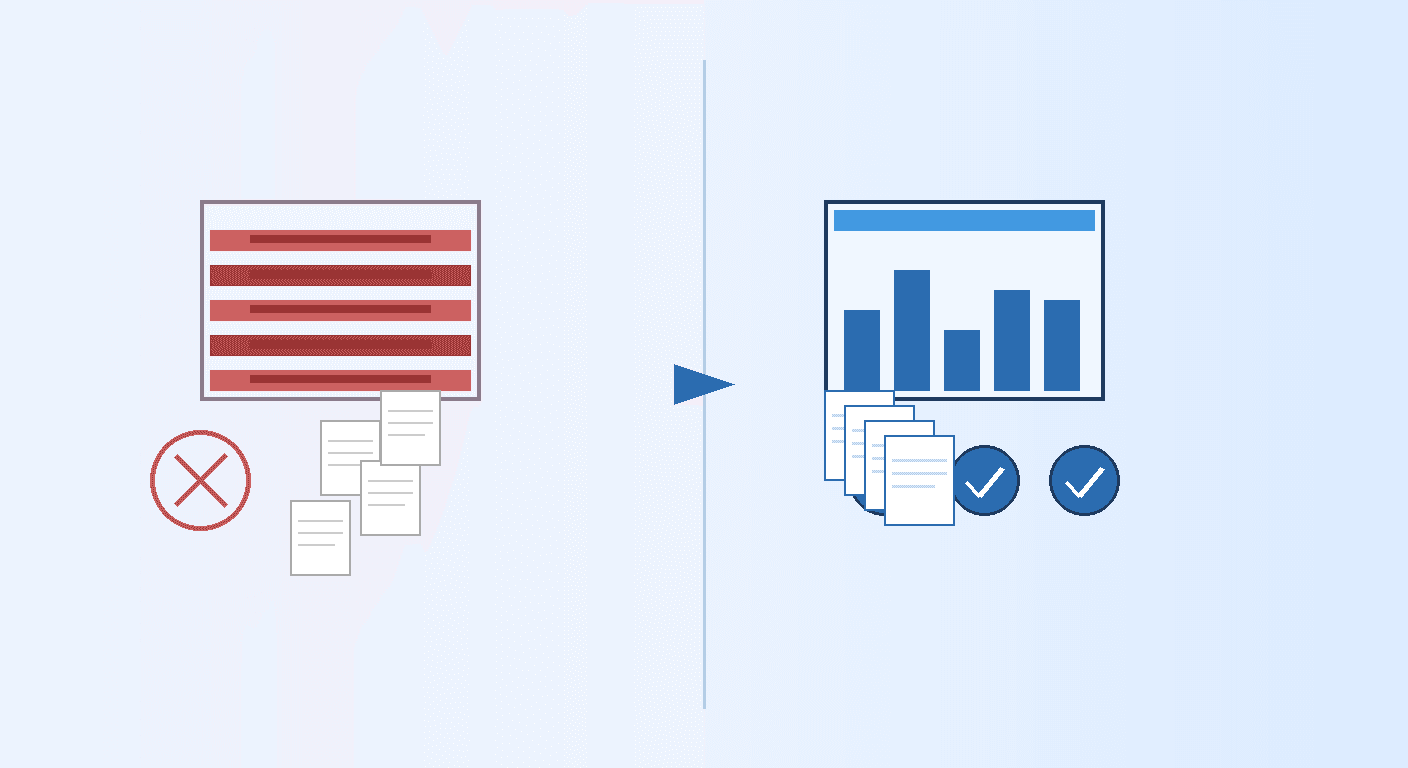
When CBSE's Class 12 results were declared on May 13, 2026, the reaction was immediate and severe. The pass rate fell to 85.20% — the lowest in seven years. Within days, 1.27 lakh (127,000) student grievances had been filed. Answer sheets belonging to one student appeared in another student's account. Evaluators reported portal crashes mid-session. Scanned images arrived illegibly blurred, yet marks were entered against them. The CBSE Chairman and Secretary were subsequently removed from their posts. Parliament demanded a judicial inquiry.
This was India's most visible digital evaluation failure to date — and it generated legitimate fear among university administrators across the country.
In the same May 2026 exam cycle, something quietly worked. J.C. Bose University of Science and Technology in Faridabad became Haryana's first government university to declare results through digital evaluation — within one month of the last paper. Not a single complaint was registered about missing or altered answer sheets. Students accessed evaluated scripts through an ERP portal and raised objections digitally, with a complete audit trail of every evaluator action.
The contrast is exact. The exam season was the same. The technology category was the same. The outcomes were opposite.
What Went Wrong at CBSE
The CBSE OSM failure is now well-documented, but its causes are systemic rather than technical. The platform failed not because on-screen marking is flawed, but because every foundational safeguard of enterprise examination software was either skipped or inadequately implemented.
Single-vendor dependency without a prior audit. Coempt Edu Teck — the platform selected for CBSE's Class 12 on-screen marking — had a documented failure history. The same firm, operating under a prior name, had crashed examination systems in Telangana in 2019 and again in 2023, with judicial intervention following both incidents. CBSE's due-diligence process did not treat prior state-level failures as disqualifying.
No pilot at scale before full deployment. CBSE evaluated approximately 9.86 million answer books through this system in 2026. A pilot at even 5% of that volume — roughly 500,000 books — across multiple states, with real evaluators operating under real connectivity conditions, would have surfaced scan-quality failures, portal concurrency issues, and the identity-management vulnerabilities that a 19-year-old security researcher subsequently found and publicly disclosed.
Scan quality without acceptance standards. Evaluators received blurred images that rendered answers illegible. The system accepted these scans rather than rejecting them for re-scanning at the centre. This is a configuration and process decision — a scan acceptance threshold — that any implementation team sets before go-live. It is not a technology constraint.
No evaluator anonymity at the architectural level. The security vulnerability disclosed after launch showed that an attacker with one examiner's login credentials could access other examiner accounts. In an enterprise-grade OSM implementation, evaluator anonymity is enforced architecturally: no evaluator sees the identity of the student whose paper they are marking, and no external request can traverse from one evaluator account to another. This is a database-level control, not a policy rule.
No mandatory double valuation. CBSE's 2026 OSM rollout did not mandate independent double valuation followed by statistical comparison. A second independent mark, combined with automatic escalation on significant deviations, catches a significant fraction of the mark anomalies that students subsequently disputed — before results are declared.
What J.C. Bose Got Right
J.C. Bose University's success was not accidental. The institution implemented digital evaluation with a focus on scan quality verification, evaluator training, and answer-book identity integrity. Every step in the workflow was verified before the next began.
The result: a university processing thousands of answer books — without the scale resources of a national board — delivered zero-complaint results faster than its own paper-based cycle of prior years.
Key differences in implementation:
The Architecture Gap Between the Two Implementations
The CBSE failure and the J.C. Bose success point to a set of non-negotiable architectural requirements for digital examination platforms that most institutions have not yet formalised as a procurement checklist.
| Requirement | What Failure Looks Like | What Success Requires |
|---|---|---|
| Scan quality threshold | Blurred images evaluated as-is | Minimum DPI + legibility verification before evaluation unlocks |
| Evaluator anonymity | Application-layer policy only | Database-level enforcement; no evaluator-to-student link traversable |
| Double valuation | Optional or absent | Mandatory independent marks with auto-escalation on deviation |
| Portal concurrency | Crashes at peak evaluator sessions | Load-tested at 120% of peak before go-live |
| Vendor failure history | Not checked | Prior state-board failure audit required in RFP |
| Student script access | Not provided | Self-access portal eliminates basis for most disputes |
What the Crisis Produced
The 2026 controversy did not discredit digital evaluation in institutional circles — it produced a precise specification of what not to do. University examination departments that were hesitant now have a reference failure to study alongside a reference success.
Several state examination boards that had been watching CBSE's rollout as a template are now re-examining their vendor contracts, scan-quality standards, and double-valuation requirements before their own November 2026 semester exam cycles.
The institutions that move next — with the right architecture in place — will inherit the credibility that CBSE's rushed deployment lost. The difference is not technology. It is the sequence of quality controls that make the technology trustworthy.
Related Reading
Ready to digitize your evaluation process?
See how MAPLES OSM can transform exam evaluation at your institution.