Bihar's AI Examination Push: What India's Fourth-Largest State Is Building for University Assessment
Bihar's chief minister launched an AI-focused examination reform committee in August 2026 and placed digital evaluation of university answer scripts before the governor for approval — signalling a major shift in how India's state universities are approaching assessment reform.
A State That Cannot Afford Another Crisis
Bihar has endured more than its share of examination controversies. The BPSC 70th Combined Competitive Examination ended in a walkout when candidates alleged a compromised question paper. The TRE4 teacher recruitment examination generated months of protest that spilled into political confrontation. The Bihar School Examination Board's paper leaks became national news.
Against this background, Chief Minister Samrat Choudhary's August 9, 2026 announcement took on a specific weight. The announcement was not a routine press statement about examination reform. It was a political signal: Bihar's government was committing, publicly, to using technology and artificial intelligence to make the state's examinations more transparent and more defensible.
The mechanism chosen was a state-level examination reform committee with a mandate to explore AI-based assessment and evaluation. The committee is tasked with recommending ways to make board, competitive, and classroom assessments fairer and more accurate. It is also meant to evaluate the role of technology and artificial intelligence in assessing students' knowledge, understanding, and analytical abilities.
The Two Separate Tracks
Bihar's examination reform effort in 2026 is running on two tracks that are related but distinct.
The first track is about entrance and recruitment examinations: BPSC competitive tests, teacher recruitment examinations, and board-level assessments. These have been the source of the political controversies. The committee's mandate covers them. The AI tools being considered here include AI-based proctoring, secure digital delivery of question papers, and automated surveillance at examination centres.
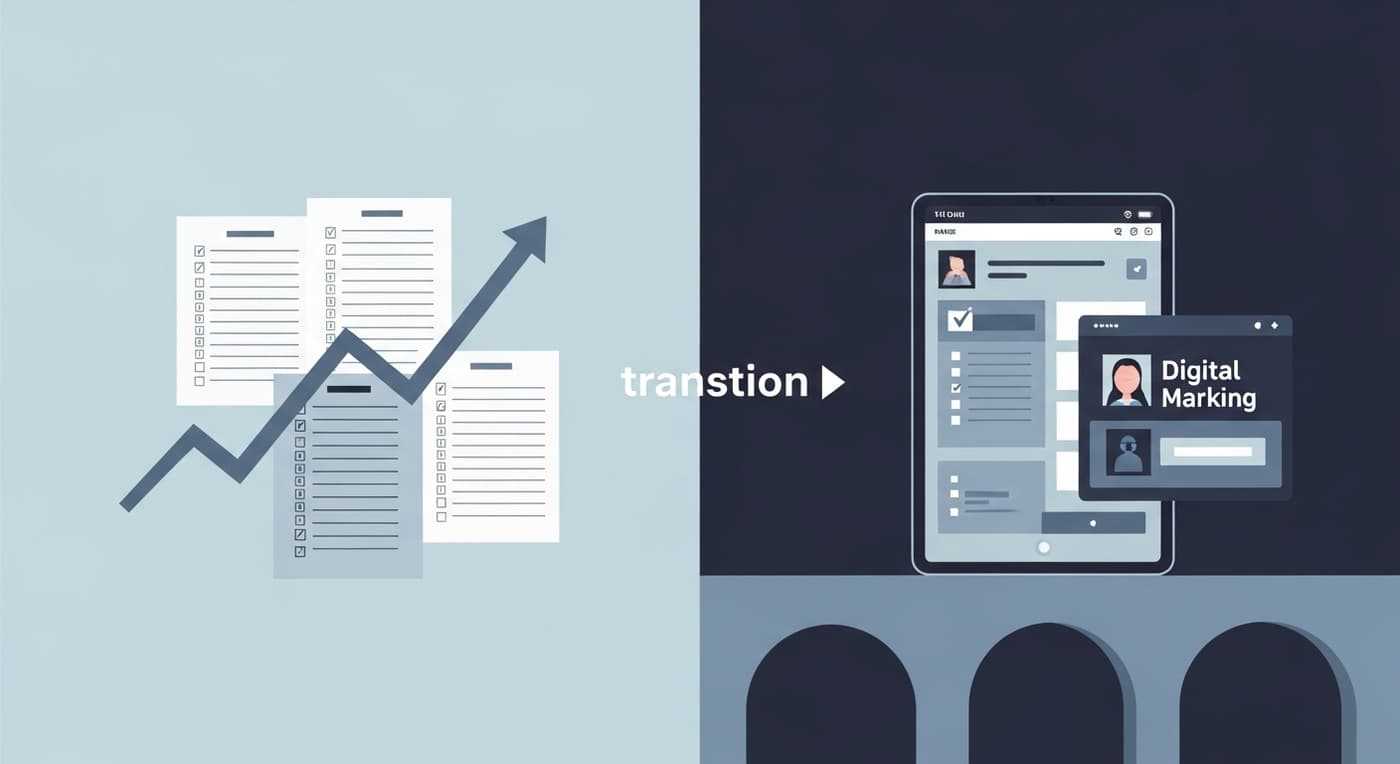
The second track is about university answer script evaluation. Bihar has more than fifteen state universities, including Patna University, Magadh University, Nalanda Open University, and a cluster of specialist and technical institutions. These universities collectively process millions of answer scripts annually through manual evaluation. The state government has proposed — and this proposal has moved to the governor's office for approval — that university answer scripts be evaluated digitally.
The proposal for digital evaluation of university scripts is being driven by the Education Department with a specific stated goal: faster results. Bihar's university result timelines have been erratic. Delays in result declaration affect student registrations, admissions to higher programmes, and scholarship disbursements. Digital evaluation, by eliminating the logistics of physical answer script transport, storage, and return, can compress the evaluation cycle substantially.
What the AI Policy Adds
At the Bihar AI Summit 2026, Choudhary announced that an AI policy for the state would be released in the near term. The policy is being developed with input from leading technology companies and is intended to position Bihar as a hub for artificial intelligence deployment in public services.
The education dimension of this policy is significant. AI in university assessment goes beyond evaluation of answer scripts. The committee's mandate covers AI tools for:
These are ambitious goals, and the state's technology readiness to implement them is still being assessed. But the political commitment to pursuing them — at the chief ministerial level, backed by a formal committee — is a meaningful change from Bihar's previous posture on examination technology.
The Governor Approval Mechanism
The requirement for governor approval before Bihar's universities implement digital evaluation reflects the constitutional structure of state universities in India. Most state universities were established under state Acts that grant significant authority to the Governor, who serves as Chancellor. Policy changes to examination procedures sometimes require either university Syndicate approval, Senate ratification, or, depending on the nature of the change, the Governor's explicit consent.
This is not unusual, and it is not an obstacle in the ordinary sense. It is a procedural checkpoint that has been reached. The proposal is before the Governor; once approved, implementation can begin with the authority of the state government behind it.
The significance of reaching this checkpoint should not be understated. Digital evaluation proposals in Indian states frequently stall at the political will phase — departments express interest, committees are formed, reports are written, and nothing changes. Bihar has moved past that phase.
Context: What State Universities in Bihar Actually Handle
Bihar's university examination system processes a very large volume. Approximate figures drawn from enrollment data suggest:
| Parameter | Approximate Scale |
|---|---|
| State university undergraduate enrollment | 30–35 lakh students |
| Annual answer scripts processed | 2–3 crore scripts |
| Universities and affiliated colleges | 15 universities, 700+ colleges |
| Average result turnaround (current) | 60–90 days post-examination |
| Evaluator base | 20,000+ evaluators across subjects |
These numbers make Bihar one of the larger state examination ecosystems in India, comparable to Rajasthan and larger than many southern states. The logistics of managing physical answer scripts at this scale — transporting them from examination centres to evaluation camps, distributing them to evaluators, collecting and storing returned scripts — is a substantial operational burden that digital evaluation would substantially reduce.
The potential for faster results at this scale is significant. A 30-day result cycle, achievable with a functioning digital evaluation platform, would represent a 50–65% improvement over current timelines. That improvement has a direct downstream impact on students planning further education, applying for scholarships, or entering the job market.
What Other States Are Watching
Bihar's decision carries significance beyond its own universities. India's state university ecosystem has been watching the CBSE OSM rollout and the NEET-related controversies with a mixture of caution and interest. The dominant sentiment among examination controllers in state universities has been: we want to move to digital evaluation, but we want someone else to go first and demonstrate that it works.
Bihar's government-backed initiative — especially if the governor approval comes through and implementation begins — provides exactly the kind of precedent other states need. A large, politically visible state university system adopting digital evaluation, with government backing and a clear rationale, reduces the perceived risk for university administrators elsewhere.
The committee model also provides a template. Rather than asking individual universities to make the switch independently, Bihar is using a state-level body to standardise the approach, select or develop a common platform, and manage the rollout in a coordinated way. That reduces the per-university decision burden and creates a shared infrastructure that smaller affiliated colleges can also use.
The Road Ahead
Bihar's examination reform committee has not yet produced its final recommendations. The governor's approval of the digital evaluation proposal is pending. The AI policy is in draft. None of this is implemented today.
But the direction is clear, and the political commitment exists at a level — chief minister and education minister — that translates into budget allocations and administrative follow-through. Institutions watching Bihar's state universities should expect significant changes to answer script evaluation processes beginning with the 2026-27 examination cycle, subject to the approvals now in progress.
For university administrators, examination technology vendors, and policy observers, the Bihar initiative is a signal worth taking seriously. India's large, enrollmen-heavy state university systems are beginning to move. The wave that started with CBSE in the school sector is reaching the state university tier.
Related Reading
Ready to digitize your evaluation process?
See how MAPLES OSM can transform exam evaluation at your institution.