When Outsourced Processing Fails: The Barkatullah University Result Crisis of 2026
Barkatullah University Bhopal's August 2026 result season saw up to 30% of marksheets carry errors after outsourced processing to a private agency — a warning for universities that treat exam data as a commodity.
A Result Season That Collapsed in Bhopal
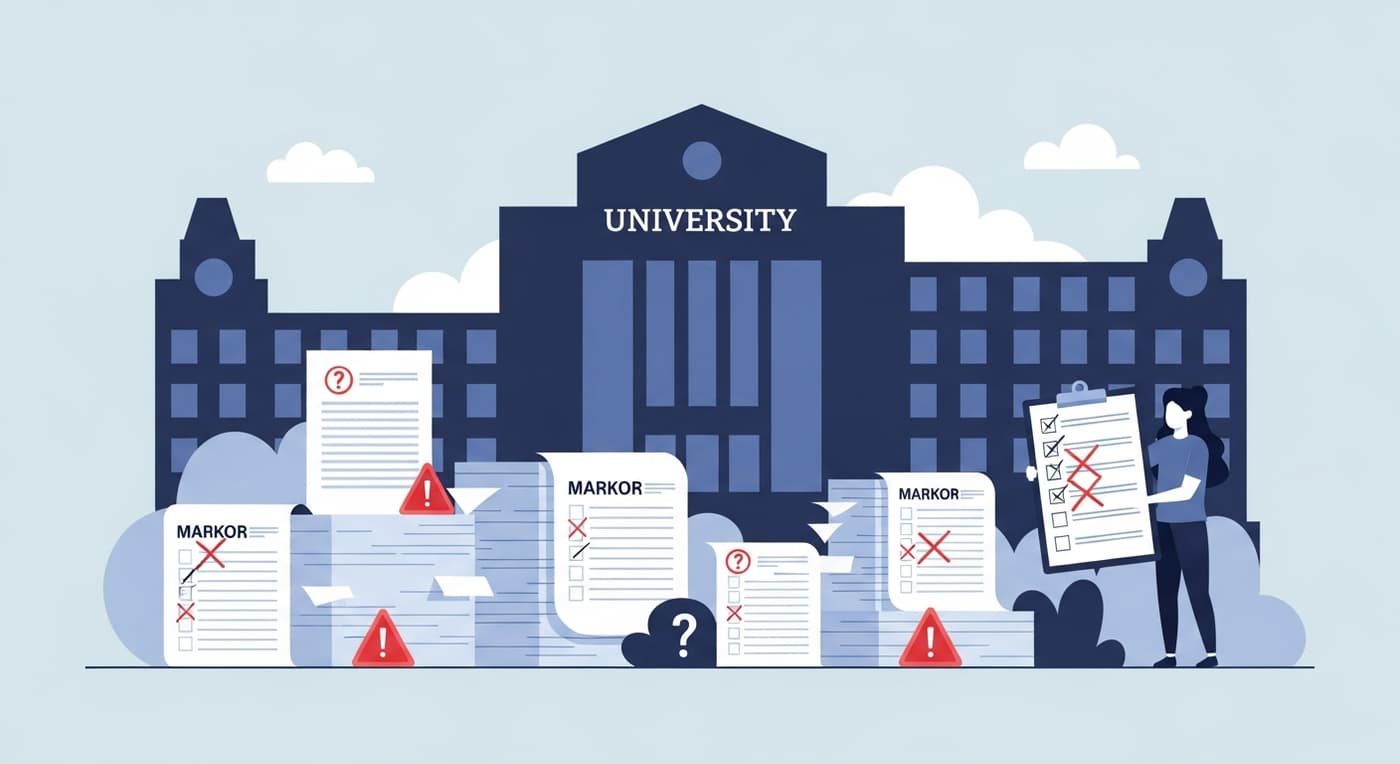
In August 2026, Barkatullah University (BU) in Bhopal declared results for its undergraduate and postgraduate programmes. Within days, complaints flooded in. Students who had appeared for exams found themselves marked absent. Toppers were assigned zero marks in individual subjects and declared failed. One student was awarded marks in a subject they had never selected.
According to reports citing university-linked sources, discrepancies may have affected approximately 30% of results released during that period. Approximately 10,000 complaints were reportedly submitted to the university within a short window. University Registrar Prof. Samar Singh initially told reporters that around 20 students had raised concerns — a figure that contradicted the volume of grievances documented by student groups and local media.
The root cause, according to the university's own statements, was its outsourced result processing partner: Infinity Certification Service, a private agency contracted to handle examination data tabulation and mark computation.
What Went Wrong
The types of errors documented in the BU crisis follow a pattern seen at other Indian universities that outsource exam processing:
A four-member committee was formed to compare OMR sheets and the agency's electronic data. The university issued a legal notice to Infinity Certification Service and imposed a financial penalty. Officials said the agency lacked adequate resources to handle the volume of data it had contracted to process. University management stated that blacklisting the agency in the upcoming procurement tender was under consideration.
The Outsourcing Risk Pattern
The BU crisis did not occur in isolation. In 2026, a pattern of examination outsourcing failures has emerged across Indian higher education:
| Institution | Agency | Scale | Primary Failures |
|---|---|---|---|
| CBSE Class 12 | Coempt Eduteck | ~9.87 million scripts | Blurred scans, wrong scripts, security breach |
| RTMNU Nagpur | External exam agency | 530+ affiliated colleges | Delayed results, marks withheld, class-level failures |
| Barkatullah University | Infinity Certification Service | ~30,000+ UG/PG students | Absent-marking, mark entry errors, subject mismatches |
Each failure shares a common thread: a university with high examination volume delegated result processing to a private vendor without sufficient oversight, verification protocols, or capacity checks.
The consequences extend beyond the immediate semester. Students facing wrong results miss supplementary examination deadlines, lose postgraduate admission opportunities, and — in cases where errors are corrected late — find that their corrected marksheets arrive after institutional cutoff dates. The reputational damage to the university is secondary to these direct academic injuries.
Why Exam Data Processing Cannot Be Treated as a Commodity
Universities outsource exam-adjacent functions routinely — printing, logistics, catering — and that is largely appropriate. Examination result data is categorically different for three reasons.
First, the data is irreversible in its consequences. A printing error can be corrected with a reprint. A mark entry error can set a student back by six months if it is not caught before supplementary exam registration closes. By the time a committee investigation concludes, the academic year has moved on.
Second, the chain of custody matters legally. Under UGC regulations and most state university acts, the university — not its vendor — bears legal responsibility for accurate result declaration. When the BU crisis prompted a Right to Information inquiry, the vendor's role became an evidentiary burden for the university, not a defence.
Third, verification requires institutional knowledge. Cross-checking OMR data against electronic marks requires evaluators who understand the university's specific subject codes, elective structures, and attendance systems. An external agency applying generic templates to a complex, multi-school university will consistently produce mismatches that internal staff would catch immediately.
What the University's Response Revealed
The response to the BU crisis exposed an institutional failure as much as a vendor failure. The registrar's initial claim of 20 complaints, contradicted by thousands of student submissions, indicated that the university's grievance intake process was not designed for high-volume error scenarios.
This is a structural problem. A university that has outsourced result processing has, in effect, delegated its first line of error detection. When students report errors to a vendor's helpdesk rather than a university's examination department, complaints are filtered before they reach institutional leadership. The university learns the true scale of the problem only when student protests or media coverage force a reckoning.
A digital evaluation platform maintained internally — or under close institutional oversight — maintains a verifiable audit trail at every step. When a question arises about a mark, an administrator can trace it to the specific evaluator, the specific timestamp, and the specific page. The data cannot be altered retroactively. The BU case, by contrast, required a committee to manually reconcile OMR sheets against printed records because no tamper-proof digital chain of custody existed.
What Institutions Should Learn
The BU crisis, read alongside the RTMNU case and the CBSE OSM controversy, provides a clear signal for examination controllers and registrars across India:
Universities in Madhya Pradesh, and across India, face a common challenge: managing examination data for thousands of affiliated colleges at scale. The answer to this challenge is not to outsource the risk — it is to build internal digital infrastructure that makes the processing transparent and verifiable at every stage.
Related Reading
Ready to digitize your evaluation process?
See how MAPLES OSM can transform exam evaluation at your institution.